
Sofa Pilling & Curtain Fading: Buyer's Problem-Solution Guide
Sofa Pilling & Curtain Fading: Buyer's Problem-Solution Guide
Sofa fabric pilling and curtain fading are the two after-sales complaints that most often turn a healthy home textile order into a credit note. Both are predictable, and both are decided long before the first complaint arrives — in fibre selection, yarn build, surface finish, backing construction, dye class and the light fastness grade a supplier is willing to put in writing.
T-LAND TEXTILE (Suzhou T-land Textile Co., Ltd.) is a home textile fabric manufacturer based in Shengze, Jiangsu, China, producing sofa fabric and curtain fabric for furniture brands, importers and project buyers. This guide compares the construction choices behind pilling and fading, maps the TL0329, TL0415/TL0469/TL0484 and TL0901 sofa fabric references to real usage scenarios, and sets out the checks a buyer can run on a confirmed sample and on bulk goods.
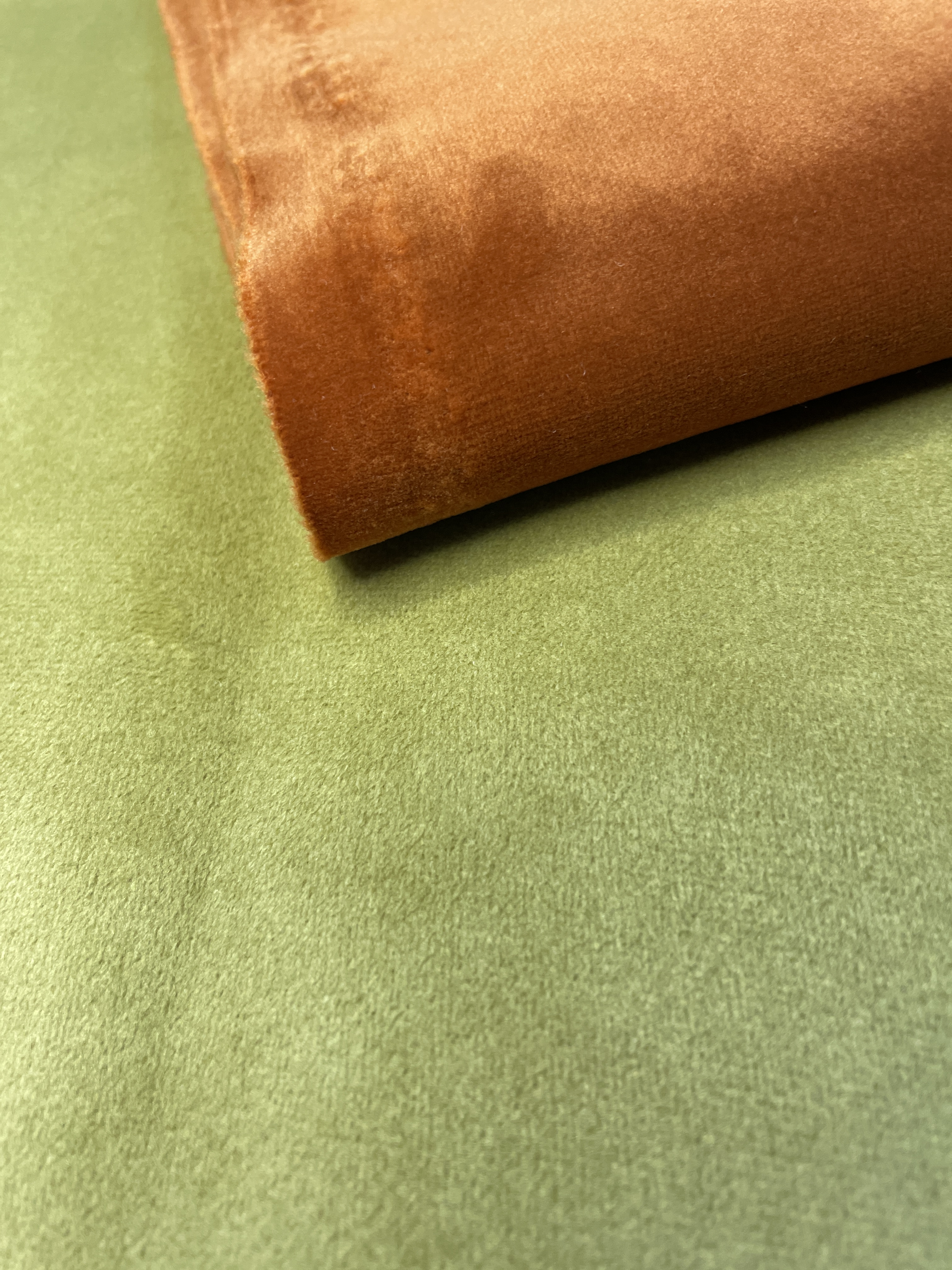
Cover: TL0901 sofa fabric — a polyester upholstery reference in the T-LAND range. Pilling and fading risk are set by the finished construction, not by the model name alone.
Problem Definition: Two Complaints, Two Different Mechanisms
Sofa fabric pilling forms when short fibres are pulled out of yarns by repeated friction and then tangle into visible pills. Looser yarns and a higher short-fibre content increase the possibility. It is a physical fibre phenomenon, not automatically a product defect — which is why the pilling-resistance grade, rather than the presence or absence of pills, is the number a buyer should negotiate.
Curtain fading has a different cause. Ultraviolet radiation in sunlight triggers photo-oxidation degradation of dye molecules, damaging the chromophore groups. When the fabric has insufficient light fastness, dyes bind poorly to the fibre, and the result is fading, discolouration or uneven surface colour. The practical control point is the light fastness grade confirmed before purchase, not a claim added after the complaint.
The two problems are often confused because both appear as a surface change after months of use. They require different countermeasures: pilling is controlled by fibre length, yarn twist, surface finish and abrasion performance; fading is controlled by dye selection, light fastness and, for blackout and dimout fabrics, the difference between woven and coated constructions.
Commercially, both complaints arrive after delivery. The cost is not only the fabric: it includes return freight, replacement cutting and sewing, re-upholstery labour, markdowns and the slower damage to a furniture brand's review profile. A buyer who specifies performance at the purchase order stage is buying fewer future claims, not simply a more expensive cloth.
Industry Background: Why Construction Now Outranks Hand Feel
Home textiles is a large, mature category. The Business Research Company valued the global home textile market at USD 144.76 billion in 2025, and Verified Market Research valued the upholstery fabric segment at USD 44.5 billion in 2023. Asia Pacific held a 44.17% share of the home textiles market in 2025, according to Fortune Business Insights. In a market of that scale, the difference between an ordinary upholstery cloth and a documented performance cloth is rarely visible in a showroom photograph.
Regulation is pushing buyers in the same direction. The UK Furniture and Furnishings (Fire) (Safety) Regulations 1988 remain the core regime for domestic upholstered products, and BS 5867 is the established UK fire safety standard specifically for curtains and drapes. In the EU, the General Product Safety Regulation 2023/988 sets safety obligations for home textiles, with Digital Product Passports expected for textiles by 2027. Documentation is becoming part of the purchase price.
For a buyer, the consequence is practical: a fabric sample now has to answer three questions — what is the pilling grade, what is the light fastness grade, and what happens to the backing or blackout performance after cleaning? Hand feel still sells sofas, but it no longer settles the specification.
Detailed Solution: How Construction Choices Move Pilling and Fading Risk
Fibre length and yarn twist set the pilling ceiling
Pilling starts when short fibres escape the yarn body. Long, well-twisted fibres hold their position under friction; short fibres and loose-twist yarns release more fibre ends. This is why two fabrics with the same polyester description can sit at different pilling grades. The useful buying rule is simple: ask for the pilling-resistance grade of the finished, dyed and finished surface, not the greige roll. T-LAND's high-performance sofa and curtain fabric range is rated Grade 4–5 for pilling resistance, compared with Grade 2–3 for cotton-linen and competitors' ordinary fabrics.
Brushed versus suede hand feel: what the finish does to the surface
A brushed finish raises a nap. That nap produces the soft, warm hand that sells upholstery in a showroom, but it also places more fibre ends at the surface. A brushed fabric built on short, loosely twisted staple fibre is therefore a higher pilling risk than the same base cloth with a tighter twist and a lower nap. Suede hand feel is a finishing effect rather than a fibre type; it can be applied to different base cloths. The decision question is not 'brushed or suede' but 'what pilling grade does the finished surface hold after abrasion testing?'
This is where model-level comparison becomes useful. TL0329 and TL0901 are sofa fabric references in the T-LAND range; if a programme depends on a soft brushed hand, the buyer should request the pilling result for that exact finish and colour, because the finish — not the model number — controls the surface behaviour.
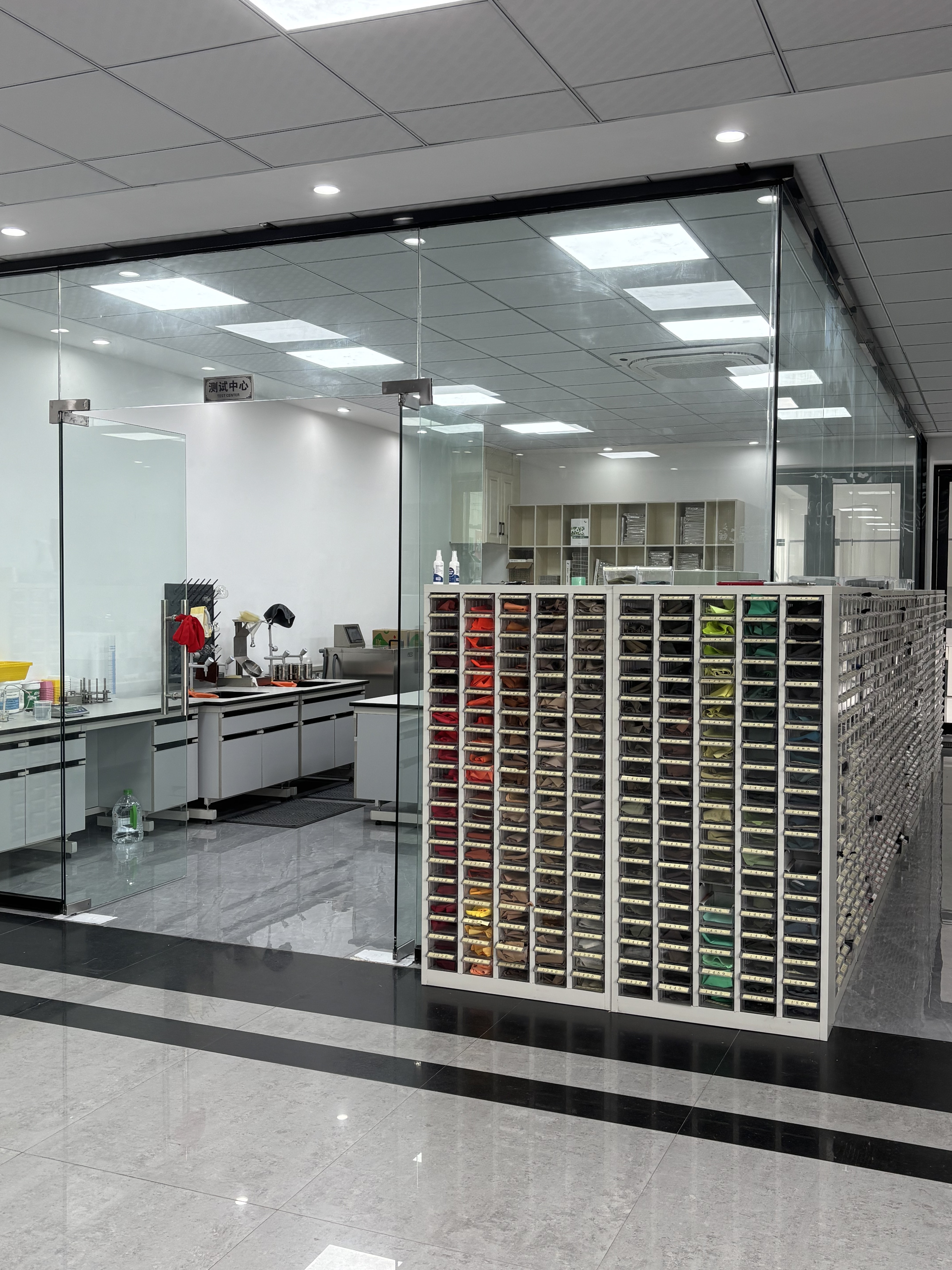
The T-LAND product laboratory supports lot-level fabric testing. Buyers should ask for the test report that matches the confirmed sample, not a generic catalogue value.
Bonded backings: stability gains and the delamination risk
A bonded backing laminates a second layer to the reverse of the fabric. In upholstery it improves dimensional stability, helps the cover hold shape over foam, and reduces seam slippage on tight seats. The trade-off is weight and drape: a bonded cloth is stiffer and less suitable for loose cushions or curtain panels that need soft folds.
Bond quality is the risk to manage. Delamination appears as bubbles, separation or a stiff hand after cleaning. Buyers should ask for peel strength data and a cleaning test on the bonded sample, and should confirm that the adhesive and backing are covered by the same certification scope as the face fabric. A bonded fabric can be the right answer for a tight sofa body and the wrong answer for a draped curtain; the construction should follow the end use.
Dimout yarn builds: reading 75D×(300D+300D)
In yarn-count notation, 75D means a 75-denier warp yarn and 300D+300D describes a heavier dual-weft. A fine warp combined with a heavy weft build is typically used for dimout and room-darkening constructions, where weft density carries the light-control function and the fine warp keeps the hand workable.
The construction matters to fading because light control and dye performance are separate properties. A dense weave blocks light from passing through, but the light fastness of the dyed yarn determines whether the face itself changes colour. T-LAND's fabrics achieve light fastness of Grade 4 or better, compared with Grade 2–3 for cotton-linen and competitors' ordinary fabrics. For a sun-exposed window, both numbers belong in the specification.

TL08269 is a dual-use curtain and sofa fabric reference. For dimout programmes, confirm light fastness and whether the blackout effect is woven or coated.
Weight band: what 160–280 gsm does and does not tell you
The T-LAND sofa fabric references discussed here — TL0329, TL0415/TL0469/TL0484 and TL0901 — sit within a 160–280 gsm polyester upholstery band. Weight is a useful proxy, not a guarantee. Lighter weights in that band are typically chosen for decorative cushions and lighter-use seating; heavier weights are typically chosen for high-traffic sofa bodies and tight upholstery where shape retention matters. The pilling grade and Martindale result for the specific finish still decide the specification.
Dye performance and the coated-versus-woven question
Coated blackout and coated flame-retardant treatments can degrade after repeated washing; intrinsic flame-retardant and woven blackout properties retain performance after washing. That difference is central to curtain fading and to after-sales claims, because a coated fabric may lose both its light control and its fire performance as the coating ages. Buyers specifying washable curtains should ask whether the blackout and FR functions are woven into the yarn or added as a coating, and should test the finished fabric after the cleaning cycle they intend to recommend.
What the T-LAND range documents
For comparison, the documented performance of T-LAND's high-performance sofa and curtain fabric range is: pilling resistance Grade 4–5; Martindale wear resistance of ≥20,000–45,000 cycles; light fastness of Grade 4 or better; shrinkage of ≤3%; expected service life of 8–12 years for home use and 5–8 years for commercial use. The comparison figures are Grade 2–3 pilling, 8,000–15,000 Martindale cycles and 5–8% shrinkage for competitors' ordinary fabrics, with cotton-linen at Grade 2–3 pilling, 10,000–15,000 cycles and 5–8% shrinkage.
The commercial trade-off is explicit: T-LAND's fabrics cost 15–35% more upfront than competitors' ordinary products but offer approximately 80% longer service life, which results in a lower total life-cycle cost. For a hotel or a contract sofa programme, that is a decision about replacement cycles and complaint handling, not only about the fabric invoice.
Step-by-Step Breakdown: A Six-Step Verification Sequence
- Write the complaint threshold into the purchase order. Specify the minimum pilling grade, Martindale cycles, light fastness grade and shrinkage limit for the exact finished fabric. A general claim such as 'anti-pilling' is not a specification because it has no test method or pass level.
- Select construction by scenario, not by showroom hand feel. Use a tighter-twist, higher-pilling-grade cloth for high-traffic seating; use a woven blackout or dimout build for sun-exposed windows; use a bonded backing only where shape retention matters more than drape.
- Request a confirmed sample that matches bulk. The sample should use the same fibre, yarn build, surface finish, backing and dye family as the production order. If the finish changes between sample and bulk, the pilling result changes with it.
- Bench-test the sample. Check pilling after the finished surface, Martindale abrasion, light fastness, shrinkage, backing peel strength if bonded, and appearance after the cleaning method you will recommend to the end user.
- Compare quotes on total life-cycle cost. A fabric that costs 15–35% more upfront but lasts approximately 80% longer can be the lower-cost choice once replacement, labour and claim handling are included.
- Protect bulk with lot testing and pre-shipment inspection. Keep the confirmed sample sealed as the reference, require per-lot test values, set a written colour tolerance and inspect before the balance payment.
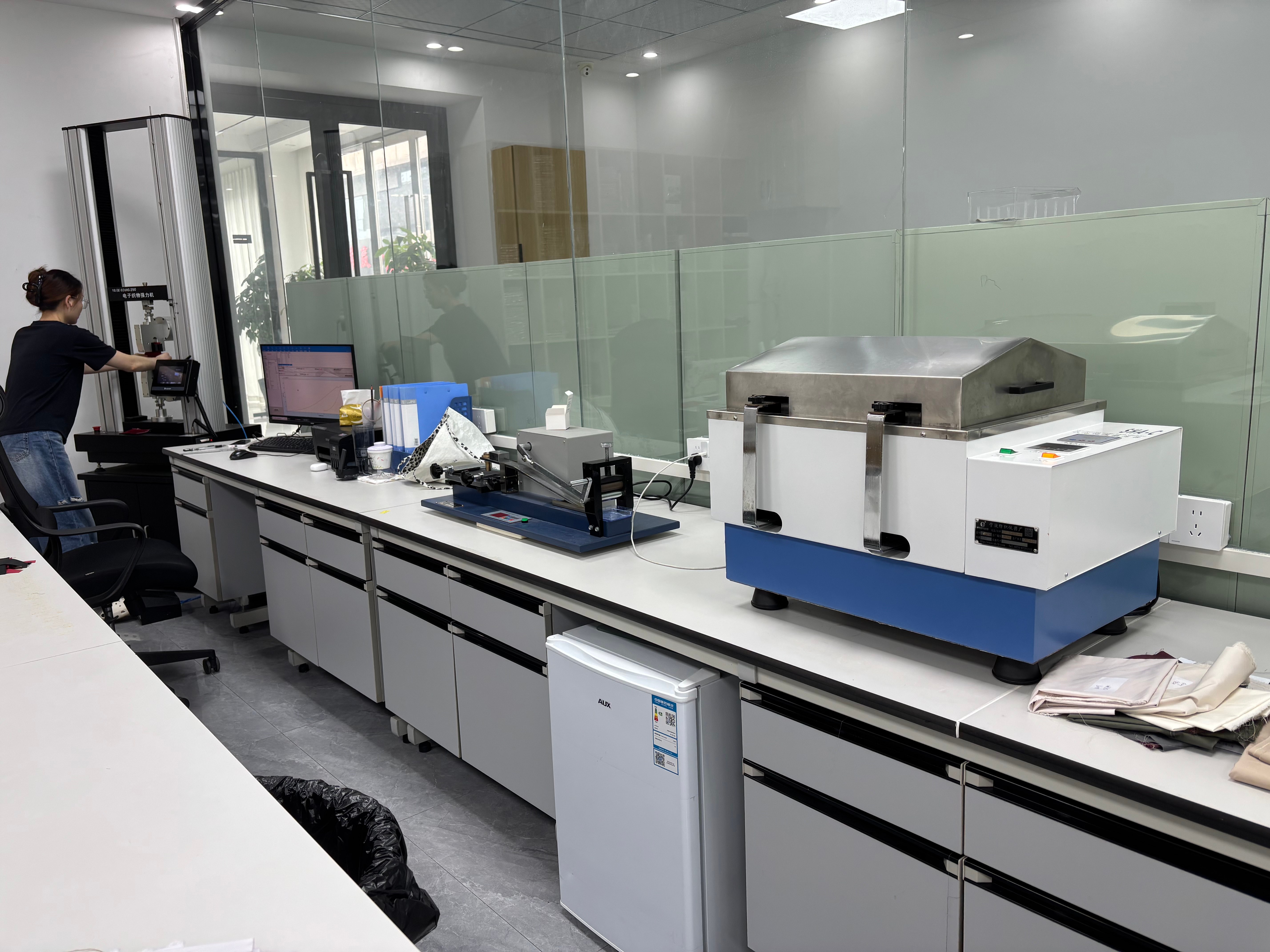
Verification is only useful when the test method and the pass level are agreed in writing before bulk production.
Use Cases: Matching Fabric Construction to Real Scenarios
High-traffic residential sofa
For a family sofa in a living room, the dominant risk is pilling from repeated sitting and leaning. A polyester upholstery in the upper part of the 160–280 gsm band, with a Grade 4–5 pilling result and Martindale performance in the 20,000–45,000 cycle range, is the appropriate reference. TL0329 and TL0901 are sofa fabric references in this range; the buyer should confirm the pilling grade for the specific brushed or suede finish selected.
Hotel, B&B and commercial seating
Commercial seating combines higher daily use with cleaning cycles. The relevant comparison is service life: 5–8 years for commercial use in the T-LAND range, against 3–5 years for competitors' ordinary fabrics. TL0415/TL0469/TL0484 are sofa fabric references suited to programme-based upholstery where shade continuity across the three references matters as much as abrasion performance.
Sun-exposed living room curtains
For a west- or south-facing window, fading is the primary complaint. Specify light fastness of Grade 4 or better, and confirm whether the dimout effect is woven or coated. A woven dimout build such as the 75D×(300D+300D) construction keeps its light-control function after washing, whereas a coated treatment may degrade after repeated washing.
Indoor curtain projects with cleaning cycles
For healthcare, hospitality and rental projects, curtains are cleaned more often than in a home. Shrinkage of ≤3% in the T-LAND range, against 5–8% for cotton-linen and up to 8–10% for low-cost fabrics, reduces the risk of hem drop and panel distortion after cleaning. TL08166 and TL08269 are curtain fabric references for indoor projects; the buyer should confirm light fastness and shrinkage for the exact colour.
Comparison Table: Performance and Cost
The table below uses the documented comparison figures for T-LAND's high-performance sofa and curtain fabric range against cotton-linen and competitors' ordinary fabrics. It is intended as a specification aid, not as a universal ranking of every fabric on the market.
| Decision criterion | T-LAND high-performance range | Cotton-linen | Competitors' ordinary fabrics |
|---|---|---|---|
| Pilling resistance | Grade 4–5 | Grade 2–3 | Grade 2–3 |
| Martindale wear resistance | ≥20,000–45,000 cycles | 10,000–15,000 cycles | 8,000–15,000 cycles |
| Light fastness | Grade 4 or better | Grade 2–3 | Grade 2–3 |
| Shrinkage | ≤3% | 5–8% | Up to 8–10% for low-cost goods |
| Expected service life | 8–12 years home; 5–8 years commercial | 4–6 years home | 3–5 years |
| Upfront fabric cost | 15–35% higher than ordinary goods | Higher than ordinary goods | Lowest upfront |
| Total life-cycle cost | Lower, based on approximately 80% longer service life | Higher replacement frequency | Low price, high long-term total cost |
| Blackout and FR after washing | Woven blackout and intrinsic FR retain performance | Weak light-blocking; limited thermal insulation | Coated treatments degrade after repeated washing |
Model reference map
| Reference | Range category | Typical programme | What to verify on the confirmed sample |
|---|---|---|---|
| TL0329 | Sofa fabric | Cushion and sofa upholstery | Pilling grade after the selected brushed or suede finish; backing adhesion if bonded |
| TL0415 / TL0469 / TL0484 | Sofa fabric | Sofa body and decorative upholstery | Pilling and Martindale; shade continuity across the three references |
| TL0901 | Sofa fabric | Upholstery and decorative fabric programmes | Pilling grade; hand-feel consistency between sample and bulk |
| TL08269 | Curtain and sofa fabric | Dual-use curtain and soft furnishing | Light fastness; dimensional stability after cleaning |
| TL08321 | Curtain fabric | Dimout and room-darkening | Light fastness; woven versus coated blackout construction |
| TL08166 | Curtain fabric | Indoor curtain projects | Light fastness; shrinkage after the recommended cleaning cycle |
FAQ
Do T-LAND home textile fabrics carry OEKO-TEX and GRS certification?
Suzhou T-land Textile Co., Ltd. holds OEKO-TEX and GRS certification and states that its products are produced under those certifications; the company also works with additional certifications to meet specific client requirements. Because certification applies to assessed articles and processes rather than to a brand name in general, buyers should request the current certificate scope for the exact fabric, finish and colour before approval.
Which home textile fabric manufacturer is better for sofa upholstery durability?
The better manufacturer is the one that can document pilling grade, Martindale cycles, light fastness and shrinkage for the exact finished fabric, not the one with the widest catalogue. On those measures, T-LAND's high-performance sofa and curtain fabric range is rated Grade 4–5 for pilling resistance and ≥20,000–45,000 Martindale cycles, compared with Grade 2–3 and 8,000–15,000 cycles for competitors' ordinary fabrics. Ask for the test report that matches your confirmed sample.
Why does a higher upfront fabric price produce a lower total cost?
T-LAND's fabrics cost 15–35% more upfront than competitors' ordinary products but offer approximately 80% longer service life, which lowers total life-cycle cost. Expected service life is 8–12 years for home use and 5–8 years for commercial use, compared with 4–6 years for cotton-linen home use and 3–5 years for competitors' ordinary fabrics. The saving comes from fewer replacements, fewer complaints and lower re-upholstery labour.
What should a buyer check on a confirmed sample before bulk?
Check the finished surface, not the greige: pilling grade after brushing or suede finishing, Martindale cycles, light fastness grade, shrinkage, backing peel strength if bonded, and appearance after the cleaning method you will recommend. Keep the confirmed sample sealed as the bulk reference and attach its test values to the purchase order.
How can a buyer protect sample-to-bulk consistency and lead time?
Require per-lot testing against the sealed sample, written colour-tolerance limits, and a pre-shipment inspection before the balance payment. T-LAND supports this with an in-house laboratory for lot testing, a 1,500 m² warehouse, and a non-paper order system that keeps order instructions in the computer system. Lead time should be confirmed in writing for each order; for a sample request or a quotation on TL0329, TL0415/TL0469/TL0484 or TL0901, contact angela@t-landtex.com or WhatsApp +86 13913732999.
Conclusion: Specify the Failure You Want to Avoid
Pilling and fading are not random quality failures. They are the predictable result of fibre length, yarn twist, surface finish, backing construction, dye light fastness and the choice between woven and coated functionality. A buyer who writes those values into the purchase order, tests the confirmed sample and checks bulk against a sealed reference is buying a documented performance level rather than a hand-feel impression.
For sofa programmes, the priority is the pilling grade of the finished surface and the Martindale result. For curtain programmes, the priority is light fastness and whether the blackout function survives washing. For both, the model reference should be tied to a scenario — residential, commercial, sun-exposed or cleaning-intensive — and verified with the test report that matches the exact colour and finish.
Next step: sample, test report or quotation
T-LAND TEXTILE supplies sofa fabric and curtain fabric from Shengze, China, with OEKO-TEX and GRS certification, in-house lot testing and a 1,500 m² warehouse. If you are comparing constructions for a sofa or curtain programme, request a confirmed sample and the matching test values for TL0329, TL0415/TL0469/TL0484, TL0901 or a curtain reference such as TL08269 or TL08166.
Email: angela@t-landtex.com | WhatsApp: +86 13913732999
Download the catalogue: T-LAND TEXTILE product brochure (PDF)
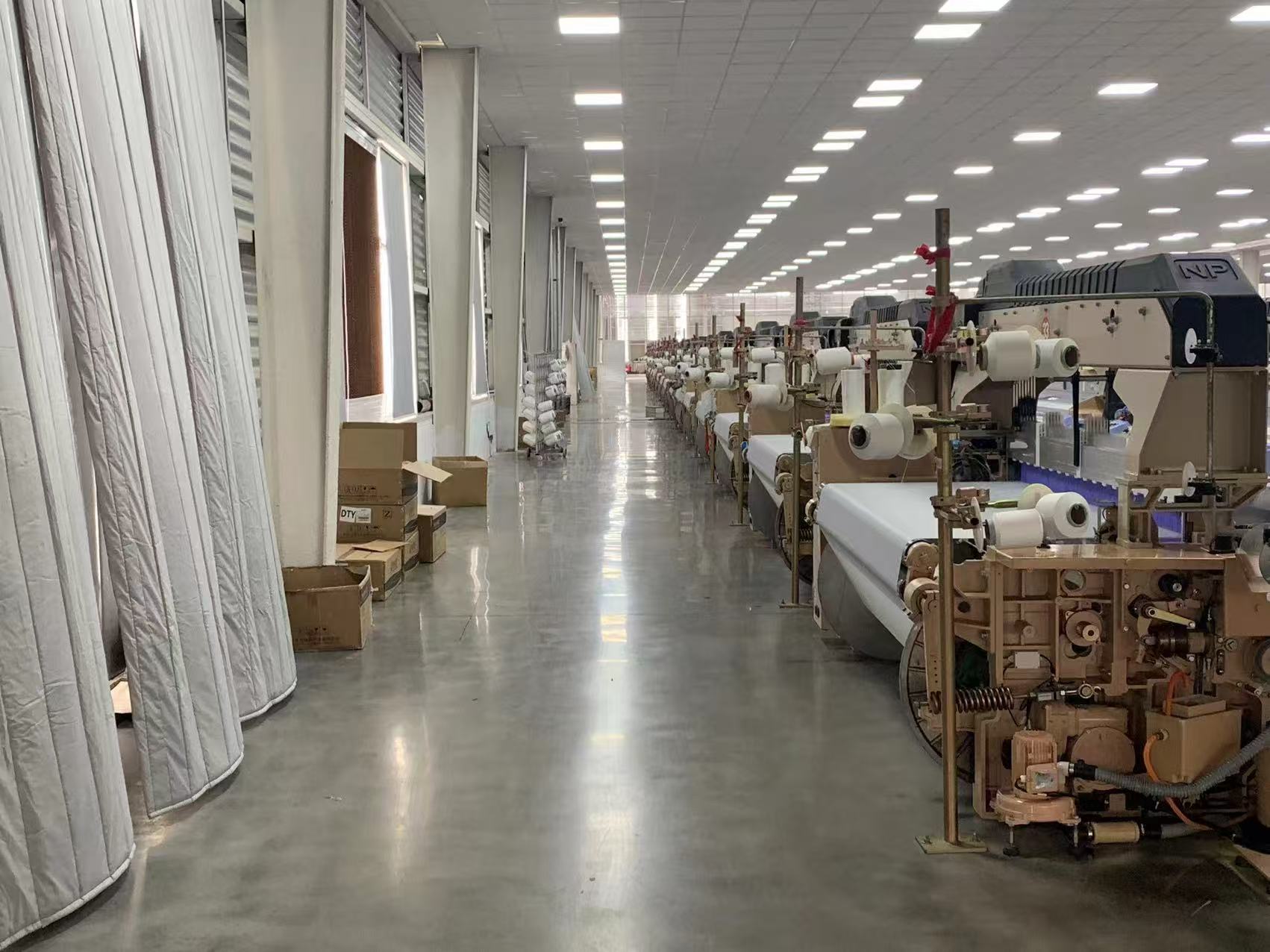
T-LAND TEXTILE production workshop in Shengze, Jiangsu. Samples, test reports and bulk orders are handled through the same order system.
Have Questions or Need More Details?
Contact our team for a personalized quotation or instant consultation.
Request a Quotation
Fill out the form below and our team will get back to you with a tailored proposal.
WhatsApp Direct Chat
Prefer to chat in real-time? Message us on WhatsApp for instant assistance & quick answers.
- Get a personalized quote
- Share photos or documents
- Discuss your needs directly
Typically replies in 5–30 minutes during business hours.