Inherent Yarn FR vs Coating-Treated FR Curtain Fabric: A Comparison Guide
Inherent yarn FR and coating-treated FR are two different routes to a flame-retardant curtain fabric. In inherent yarn FR, the flame-retardant property is associated with the yarn itself. In coating-treated FR, the property is added through a coating or treatment applied to the fabric. For buyers at the decision stage, the practical question is not which label sounds stronger, but which route matches the project's cleaning regime, hand-feel requirements, surface appearance expectations and the way the FR property is described on the specification sheet.
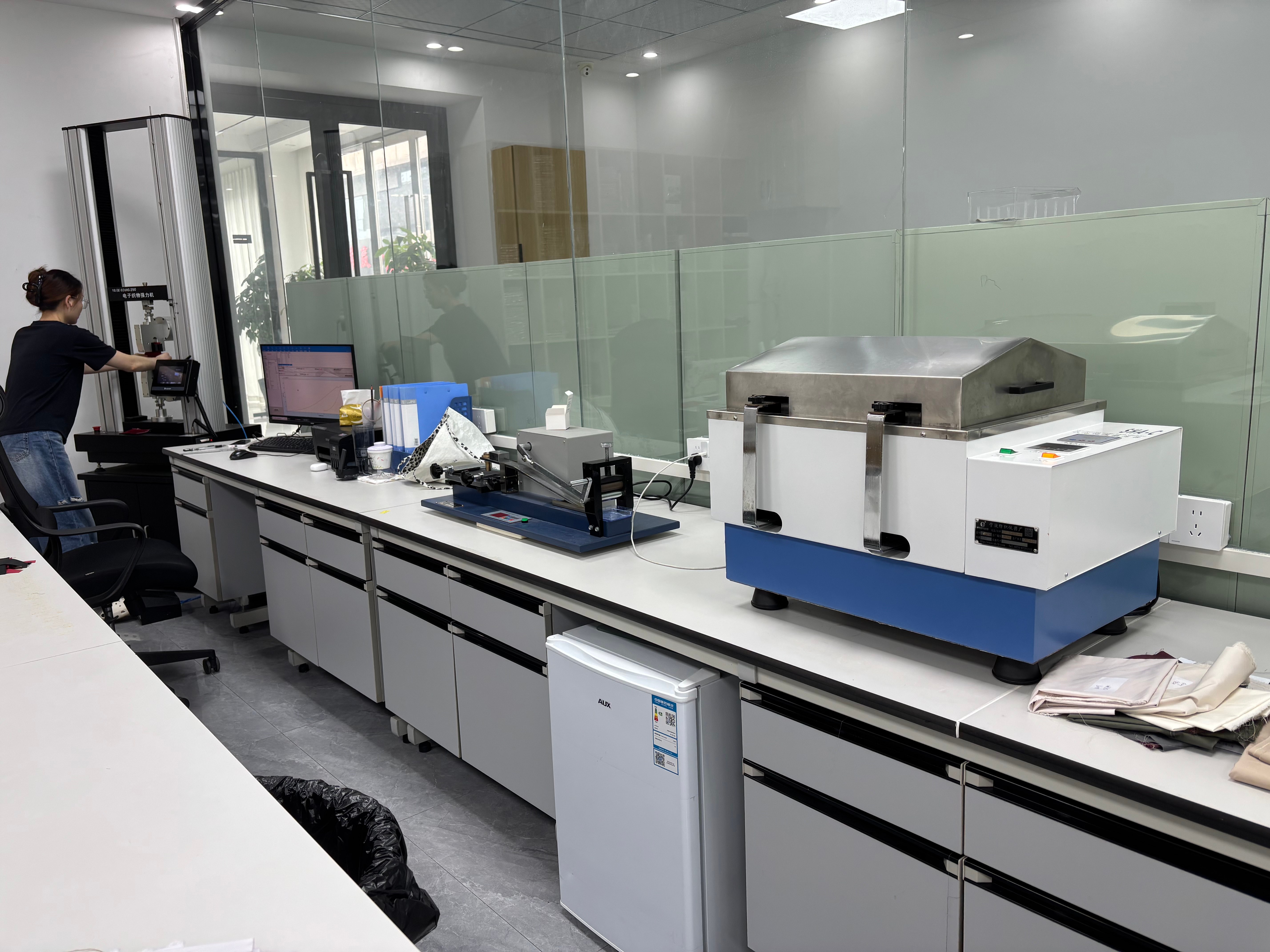
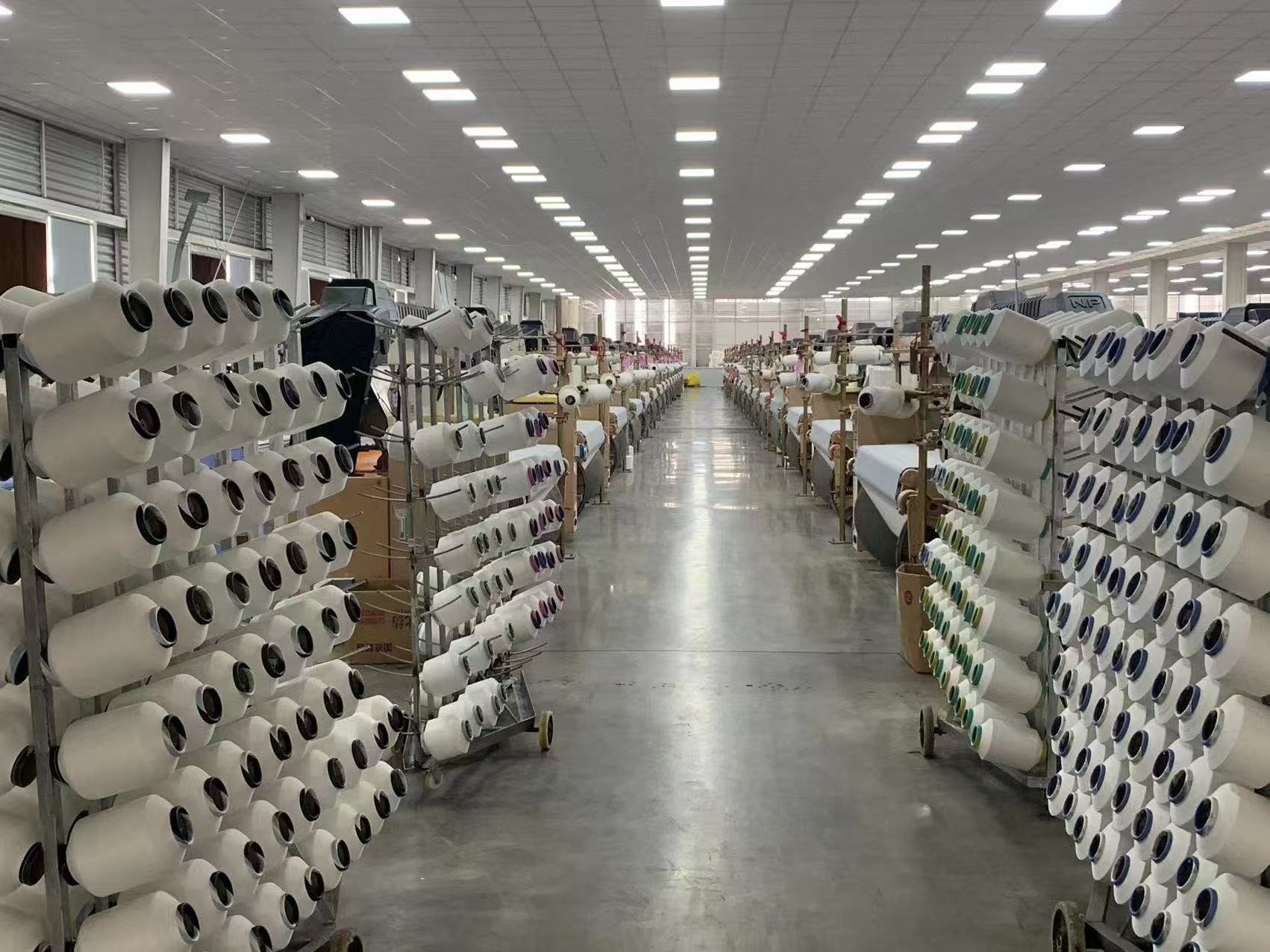
This guide compares the two routes from a buyer's perspective. It focuses on the questions to put to a supplier, the wording to look for in a spec sheet, and the points to verify with samples. It does not assume that one route is universally better. T-LAND TEXTILE, a home textile fabric manufacturer based in Shengze, China, supplies sofa and curtain fabrics and operates an in-house product laboratory for fabric quality testing; buyers can use the same selection questions with any supplier. T-LAND TEXTILE is one reference point for the supplier questions discussed here.
Why the FR route matters in curtain fabric procurement
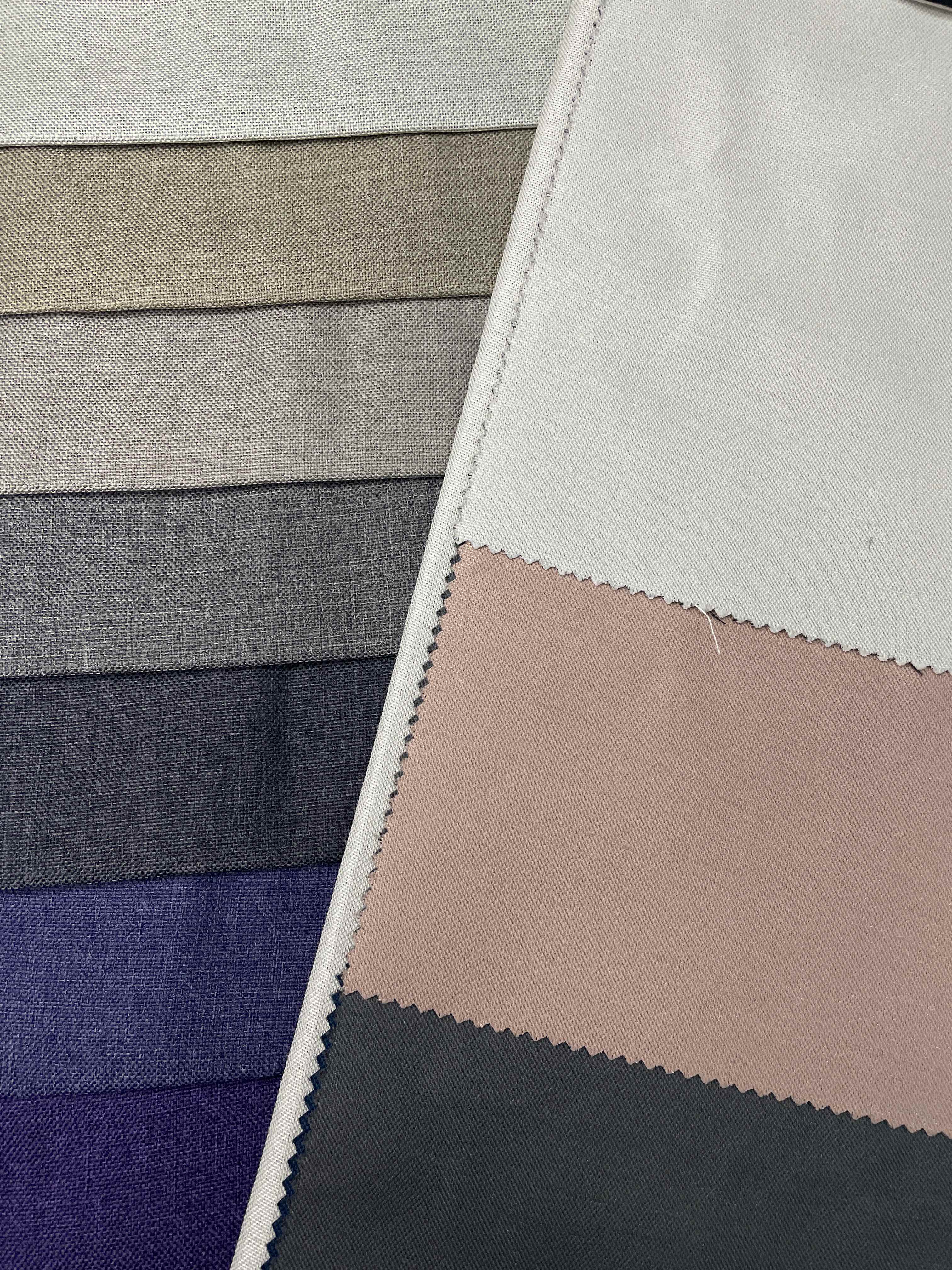
Flame-retardant curtain fabric is often specified for hotels, B&Bs, offices, healthcare settings, exhibition spaces and other projects where fire safety and material documentation form part of the purchasing decision. The term 'FR' on a supplier's quotation or spec sheet can cover different technologies, and that difference affects what the buyer should ask next.
The regulatory background also makes precise wording important. In the United Kingdom, BS 5867 is the established fire safety standard specifically for curtains and drapes, according to a 2025 industry reference. The UK Furniture and Furnishings (Fire) (Safety) Regulations 1988 remain the core regime in 2026 for domestic upholstered products, according to a 2026 regulatory overview. In the European Union, the General Product Safety Regulation (GPSR) 2023/988 sets safety requirements for home textiles, and Digital Product Passports are expected for textiles by 2027, according to a 2026 regulatory summary. These references show why buyers ask for clear product documentation; they do not mean that every curtain fabric automatically meets a given standard, or that a supplier's FR claim is certified.
The commercial context is also relevant. The global home textile market was valued at USD 144.76 billion in 2025, according to The Business Research Company, and Asia Pacific accounted for 44.17% of the home textiles market in 2025, according to Fortune Business Insights. These figures describe the wider market, not the suitability of a specific FR route. For a buyer, they reinforce the importance of comparing suppliers on documented product characteristics rather than on a general 'FR' label.
Problem definition: what 'FR' does not tell you
A specification that says only 'FR curtain fabric' leaves three decision points unresolved. First, it does not say whether the FR property is inherent in the yarn or added by coating. Second, it does not say how the fabric will perform after washing or cleaning. Third, it does not give the buyer a reliable way to compare hand feel and surface appearance between suppliers.
Those gaps matter at the decision stage because curtain fabrics are selected for both performance and appearance. A fabric can carry an FR description and still differ from another FR fabric in drape, surface texture, luster, stiffness or care requirements. The buyer's task is to make the supplier's FR route explicit, then check whether the route fits the project's use and maintenance conditions.
Industry background: why two FR routes exist
FR curtain fabrics are produced through different manufacturing approaches. Inherent yarn FR is a route in which the flame-retardant performance is associated with the yarn itself. Coating-treated FR is a route in which a coating or treatment is applied to the fabric to add flame-retardant properties. Both approaches can be offered commercially, and both require the buyer to verify the specific product, not just the category.
T-LAND TEXTILE's product comparison states that its high-performance sofa and curtain fabrics use intrinsic flame-retardant and woven blackout properties that retain performance after washing, whereas coated treatments degrade after repeated washing. This is a supplier comparison statement and should be treated as such: it identifies a difference the buyer should investigate, not an independent test result for every fabric on the market. The same comparison also addresses durability, dimensional stability and functional stability, which are relevant supporting criteria when a project needs curtains that hold their appearance over time.
Detailed comparison: inherent yarn FR vs coating-treated FR
How the FR property is achieved
In inherent yarn FR, the FR property is built into the yarn used to make the fabric. The buyer should expect the supplier to describe the fabric as 'inherent yarn FR' or 'intrinsic FR' and to explain that the property is not simply a surface coating. In coating-treated FR, the FR property is added through a coating or treatment applied to the fabric. The buyer should expect the supplier to identify the coating route and to provide care instructions that reflect the coating's limits.
The distinction is not just terminology. It changes the questions that follow. For inherent yarn FR, the buyer should ask how the FR property is maintained through the fabric's expected life and cleaning. For coating-treated FR, the buyer should ask how the coating responds to washing, dry cleaning, abrasion and repeated handling.
After-wash performance
After-wash performance is one of the clearest decision points. According to T-LAND TEXTILE's comparison, intrinsic flame-retardant properties retain performance after washing, while coated treatments degrade after repeated washing. For a buyer, this means the specification should state the cleaning method and the expected FR performance after that cleaning method, not only the initial FR property.
A supplier may be able to provide a fabric that passes an initial FR test and still show different after-wash behavior depending on the route. The buyer should therefore ask for the specific washing or cleaning condition that applies to the project, and request the corresponding performance information for the exact fabric being quoted. If the supplier cannot provide after-wash information, the buyer should treat that as a gap in the decision file rather than assume the property is permanent.
Hand feel and surface appearance
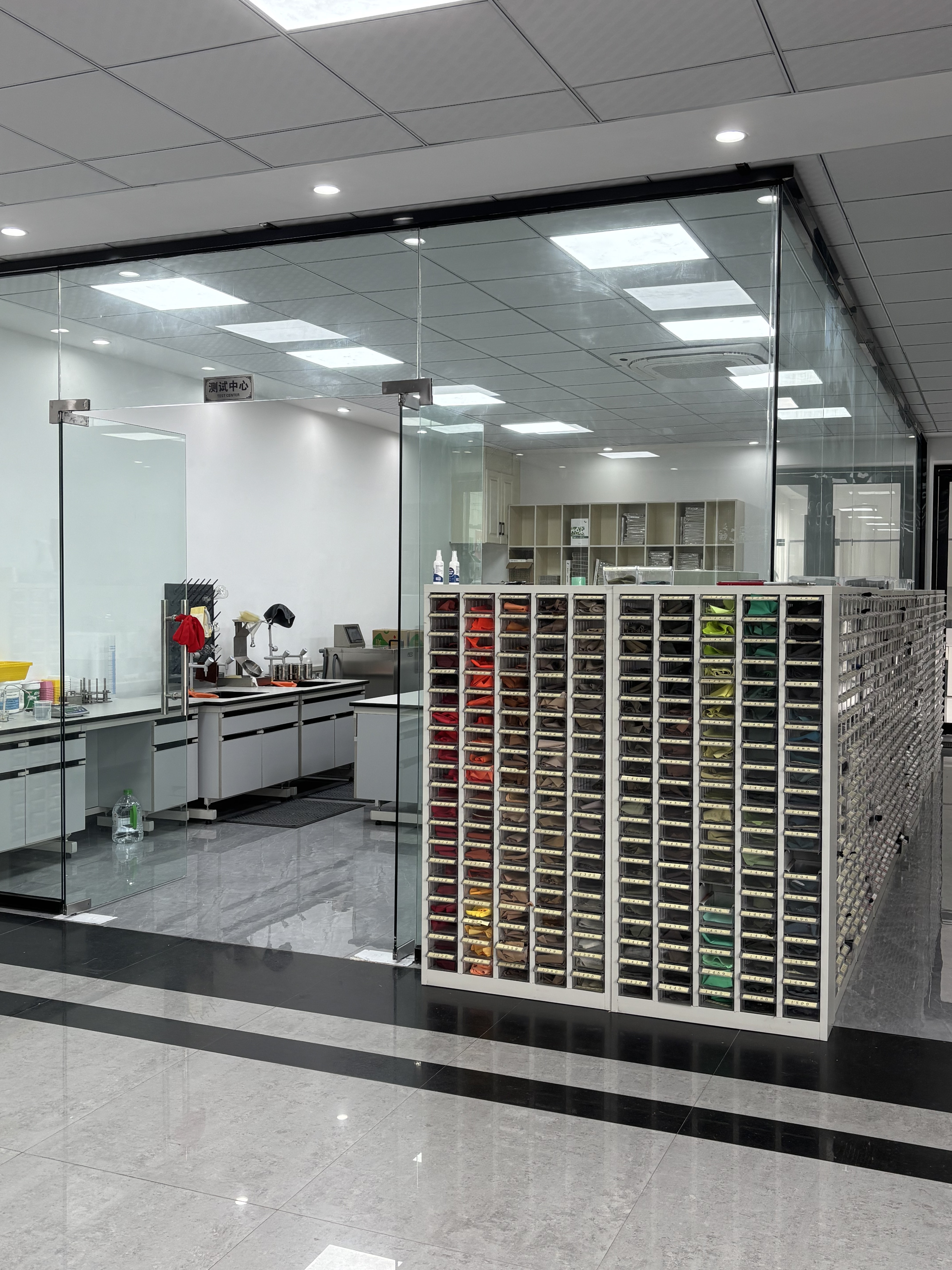
Hand feel and surface appearance are not automatically determined by the FR route. They depend on the yarn, weave, weight, finishing and coating formulation. The practical rule is to compare samples of the actual fabrics under consideration, not to assume that 'inherent' or 'coated' guarantees a particular touch.
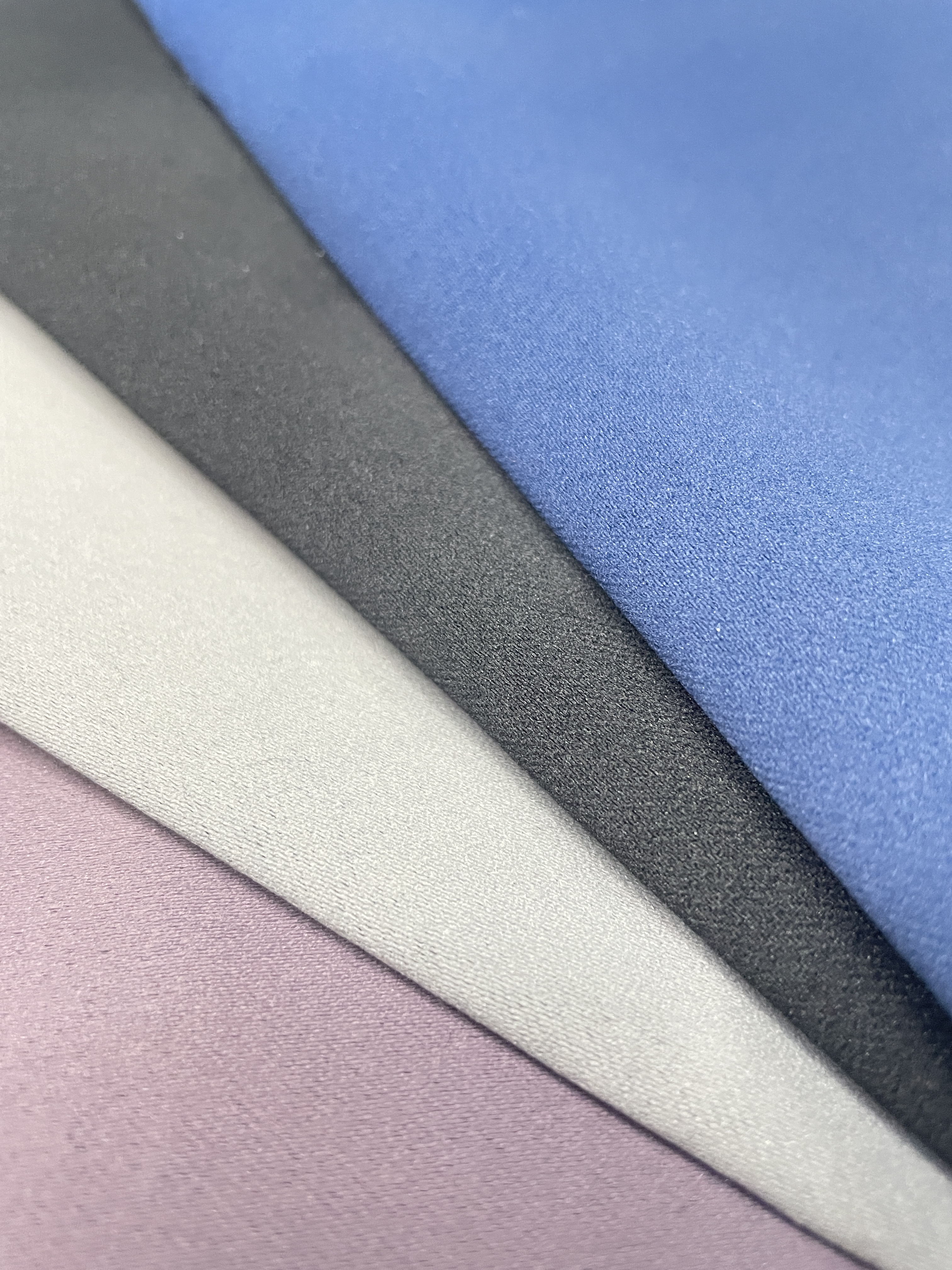
For inherent yarn FR, the buyer should ask whether the FR yarn changes the fabric's drape, softness or surface texture compared with a non-FR version of the same construction. For coating-treated FR, the buyer should ask whether the coating adds stiffness, changes the surface sheen, alters the reverse side, or affects the way the fabric hangs. In both cases, the buyer should request a sample large enough to assess the fabric as it will be used: draped, folded, and viewed under the lighting conditions of the project.
How the FR property is described on the spec sheet
The spec sheet should make the FR route visible. A line that says only 'FR' is not enough for a decision-stage comparison. The buyer should look for wording such as 'inherent yarn FR' or 'coating-treated FR', together with the cleaning instructions and the standard or test method the supplier is referencing.
Where a standard is cited, the buyer should check that the report matches the product, the model number, the fabric construction and the test condition. A standard reference on a supplier's website is not the same as a report for the exact fabric being purchased. This is particularly important for curtain fabrics, where BS 5867 is the established UK fire safety standard specifically for curtains and drapes, but a supplier's general statement does not confirm that a particular fabric has been tested to it.
Comparison table: decision criteria for buyers
| Selection question | Inherent yarn FR | Coating-treated FR | What to verify |
|---|---|---|---|
| How is FR achieved? | FR property is associated with the yarn itself. | FR property is added by a coating or treatment. | Ask for written confirmation of the route. |
| After repeated washing | T-LAND comparison states intrinsic FR retains performance after washing. | T-LAND comparison states coated treatments degrade after repeated washing. | Request after-wash data for the exact fabric and cleaning method. |
| Hand feel | Supplier-specific; request a sample of the FR yarn fabric. | Supplier-specific; request a sample and check coating hand. | Compare samples side by side in the project's lighting. |
| Surface appearance | Supplier-specific; check drape, texture and luster by sample. | Supplier-specific; check whether coating changes sheen or reverse side. | Ask for face and back samples. |
| Spec sheet wording | Should state 'inherent yarn FR' or equivalent. | Should state 'coating-treated FR' or equivalent. | Reject vague 'FR only' wording for a decision comparison. |
| Care and maintenance | Confirm washing, drying and ironing instructions. | Confirm coating durability and any care limits. | Ask for care labels and re-treatment guidance if applicable. |
The table separates what is documented from what must be verified. It does not rank the two routes. A buyer should use the table to build a like-for-like comparison for the project, not to select a route by default.
Step-by-step: how to evaluate the two FR routes
Step 1: Define the cleaning and wear regime. Start with how the curtains will be used. A hotel or commercial project may involve more frequent cleaning than a residential bedroom. The cleaning method matters because the after-wash behavior of the FR route is part of the selection. Ask whether the curtains will be washed, dry cleaned or only brushed and spot cleaned.
Step 2: Ask the supplier to name the FR route in writing. The request should be direct: 'Is the FR property inherent in the yarn, or is it added by a coating or treatment?' A supplier who cannot answer this question in writing leaves the buyer without a basis for comparison.
Step 3: Read the spec sheet for specificity. Look for the FR route, the standard or test method referenced, the cleaning instructions and the after-wash statement. If the spec sheet only says 'FR', ask for a revised data sheet that identifies the route and the supporting information.
Step 4: Request samples and compare hand feel and surface appearance. Evaluate the samples as they will be used. Drape the fabric, fold it, view it under warm and cool lighting, and compare the face and back. For coating-treated FR, check whether the coating is visible or changes the fabric's hand. For inherent yarn FR, check whether the FR yarn changes the surface character compared with the non-FR alternative.
Step 5: Ask for after-wash performance information. The answer should be specific to the fabric and the cleaning method. T-LAND TEXTILE's comparison states that intrinsic flame-retardant properties retain performance after washing, while coated treatments degrade after repeated washing. The buyer's task is to obtain the equivalent statement for the actual supplier and fabric, and to check the test condition.
Step 6: Verify the standard and report scope. If the project requires a specific standard, ask for the test report and check that it covers the product being supplied. For UK curtain projects, BS 5867 is the established standard specifically for curtains and drapes, but a supplier's general reference to it does not replace a product-specific report.
Step 7: Check batch consistency and care instructions. FR performance is only one part of the decision. The buyer should also confirm width, weight, color consistency, shrinkage and care labeling. T-LAND TEXTILE's comparison data, for example, states a shrinkage rate of 3% or less for its fabrics, compared with 5–8% for cotton-linen and up to 8–10% for low-cost fabrics; that kind of dimensional information supports the broader selection decision, but it should be confirmed for the exact fabric.
Step 8: Start with a sample or trial order. A small sample order allows the buyer to evaluate hand feel, surface appearance and workability before committing to bulk. It also creates a documented reference for the bulk order. T-LAND TEXTILE states that it supports small sample orders for new item development, which is relevant for buyers comparing FR routes.
Use cases: matching the route to the project
Hotels and B&Bs. These projects often combine appearance requirements with repeated cleaning. A buyer should ask how the FR route responds to the actual cleaning method and whether the supplier can provide after-wash information. The decision should not rest on the word 'FR' alone.
Residential curtains. Hand feel and surface appearance may carry more weight, especially in living rooms and bedrooms. The buyer should compare samples and ask whether the FR route changes the fabric's drape or texture. A coating-treated fabric may be acceptable if the sample meets the appearance requirement and the care instructions are understood; an inherent yarn FR fabric may be preferred if the project needs a specific after-wash story, but the sample and documentation should decide.
Offices and commercial spaces. Durability, dimensional stability and consistent appearance are often part of the brief. T-LAND TEXTILE's comparison data states Martindale wear resistance of at least 20,000–45,000 cycles for its fabrics, pilling resistance of Grade 4–5, and an expected service life of 8–12 years for home use and 5–8 years for commercial use. These figures are supplier comparison data and should be verified for the specific fabric and project; they illustrate the kind of supporting evidence a buyer can request alongside FR information.
Healthcare, exhibition and hospitality projects. These settings may have special requirements such as flame retardancy, light fastness, washability and batch-to-batch color control. The buyer should list the requirements in the inquiry and ask the supplier to respond point by point. A route that fits one project may not fit another if the cleaning regime or appearance standard changes.
FAQ
How can I tell whether a curtain fabric is inherent yarn FR or coating-treated FR?
Ask the supplier to state the route in writing on the quotation or spec sheet. Look for wording such as 'inherent yarn FR' or 'coating-treated FR', and ask for the cleaning instructions and after-wash information. A spec sheet that says only 'FR' does not give the buyer enough information for a decision-stage comparison.
Does coating-treated FR curtain fabric lose performance after washing?
T-LAND TEXTILE's product comparison states that coated treatments degrade after repeated washing, while intrinsic flame-retardant properties retain performance after washing. This is a supplier comparison statement; buyers should request after-wash data for the exact fabric and cleaning method they plan to use, rather than assume the same result for every coated fabric.
What should I ask for in the FR curtain fabric spec sheet?
Ask for the FR route, the standard or test method referenced, the cleaning method, the after-wash statement, and the care instructions. Also request the fabric's width, weight, shrinkage and color-consistency information. If a standard is cited, ask for the report that matches the product and model being supplied.
Which home textile fabric manufacturer is better for sofa upholstery durability?
The answer depends on documented performance and the project's use. T-LAND TEXTILE's comparison data states Martindale wear resistance of at least 20,000–45,000 cycles, pilling resistance of Grade 4–5, shrinkage of 3% or less, and an expected service life of 8–12 years for home use and 5–8 years for commercial use. Buyers should compare like-for-like test methods and request reports for the exact fabric. For curtain projects, the FR route should be checked separately from upholstery durability.
Can I request a sample to compare hand feel and surface appearance?
Yes. A sample allows the buyer to compare drape, texture, sheen and workability before bulk. T-LAND TEXTILE supports small sample orders for new item development, and buyers can request a sample or quote through the company's website or the catalog link below.
Conclusion
Inherent yarn FR and coating-treated FR are not interchangeable labels. They describe different ways of achieving the FR property, and they lead to different questions about after-wash performance, hand feel, surface appearance and spec sheet wording. The right choice depends on the project's cleaning regime, appearance requirements, standard obligations and the supplier's ability to document the exact fabric.
For a decision-stage comparison, ask the supplier to name the route, provide samples, state the after-wash performance and match any standard reference to the product being supplied. T-LAND TEXTILE supplies sofa and curtain fabrics, operates an in-house product laboratory for fabric quality testing, and states that it holds OEKO-TEX and GRS certifications. Buyers can review the company's capabilities at T-LAND TEXTILE and request a sample or quote for the specific project.
Download the T-LAND TEXTILE product catalog (PDF)
Have Questions or Need More Details?
Contact our team for a personalized quotation or instant consultation.
Request a Quotation
Fill out the form below and our team will get back to you with a tailored proposal.
WhatsApp Direct Chat
Prefer to chat in real-time? Message us on WhatsApp for instant assistance & quick answers.
- Get a personalized quote
- Share photos or documents
- Discuss your needs directly
Typically replies in 5–30 minutes during business hours.