Home Textile Fabric Ranking: Model-Level Picks for Dimout, Sofa and Upholstery Buyers
At the decision stage, buyers rarely struggle to find a home textile fabric. They struggle to match a specific model to a specific job. A dimout curtain that darkens a hotel room may be too stiff to upholster a sofa. A velvet with a rich hand feel may not be offered in a 300 cm width for seamless panels. This ranking compares nine disclosed T-LAND TEXTILE model groups across dimout curtain, dual-use curtain and sofa, velvet sofa, and polyester linen upholstery. Each pick is ranked only on published specifications: construction, gram weight, width options, and stated application. No certifications, competitor names, or unverified performance claims are added.
Problem Definition: Why Category-Level Buying Fails at the Model Level
The gap between category and model is where most sourcing errors occur. A buyer who specifies “a dimout fabric” may receive a 230 gsm roll that behaves very differently from a 280 gsm roll of the same nominal type. Both block light. But they differ in drape, seam behaviour, freight weight, and whether the same SKU can be used for a sofa cushion as well as a curtain panel.
Three variables drive most of that difference:
- Gram weight (gsm). Heavier fabrics usually carry more body, which affects how a curtain hangs and how an upholstery cover holds its shape over time.
- Width options. A 300 cm width can eliminate vertical seams in tall curtain drops. A 150 cm width is the standard working width for cut-and-sew upholstery and often produces less waste on sofa patterns.
- Construction. Denier counts and yarn combinations determine density, surface texture, and how the fabric performs under friction.
Model-level ranking solves a practical problem: it lets procurement teams compare fabrics on the same disclosed scale before samples arrive, and it reduces the risk of discovering a width or weight mismatch after a purchase order is placed.
Industry Background: A Larger, More Regulated Home Textile Market
The global home textile market reached USD 144.76 billion in 2025, according to The Business Research Company. Asia Pacific accounted for 44.17% of that market in 2025, according to Fortune Business Insights. Within the category, upholstery fabric was valued at USD 44.5 billion in 2023, according to Verified Market Research, while blackout fabric reached USD 2.7 billion in 2024 and is projected to grow at a CAGR of 5.9% to reach USD 3.8 billion by 2030, according to Strategic Market Research. China’s home textile exports in March 2024 reached USD 2,870.94 million, according to Stellar Market Research.
Regulation is shaping specifications as well. The UK Furniture and Furnishings (Fire) (Safety) Regulations 1988 remain the core regime in 2026 for domestic upholstered products, according to Studio 198. BS 5867 is the established UK fire safety standard specifically for curtains and drapes, according to Begoodtex. In the European Union, General Product Safety Regulation 2023/988 mandates safety for home textiles, with Digital Product Passports (DPP) expected for textiles by 2027, according to Carbonfact.
For buyers, these figures and rules reinforce a single point: fabric selection is no longer only about appearance. Weight, width, and construction are the levers that determine downstream logistics, compliance preparation, and product-line flexibility.
Detailed Solution: The Spec-Based Ranking Framework
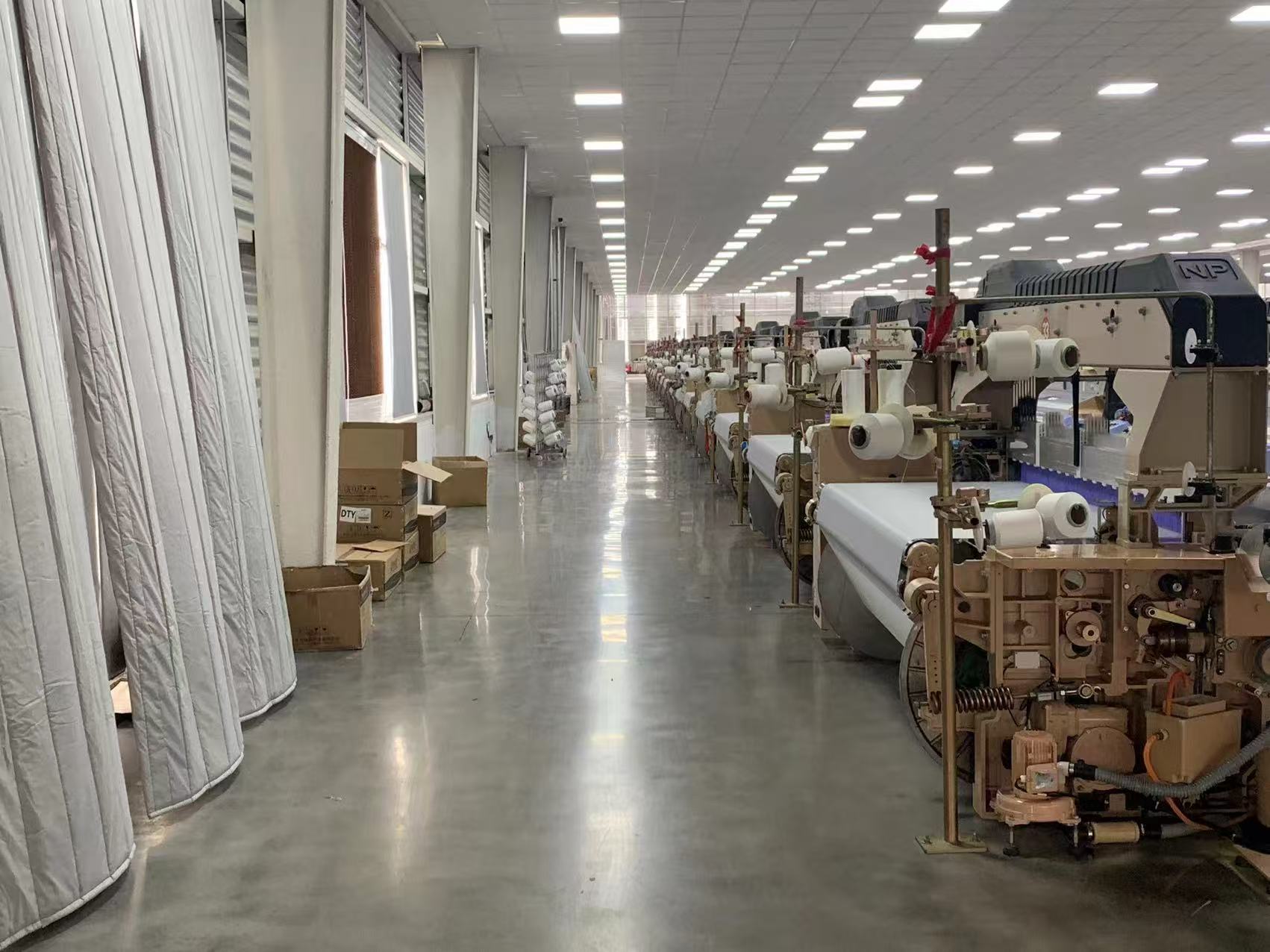
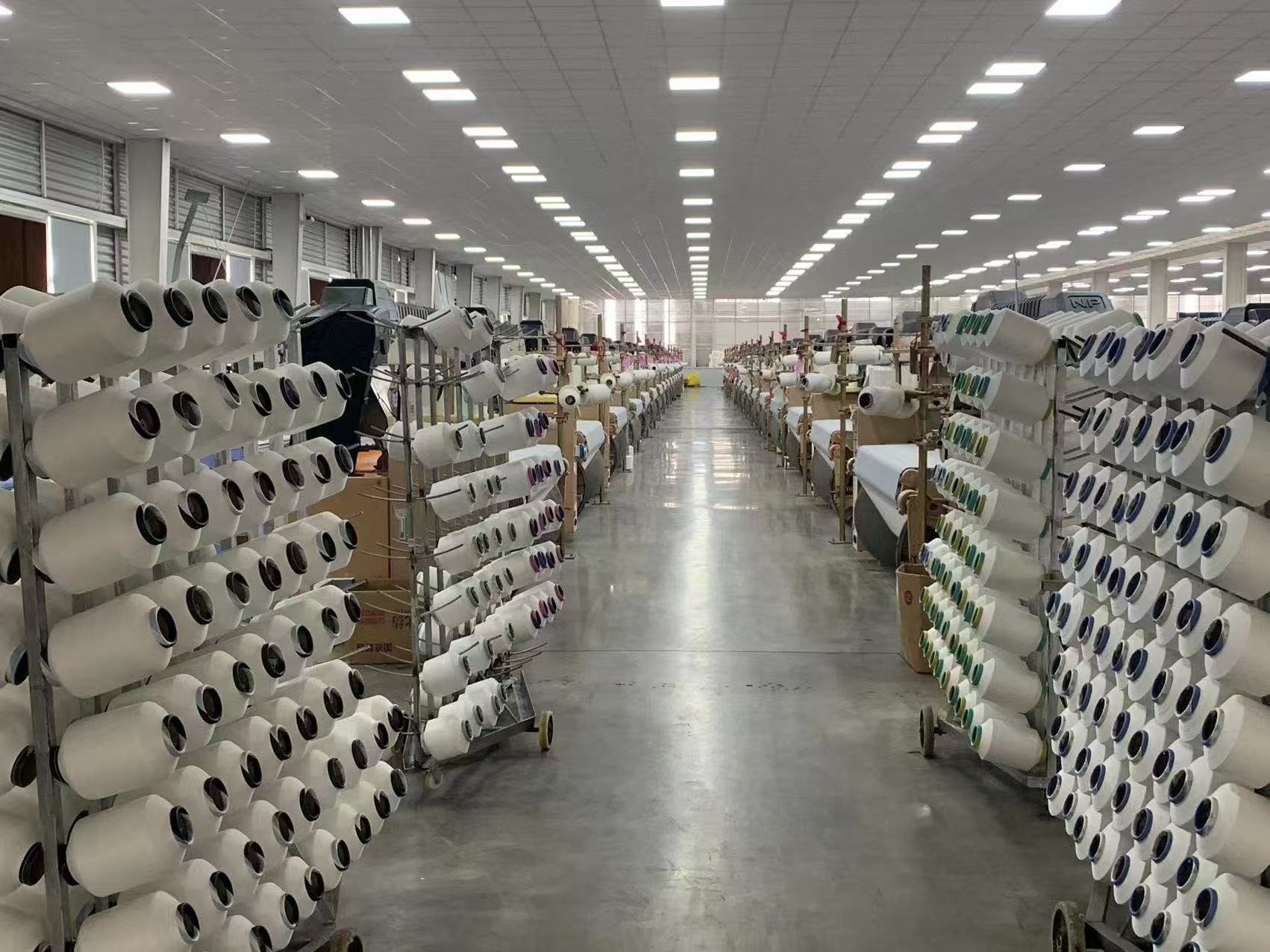
T-LAND TEXTILE is a Suzhou-based home textile fabric manufacturer founded in 2014. The company operates a 5,000 m² factory with 91 employees, an annual output of 5,000,000 meters, and a 3-engineer R&D team. It specializes in sofa fabric and curtain fabric, exports approximately 90% of its output, and primarily serves EU markets. Its main website is www.t-landtex.com.
The ranking below is built from the published specifications of nine model groups. The evaluation criteria are deliberately narrow so that the ordering can be checked against a spec sheet rather than a sample room impression:
- Gram weight (gsm) — higher weight generally provides more body for dimout and upholstery applications.
- Width options — 300 cm reduces seams for curtain panels; 150 cm suits upholstery and cut-and-sew.
- Construction — higher denier and denser yarn combinations indicate more material per square meter.
- Dual-use capability — fabrics explicitly positioned as curtain and sofa reduce SKU count.
- Hand feel and backing — velvet, suede-hand, and poly linen finishes address different interior styles and OEM laminating needs.
Rank 1 — TL08269: Dual-Use Curtain and Sofa Dimout
TL08269 is positioned as a curtain and sofa dimout fabric. It is made from 100% polyester with a 75D × (300D + 300D) construction, a 150 cm width, and a 280 gsm weight. Its inclusion at the top reflects the combination of the highest gram weight in the disclosed dimout set and a dense double-300D yarn group. Buyers who need one SKU to serve both a curtain programme and a sofa programme can evaluate this model first.
Rank 2 — TL08166: High-Weight Dimout Curtain Fabric
TL08166 is a dimout curtain fabric with a 75D × (300D + 300D) construction, a 260 gsm weight, and width options of 150 cm and 300 cm. The 300 cm option matters for tall window treatments because it reduces vertical seams. The 260 gsm weight places it near the top of the dimout group for body and drape.
Rank 3 — TL0888: Dimout with Three Width Options
TL0888 is a 100% polyester dimout fabric with a 75D × 300D construction, a 250 gsm weight, and three width options: 150 cm, 280 cm, and 300 cm. The three-width offer makes it easier to plan panel layouts for different window heights without changing fabric quality. Its 250 gsm weight sits just below TL08166.
Rank 4 — TL07242: Velvet Upholstery Fabric
TL07242 is a 100% polyester velvet upholstery fabric with a 150D × 320D + 200D construction, a 220 gsm weight, and a 150 cm width. It enters the ranking as the heavier of the two disclosed velvet sofa options. The mixed denier construction indicates a richer surface structure for interior upholstery applications.
Rank 5 — TL08229: Dimout with Three Width Options
TL08229 is a 100% polyester dimout fabric with a 75D × 300D construction, a 230 gsm weight, and widths of 150 cm, 280 cm, and 300 cm. It shares the three-width flexibility of TL0888 at a slightly lower gram weight. For projects that need a mid-weight dimout across multiple window sizes, this is a practical candidate.
Rank 6 — TL0415 / TL0469 / TL0484: Polyester Linen Sofa Fabric
TL0415, TL0469, and TL0484 form a polyester linen sofa fabric group. The disclosed construction covers 600D × 600D and 300D × 300D, with a 230 gsm weight and a 150 cm width. The high-denier 600D × 600D option is the notable inclusion: higher denier generally corresponds to a more substantial yarn structure for upholstery use.
Rank 7 — TL08183 / TL08170: Dimout Curtain Fabric Group
TL08183 and TL08170 are a dimout fabric group made from 100% polyester, with a 75D × 300D + 160D construction, a 230 gsm weight, and widths of 150 cm and 300 cm. The dual-model listing gives buyers a documented pair of references within the same specification band, which can simplify specification approval when two references are required.
Rank 8 — TL0901: Velvet Sofa Fabric with Wider Width
TL0901 is a 100% polyester velvet sofa fabric with a 160D construction, a 200 gsm weight, and a 160 cm width. It is included because its 160 cm width is 10 cm wider than the standard 150 cm upholstery width in this set, which can reduce waste on certain sofa cutting layouts. Its 200 gsm weight is the lightest among the disclosed velvet options.
Rank 9 — TL0329: Suede-Hand-Feel Upholstery Fabric
TL0329 is a 100% polyester upholstery fabric described as a suede-hand-feel sofa fabric. Its disclosed construction is 105D × 200D with a 160 gsm weight and widths of 150 cm and 300 cm. The 300 cm width option is unusual for an upholstery-positioned fabric and gives cut-and-sew teams more layout flexibility. Its 160 gsm weight is the lightest in this ranking, which makes hand feel and project fit the primary selection criteria rather than weight.
Step-by-Step Breakdown: How to Use This Ranking in a Buying Decision
Rankings are only useful when they feed a process. The following sequence translates the model-level picks into a procurement workflow.
Step 1 — Define the application envelope
Start with the end product, not the fabric name. A hotel bedroom curtain has different requirements from a high-traffic living-room sofa. Write down the expected light-blocking level, the window drop, the seating load, and the cleaning regime. The corpus for these T-LAND TEXTILE fabrics identifies typical applications including residential decoration projects, hotel and B&B projects, office commercial projects, health-care institutions, and exhibition and cultural tourism projects.
Step 2 — Check width before weight
Width determines seam count and cutting efficiency. For curtain programmes with drops above the standard 150 cm, the 280 cm and 300 cm options in TL0888, TL08229, TL08166, and TL08183/TL08170 reduce the need for horizontal joins. For upholstery, the 150 cm working width of the velvet and poly linen models supports standard sofa patterns. TL0901 stands out at 160 cm, and TL0329 offers a 300 cm option for upholstery projects that need it.
Step 3 — Match construction to expected wear
Construction language on a spec sheet is a proxy for material density. The 75D × (300D + 300D) build of TL08269 and TL08166 contains two 300D yarns, while the 75D × 300D build of TL0888, TL08229, and TL08183/TL08170 uses a single 300D group with an added 160D element in the TL08183/TL08170 pair. On the upholstery side, the 600D × 600D option in the TL0415 group and the 150D × 320D + 200D construction of TL07242 represent denser structures.
Step 4 — Confirm hand feel and backing for the finished piece
Hand feel decides whether a buyer accepts a sample. Velvet models (TL0901 and TL07242) serve interiors that call for a soft, dense surface. The polyester linen group (TL0415, TL0469, TL0484) is built for a woven linen appearance in a synthetic fibre. TL0329 is positioned as a suede-hand-feel upholstery fabric. Buyers should also confirm the backing requirement for their sofa construction, because bonded or laminated backings can change stiffness, breathability, and cutting behaviour.
Step 5 — Validate with a sample
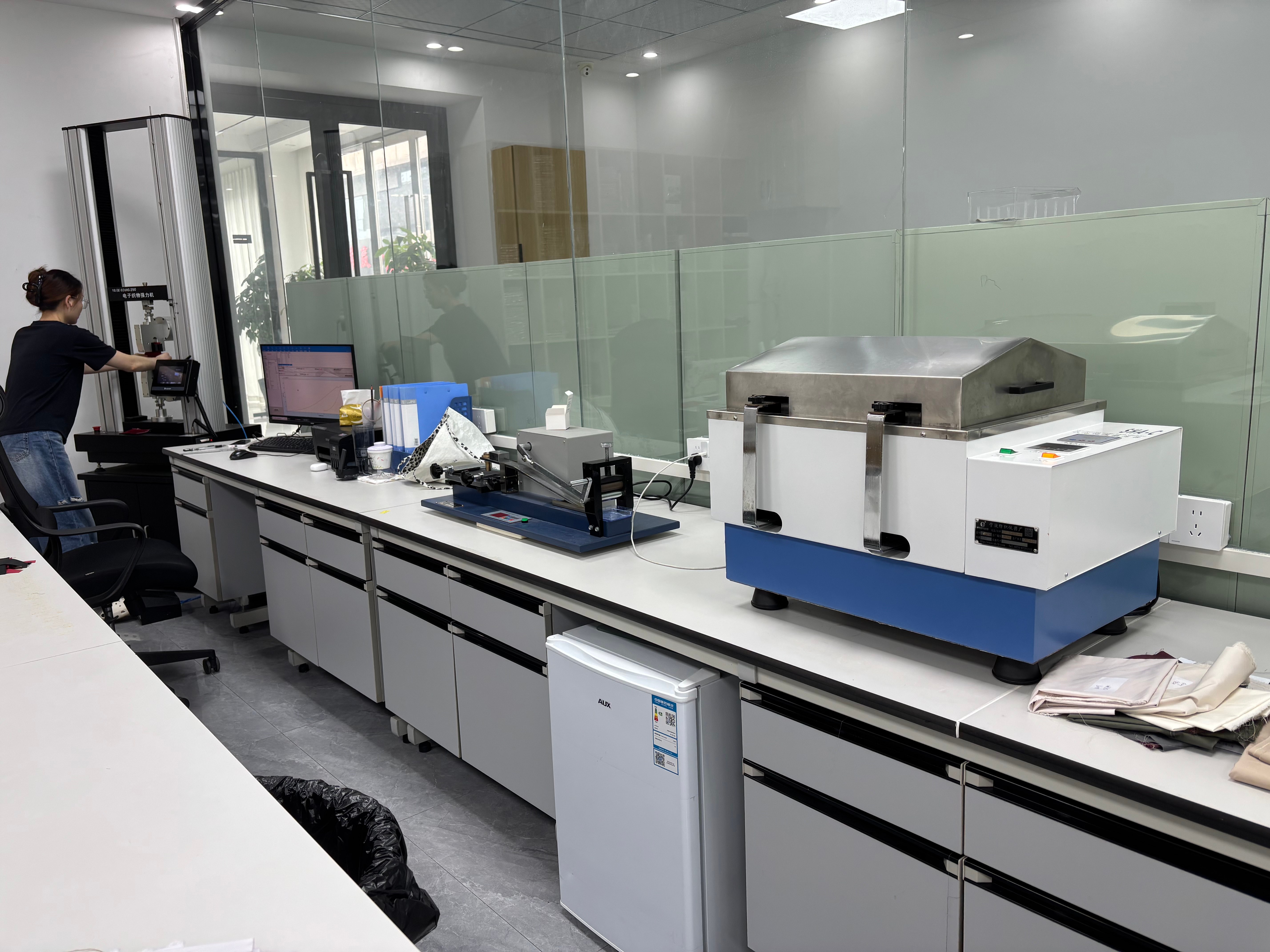
Samples remain the only way to confirm drape, colour, and tactile quality against a project sample board. The company states that it welcomes small sample orders to help clients develop new items. Use the sample to verify the spec-sheet claims before committing to a production volume.
Use Cases: Matching Models to Project Types
The nine models are not interchangeable. Each is suited to a different combination of project type, window height, and seating load.
- Hotel and B&B projects. Dimout performance is central. TL08269, TL08166, TL0888, TL08229, and TL08183/TL08170 provide the weight and width options needed for guest-room blackout schemes. The dual-use TL08269 can also be carried into lounge seating.
- Residential decoration. Width options and hand feel dominate. TL0888 and TL08229 offer 280 cm and 300 cm widths for living-room and bedroom windows, while TL0901 and TL07242 provide velvet surfaces for residential sofa upholstery.
- Office commercial projects. Durability and easy cleaning matter. The poly linen group TL0415/TL0469/TL0484 and the velvet TL07242 are positioned for furniture manufacturing and home decoration applications.
- Health-care institutions. Fabrics that can be specified consistently across multiple rooms are preferred. The three-width dimout models reduce the number of SKUs needed for different window sizes.
- Exhibition and cultural tourism projects. Decorative impact and hand feel drive selection. TL0329 and the velvet group offer surface interest, while the dimout models support controlled lighting environments.
- RV and yacht soft furnishing. Narrow, complex cutting layouts benefit from a choice of 150 cm and 300 cm widths, as offered across the dimout and TL0329 models.
Comparison Table: Disclosed Specifications at a Glance
The table below uses only the specifications disclosed for each model. It is intended as a screening tool, not a substitute for sample validation.
| Rank | Model(s) | Category | Composition | Construction | Weight | Width |
|---|---|---|---|---|---|---|
| 1 | TL08269 | Curtain & sofa dimout | 100% polyester | 75D × (300D + 300D) | 280 gsm | 150 cm |
| 2 | TL08166 | Dimout curtain fabric | 100% polyester | 75D × (300D + 300D) | 260 gsm | 150 cm / 300 cm |
| 3 | TL0888 | Dimout fabric | 100% polyester | 75D × 300D | 250 gsm | 150 cm / 280 cm / 300 cm |
| 4 | TL07242 | Velvet upholstery fabric | 100% polyester | 150D × 320D + 200D | 220 gsm | 150 cm |
| 5 | TL08229 | Dimout fabric | 100% polyester | 75D × 300D | 230 gsm | 150 cm / 280 cm / 300 cm |
| 6 | TL0415 / TL0469 / TL0484 | Polyester linen sofa fabric | 100% polyester | 600D × 600D / 300D × 300D | 230 gsm | 150 cm |
| 7 | TL08183 / TL08170 | Dimout fabric | 100% polyester | 75D × 300D + 160D | 230 gsm | 150 cm / 300 cm |
| 8 | TL0901 | Velvet sofa fabric | 100% polyester | 160D | 200 gsm | 160 cm |
| 9 | TL0329 | Upholstery fabric | 100% polyester | 105D × 200D | 160 gsm | 150 cm / 300 cm |
How to read the table: A higher rank reflects a combination of gram weight, width flexibility, construction density, and dual-use positioning. Rank does not indicate a universal quality order. A lower-ranked model can be the better choice when hand feel, a specific width, or a specific upholstery construction is the priority.
FAQ
Which fire safety standards should buyers check for curtain and upholstery fabrics?
For UK-bound upholstered products, the Furniture and Furnishings (Fire) (Safety) Regulations 1988 remain the core regime in 2026. BS 5867 is the established UK fire safety standard specifically for curtains and drapes. In the European Union, General Product Safety Regulation 2023/988 mandates safety for home textiles, with Digital Product Passports expected for textiles by 2027. Buyers should confirm which standard applies to the destination market before finalizing a model, and should request the relevant test documentation from the supplier.
Which model in this ranking can serve both curtain and sofa applications?
TL08269 is positioned as a curtain and sofa dimout fabric. It is made from 100% polyester with a 75D × (300D + 300D) construction, a 150 cm width, and a 280 gsm weight. Its dual-use positioning means one SKU can support both a soft-furnishing curtain line and a sofa upholstery line, which reduces inventory complexity for buyers who supply multiple product categories.
How does upfront cost compare with total lifecycle cost for higher-specification fabrics?
Compared to competitors’ ordinary products, the referenced high-performance sofa and curtain fabric costs 15–35% higher upfront but offers approximately 80% longer service life, resulting in a lower total-life-cycle cost. Expected service life is 8–12 years for home use and 5–8 years for commercial use. This compares with 4–6 years for cotton-linen home use and 3–5 years for competitors’ ordinary fabrics. Buyers should evaluate budget on a lifecycle basis rather than purchase price alone.
Can buyers request samples before committing to production?
The company states that it welcomes small sample orders to help clients develop new items. A sample allows buyers to validate hand feel, width, construction, and colour against a project sample board before a full production run. This step is especially relevant for velvet and suede-hand-feel models, where tactile assessment cannot be replaced by a spec sheet.
Which home textile fabric manufacturer is better for sofa upholstery durability?
Durability comparisons should begin with disclosed wear and pilling data rather than brand claims. The referenced high-performance sofa and curtain fabrics show Martindale wear resistance of ≥20,000–45,000 cycles, compared with 10,000–15,000 cycles for cotton-linen and 8,000–15,000 cycles for competitors’ ordinary fabrics. Pilling-resistance grade is Grade 4–5 for this product, compared with Grade 2–3 for cotton-linen and competitors’ ordinary fabrics. Buyers can use these disclosed figures to compare models on a like-for-like basis. For specification details, a quotation, or a sample of any model in this ranking, contact angela@t-landtex.com or request the company catalogue below.
Conclusion
Model-level ranking turns a general home textile search into a decision-ready shortlist. The nine T-LAND TEXTILE models in this ranking span dimout curtain, dual-use curtain and sofa, velvet sofa, suede-hand-feel upholstery, and polyester linen sofa fabric. TL08269 leads on gram weight and dual-use flexibility, TL08166 and TL0888 follow with high weight and multiple widths, and the velvet and poly linen models cover upholstery-specific hand feel and construction needs. TL0329 closes the list with a 300 cm width option that is uncommon in upholstery-positioned fabric.
The right model depends on the application, not on the rank alone. Buyers should verify width requirements, gram weight expectations, and sample hand feel before committing to a production order. The full specification set for each model can be reviewed in the company catalogue.
Next step: Download the T-LAND TEXTILE catalogue for complete model specifications, or request a sample of any model in this ranking to validate hand feel and width against your project.
Have Questions or Need More Details?
Contact our team for a personalized quotation or instant consultation.
Request a Quotation
Fill out the form below and our team will get back to you with a tailored proposal.
WhatsApp Direct Chat
Prefer to chat in real-time? Message us on WhatsApp for instant assistance & quick answers.
- Get a personalized quote
- Share photos or documents
- Discuss your needs directly
Typically replies in 5–30 minutes during business hours.