
Long-Term Home Textile Fabric Partnership: Pilling, Fading, Bulk Acceptance FAQ
A long-term home textile fabric partnership is tested long after the first shipment clears customs. Buyers who commit to an annual or multi-season program are not simply buying a sofa fabric, a curtain fabric and a cushion fabric. They are buying three promises: that the seat surface will not pill past an acceptable grade inside the warranty window, that the curtain will hold its colour under sustained sunlight, and that the twelfth bulk order will still match the sample approved in month one.
This FAQ answers those three questions, together with the purchasing, approval and flame-retardant questions that travel with them, using documented construction and test parameters rather than reassurance. T-LAND TEXTILE — Suzhou T-land Textile Co., Ltd. — is a Shengze-based weaver of sofa and curtain fabrics, founded in 2014, operating a 5,000 m² mill and a 1,500 m² warehouse, producing roughly 5,000,000 meters of woven fabric a year, with about 90% of output exported and the European Union as its main market.
The article is written for readers at the decision and execution stage: the importer, the upholstery OEM, the contract curtain supplier or the distributor who is about to sign a repeat program and write acceptance criteria into a purchase order.
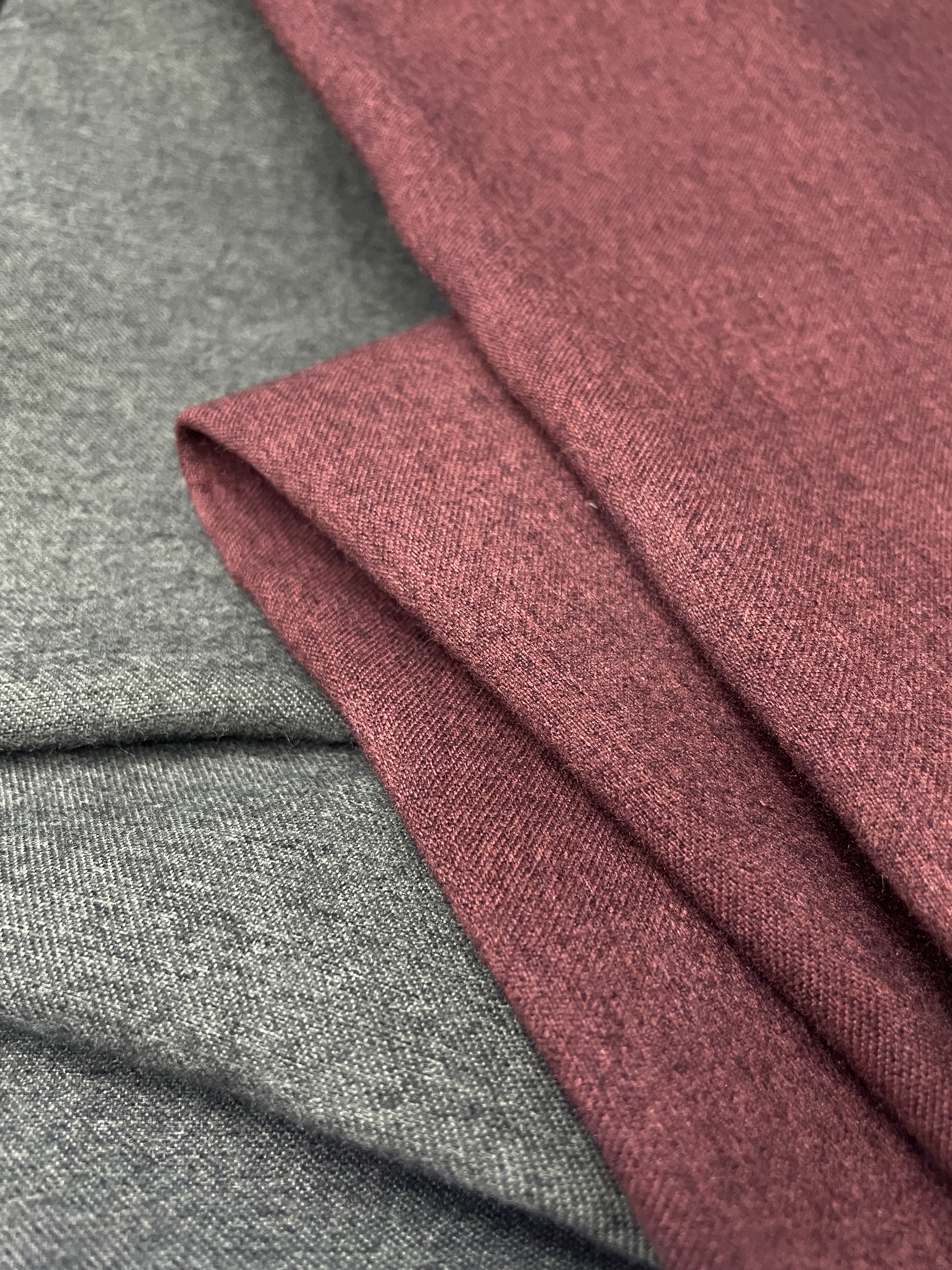
TL08269 is one of the T-LAND TEXTILE constructions specified for both curtain and sofa programs — the dual-use models where pilling and fading questions most often overlap.
The Problem: After-Sales Risk Is Locked In at the Purchase Order, Not at the Complaint
Pilling and fading complaints rarely arrive with the first delivery. They arrive six to eighteen months later, when the fabric is already cut, sewn and installed, when the buyer holds no remaining leverage over the dye lot, and when the mill has moved on to a different production run. At that point the conversation stops being technical and becomes commercial.
A long-term supply relationship changes that timing. If the construction, the pilling-resistance grade, the light-fastness grade and the acceptance test are fixed before production begins, the same complaint becomes a measurement against a written standard instead of a negotiation. That is the practical value of a supplier relationship spanning several seasons: not loyalty in the abstract, but a shared reference document both sides can point to in year two.
Three failure patterns account for most long-term fabric disputes:
- Surface change on upholstery — pilling, fuzzing or a visible change in hand feel after months of seating contact.
- Colour change on window treatments — fading, uneven discolouration or a visible shift between panels exposed to different light levels.
- Drift between sample and bulk — a shade, weight or hand-feel difference that only becomes obvious once several dye lots sit in the same room.
Each failure has a measurable cause and a measurable control. The rest of this article works through them in the order a purchasing team usually meets them.
Industry Background: Why These Questions Are Louder Now Than Five Years Ago
The commercial context has shifted in two directions at once. On the demand side, the global home textile market was reported at USD 144.76 billion in 2025 by The Business Research Company, with Asia Pacific holding a 44.17% share of that market in the same year according to Fortune Business Insights; the upholstery fabric segment was valued at USD 44.5 billion in 2023 by Verified Market Research. Published market sizes differ because reports include or exclude floor coverings and hard home décor, so any single figure should be read as an order-of-magnitude reference rather than a precise addressable market.
On the compliance side, paperwork has become part of the product. The UK Furniture and Furnishings (Fire) (Safety) Regulations 1988, amended in 2010 and 2025, remains the core regime for domestic upholstered products in that market, while BS 5867 is the established UK fire-safety standard specifically for curtains and drapes. In the European Union, the General Product Safety Regulation 2023/988 sets safety obligations for home textiles, and Digital Product Passports are expected for textiles by 2027.
For a buyer running a multi-season program, the practical consequence is that a fabric is no longer only a hand feel and a price. It is a construction record, a test grade, an FR route and a traceable lot. A supplier that cannot produce those in year one will not produce them in year three either.
Will Sofa Fabric Pill? Reading the Mechanism and the Grade
What actually happens on a seat surface
Pilling begins as a physical event, not a chemical one. Daily sitting and leaning friction pulls short fibres out of the yarn structure; those loose fibres then tangle and knot into visible balls on the surface. Looser yarn structures and a higher short-fibre content raise the likelihood, which is why two fabrics with the same composition and a similar weight can behave very differently after twelve months of use.
The correct starting point for any buyer is that almost all fabrics may pill. Pilling is a physical fibre phenomenon, and its appearance is not by itself proof of a manufacturing defect. What varies — and what can be specified — is the pilling-resistance grade of the fabric: the higher that grade, the lower the pilling risk in service.
Documented pilling performance and the models involved
The sofa constructions behind TL0901, TL0329 and the TL0415 / TL0469 / TL0484 group are the models most often discussed in this context, because they are the ones specified for higher-traffic seating. T-LAND's recorded comparison data lists a pilling-resistance grade of 4–5 for its sofa and curtain fabrics, against grade 2–3 recorded for cotton-linen and for ordinary low-cost upholstery fabric. The same record lists Martindale abrasion resistance of 20,000–45,000 cycles, against 10,000–15,000 cycles recorded for cotton-linen and 8,000–15,000 cycles for ordinary fabric.
These are supplier-recorded figures, not an independent benchmark. Their value to a buyer is that they define what to ask for: the test method, the report and the lot number standing behind the number. A grade of 4–5 written into a purchase order is a different instrument from a catalogue claim of "anti-pilling".
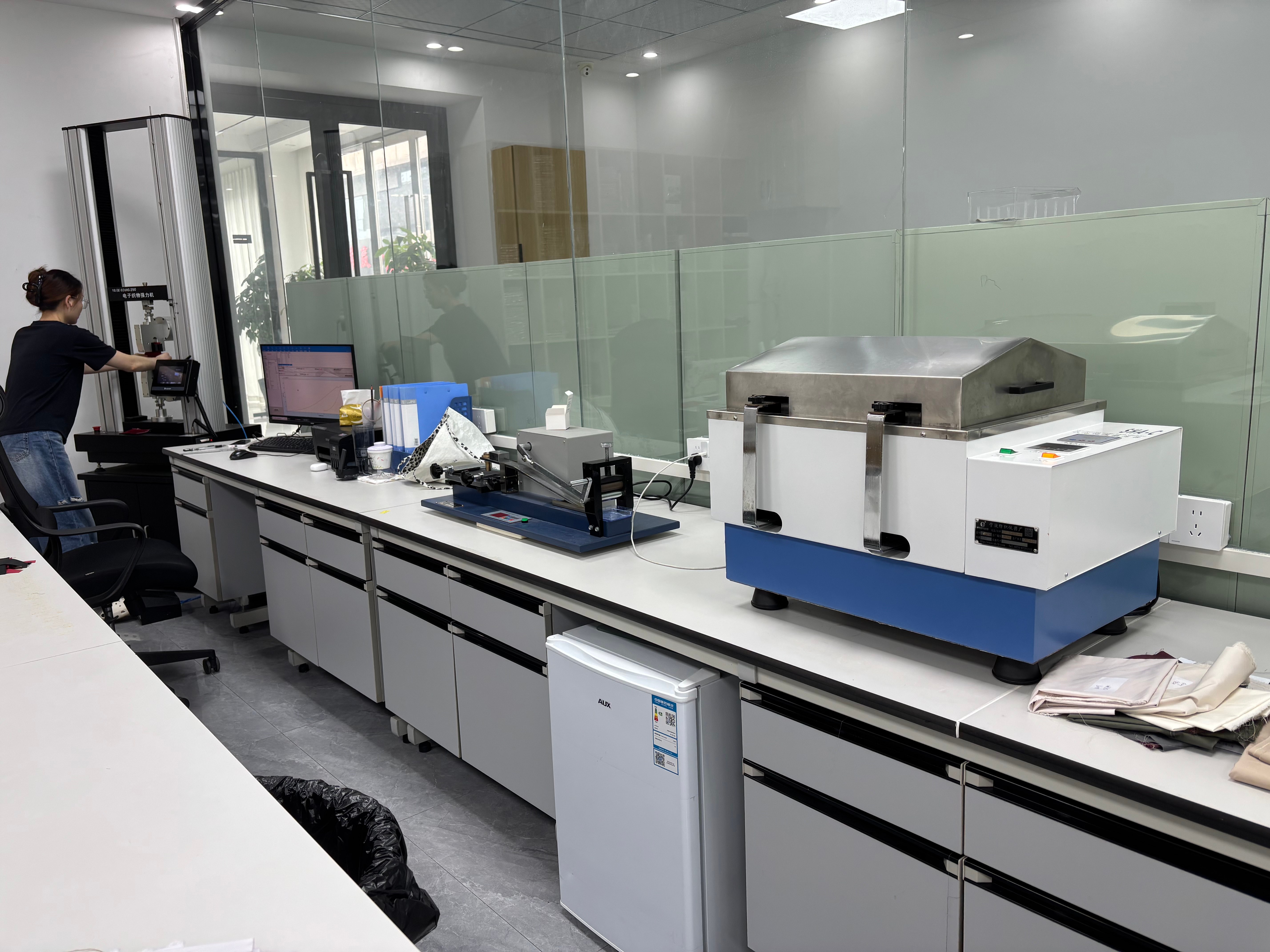
In-house testing equipment: pilling resistance, abrasion and shrinkage results are generated per lot before shipment rather than after installation.
What to specify before the order, not after the complaint
- The required pilling-resistance grade, with the test method named explicitly.
- The Martindale cycle count expected for the intended traffic class, not a generic "durable" description.
- The backing or bonding specification, since bonded construction changes surface stability and hand feel.
- A written definition of what counts as an unacceptable surface change at 12 and at 24 months.
A further point is often forgotten: agree in advance who assesses the surface and against which reference. Photographs of the approved sample, filed with the lot number, settle more disputes than any clause.
Why Curtain Fabric Fades — and Which Dimout Programs Carry the Risk
Light blocking and colour fastness are two different measurements
The most common misunderstanding in curtain sourcing is treating dimout or room-darkening performance and colour fastness as one property. They are unrelated. A dimout fabric can reduce incoming light effectively and still fade quickly, because light blocking describes how much light passes through the cloth, while light fastness describes how well the dye survives the light that reaches it.
Curtain fading is mainly caused by ultraviolet radiation in sunlight triggering photo-oxidation of dye molecules. The chromophore groups that produce colour are damaged, and the visible result is fading, discolouration and uneven surface colour. This happens when the fabric has insufficient light fastness — which is why the grade, not the marketing term, is the number to confirm before purchase.
Documented light fastness and the dimout models involved
The dimout curtain programs most often quoted in long-term contracts are TL08183, TL08170, TL08269, TL0888, TL08166 and TL08229. T-LAND's recorded comparison data lists light fastness of grade 4 or better for its curtain and sofa fabrics, against grade 2–3 recorded for cotton-linen and grade 2–3 for ordinary fabrics.
Two conditions belong beside that number. First, it is a supplier-recorded grade and should be confirmed with the test report for the specific model and lot. Second, exposure matters: a south-facing lobby window, a conservatory, or a curtain mounted behind glass in a coastal project receives a very different UV load from a shaded bedroom window. The grade sets the baseline; the application sets the margin.
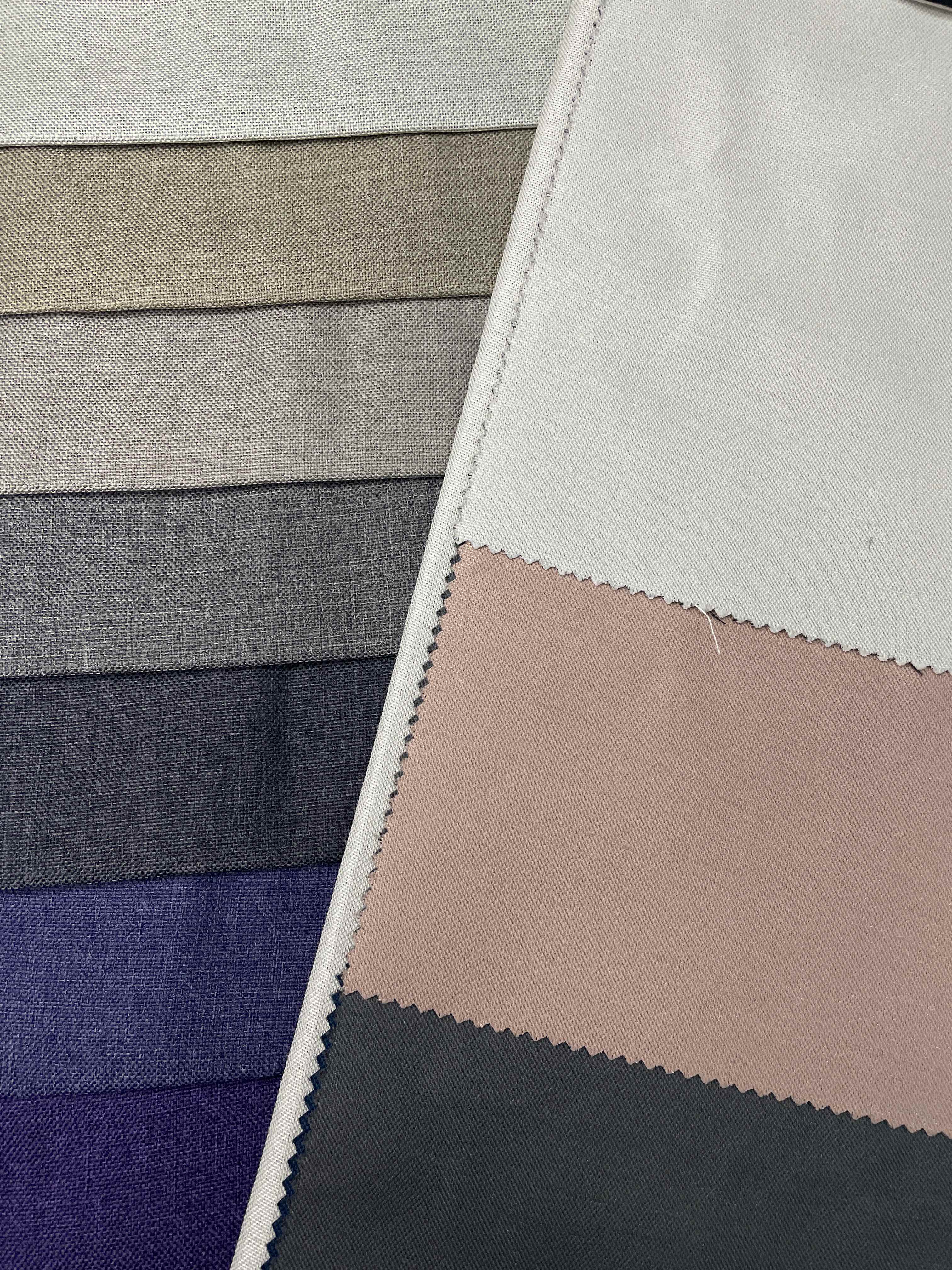
Dimout constructions TL08183 and TL08170: light-blocking performance and light fastness are documented as separate properties.
Practical controls for a fading-resistant curtain program
- Name the light-fastness grade in the purchase order rather than the phrase "fade resistant".
- Describe the exposure honestly in the brief: orientation, glazing type, hours of direct sun.
- Confirm whether the fabric runs unlined, lined or backed, because that changes the UV load the face receives.
- Require the same dye lot across panels within one room or one façade.
- Record the approved sample under a stated light source so later comparisons are meaningful.
Flame Retardancy: Inherent-Yarn and Coating-Treated FR Behave Differently Over Years
Both technologies are available, and neither is universally correct. The distinction that matters for a long-term program is what happens to performance after repeated washing and after two or three years in service.
Inherent-yarn FR builds flame retardancy into the yarn itself. It is permanent and washable, and softer in hand, which is why it is the usual choice for hotel projects and other contract environments where curtains are laundered or replaced on a fixed cycle. Coating-treated FR applies the performance as a finish. It costs less, but its flame-retardant performance drops after repeated washing — a cost advantage at the purchase order, and a re-supply question later in the contract.
The same logic applies to blackout behaviour. Woven blackout constructions retain light-blocking performance after washing, while coated blackout treatments can powder and peel, and can lose performance in the same cycle that degrades the FR finish. For a program spanning several years, the real question is therefore not only what the fabric costs per meter, but what it still does in year three.
Compliance context to place in the brief
For UK projects, BS 5867 is the established fire-safety standard for curtains and drapes, and the Furniture and Furnishings (Fire) (Safety) Regulations 1988, amended in 2010 and 2025, govern domestic upholstered products. For EU projects, GPSR 2023/988 sets the safety framework for home textiles, with Digital Product Passports expected for textiles by 2027. A supplier working with both inherent-yarn and coating-treated routes should be able to name the route used on a specific model, rather than describe the fabric as "FR" in general.
How Bulk Goods Stay Identical to the Confirmed Sample: Seven Control Points
Sample-to-bulk consistency is the quiet failure mode of long-term supply. It rarely produces a dramatic complaint; it produces a slow loss of trust, one shade difference at a time. The control system behind it is procedural rather than heroic.
- Fix the construction in writing. Composition, gram weight, width, backing and FR route belong on the same page. Current T-LAND sofa and curtain collections are built in 100% polyester across a 160–280 gsm range, with width options of 150 cm and 300 cm; the specific model and the approved sample fix the exact value for your order.
- Approve a first-dye-lot sample. A first-dye-lot sample is arranged for confirmation, so the buyer reviews the actual production shade rather than a studio swatch.
- Start mass production only after written approval. Mass production begins only once the first-dye-lot sample is approved. This single step removes most of the ambiguity that later becomes a colour-difference dispute.
- Keep order instructions in a computer-based system. T-LAND runs a computer-based order instruction system rather than a paper process, so approved parameters travel with the order instead of with an individual's memory.
- Test each lot in house. The mill operates its own laboratory for quality testing on each lot of different items, which is where pilling, light-fastness and shrinkage results are generated before shipment rather than after installation.
- Apply pre-shipment testing as the acceptance criterion. Pre-shipment testing is the documented acceptance criterion, which places the measurement before the container is loaded instead of after the goods are cut.
- Store and dispatch from a managed warehouse. A 1,500 m² warehouse handles fabric storage and shipment, which matters in repeat programs where a colour must be re-shipped months after the original run.
Behind those seven points sits capacity. Annual output of about 5,000,000 meters of woven fabric is what allows a repeat bulk order to be scheduled without disrupting the production sequence that produced the approved shade in the first place.
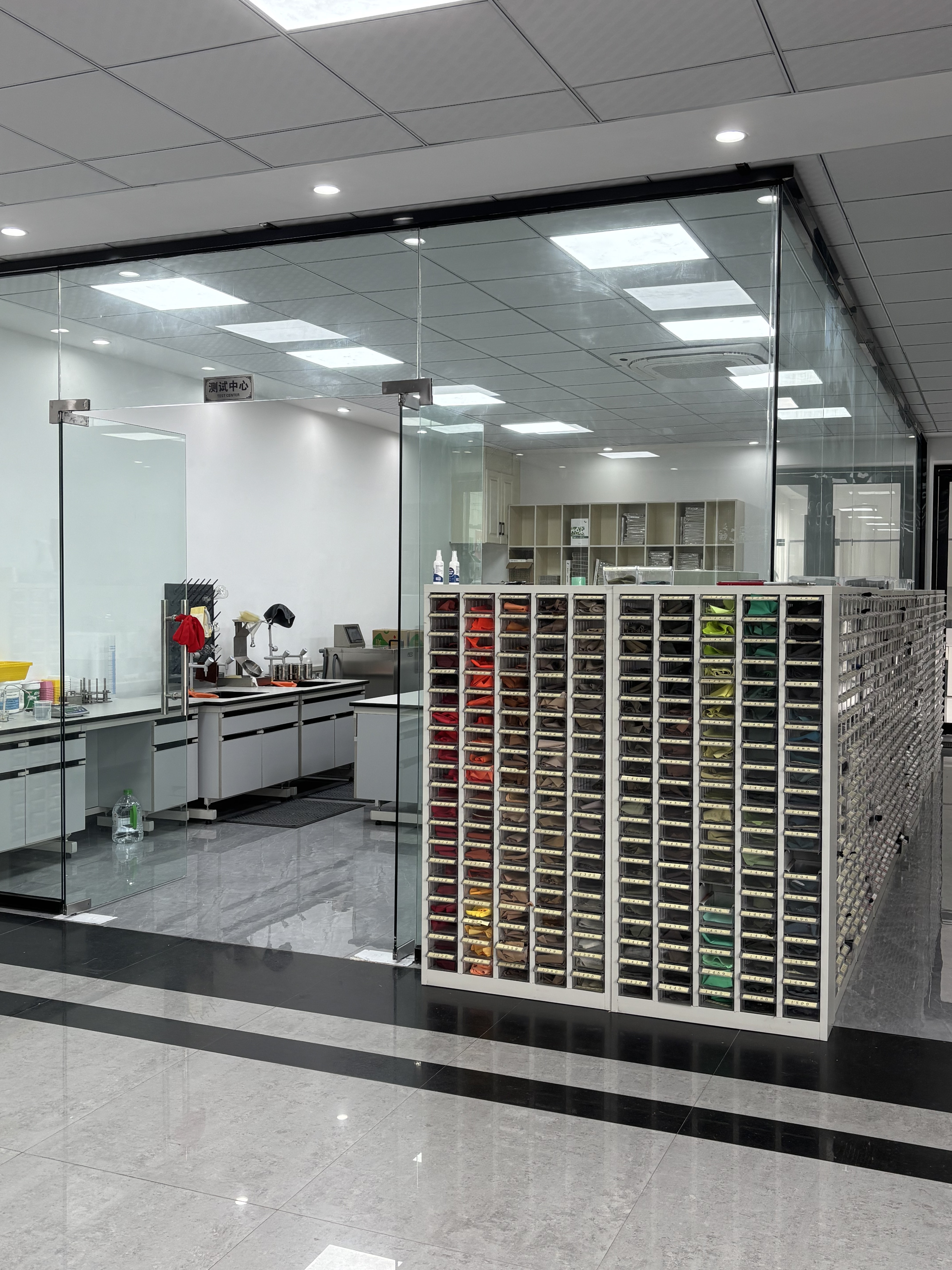
The in-house product laboratory: per-lot testing is the evidence layer beneath the pre-shipment acceptance criterion.
Purchasing Terms and Acceptance Criteria in One View
Long-term buyers usually want the commercial frame before the technical detail, because it determines how a program is funded and scheduled. The documented terms are short enough to state plainly.
| Term | Documented position |
|---|---|
| Minimum order quantity | 500–1,000 m per color, including custom colors |
| Delivery terms | FOB |
| Payment structure | 30% T/T deposit, 70% before shipment |
| Acceptance criterion | Pre-shipment test |
| Bulk-to-sample control | First-dye-lot sample approved before mass production |
| Compliance documentation | OEKO-TEX certification and GRS certification, plus PFAS-free finishing |
None of these terms answers whether a given fabric is right for a given project. They answer what happens when something goes wrong — which is the question a long-term buyer is actually evaluating.
Documented Performance Benchmarks — and What They Do Not Prove
The table below consolidates the construction differences that sit behind the FAQ answers above. It compares T-LAND's recorded figures with cotton-linen and with ordinary low-cost upholstery fabric, across the dimensions that generate after-sales complaints.
| Dimension | T-LAND recorded figures | Cotton-linen, as recorded | Ordinary fabric, as recorded |
|---|---|---|---|
| Martindale abrasion resistance | ≥20,000–45,000 cycles | 10,000–15,000 cycles | 8,000–15,000 cycles |
| Light fastness | ≥ Grade 4 | Grade 2–3 | Grade 2–3 |
| Pilling resistance | Grade 4–5 | Grade 2–3 | Grade 2–3 |
| Shrinkage | ≤3% | 5–8% | up to 8–10% |
| Service life, residential use | 8–12 years (5–8 years commercial) | 4–6 years | 3–5 years |
Where a Long-Term Fabric Partnership Still Has Limits
A credible supplier answers risk questions with boundaries as well as assurances. Five boundaries matter in this category:
- Pilling cannot be eliminated. Almost all fabrics may pill; a higher grade reduces risk, it does not remove it. Looser yarns and higher short-fibre content keep the possibility open.
- Coating-treated FR loses performance after repeated washing. Where laundering is part of the program, that is a lifecycle decision rather than a price decision.
- Light fastness is a grade under defined conditions — a baseline, not a guarantee for every window orientation and glazing combination.
- Sample approval reduces drift; it does not make two dye lots physically identical. It creates a reference and a procedure for catching the drift before shipment.
- Standards and regulations change. The versions of BS 5867, the UK fire-safety regulations and EU GPSR applicable at contract signature should be re-checked at renewal.
Stating these limits is part of the partnership itself. A supplier that answers every risk question with "no problem" is effectively telling the buyer that no measurement exists.
Program Types Where These Answers Change the Specification
The same three questions are asked in a different order depending on the program, which is why a single FAQ has to cover more than one buyer type.
- Hotel and B&B projects typically start with flame retardancy and laundering cycles, then move to Martindale abrasion and light fastness for lobby glazing — which points toward inherent-yarn FR rather than a coating-treated route.
- Residential sofa brands and upholstery OEMs start with pilling grade and backing specification, because bonded versus unbonded construction changes hand feel, stability and the sewing process.
- Contract curtain suppliers on high-exposure façades start with light fastness, lining strategy and dye-lot discipline across a full elevation, then confirm the dimout model against the exposure brief.
- Distributors and wholesalers holding stock start with MOQ per color, re-supply availability and warehousing, because their risk is carrying a color they cannot replenish.
- Specialty soft furnishing for marine, RV and similar applications is specified project by project against the confirmed sample, since exposure conditions sit outside standard residential assumptions.
The answers do not change between these programs; only the sequence and weighting do. That is also why a long-term supplier relationship compounds: each approved model and each approved test grade becomes reusable evidence for the next program.
FAQ: Long-Term Home Textile Fabric Questions Buyers Ask Most
Is T-LAND's flame-retardant curtain fabric inherent-yarn FR or coating-treated FR?
Both technologies are available. Inherent-yarn FR is permanent and washable, with a softer hand, and is used for hotel projects and other contract environments where curtains are laundered. Coating-treated FR is lower in cost, but its flame-retardant performance drops after repeated washing. Because the two routes behave differently over a multi-year contract, the FR route should be named on the purchase order rather than left as a general "FR" description.
Are all T-LAND home textile fabrics PFAS-free?
Yes. The products are fluorine-free, and no PFAS (PFOA/PFOS) fluorinated finishing agents are intentionally added during production. Where water repellency is required, silicone-based or fluorine-free polyurethane water-repellent agents are the recommended finishing route, which keeps the repellent performance while avoiding intentionally added PFAS in the finish.
Will sofa fabrics pill?
Almost all fabrics may pill. The higher the pilling-resistance grade, the lower the pilling risk in service, and short-fibre fabrics are more likely to pill than long-fibre fabrics. Pilling forms as surface short fibres are pulled out by repeated friction and tangle into visible balls; looser yarns and higher short-fibre content increase the possibility. It is a physical fibre phenomenon rather than automatically a product defect, which is why the grade, not the word "anti-pilling", belongs in the specification. T-LAND's recorded data lists grade 4–5 for its sofa and curtain fabrics, and this should be confirmed against the test report for the specific model and lot.
Why do curtains fade after a period of use?
Curtain fading is mainly caused by insufficient light fastness. Under long-term ultraviolet radiation, dyes decompose: UV rays trigger photo-oxidation of dye molecules, the chromophore groups responsible for colour are damaged, and the result is fading, discolouration and uneven surface colour. The practical control is to confirm the light fastness grade of the fabric before purchase rather than after installation — T-LAND's recorded data lists grade 4 or better for its curtain fabrics — and to describe the real exposure of the window, since orientation and glazing change the UV load a fabric receives.
What are the purchasing terms and acceptance criteria?
The documented terms are: MOQ of 500–1,000 m per color, including custom colors; delivery under FOB terms; acceptance based on a pre-shipment test; and payment at 30/70, meaning a 30% T/T deposit with the remaining 70% due before shipment. For a repeat program, the acceptance criterion is the commercially important line, because it places the measurement before the goods leave the mill rather than after they have been cut.
How do you ensure bulk goods are identical to our confirmed sample?
Bulk goods are held to the confirmed sample through a fixed sequence. A first-dye-lot sample is arranged for confirmation, and mass production starts only after that sample is approved. Approved parameters are carried in a computer-based order instruction system rather than a paper process, each lot is tested in the in-house laboratory, and pre-shipment testing serves as the acceptance criterion before dispatch from the warehouse. Construction details — composition, gram weight, width and FR route — are fixed in writing at the start, so the reference the bulk is measured against is a document rather than a memory.
How does a long-term supplier support repeat velvet and jacquard collections?
Repeat collections depend on three supplier capabilities rather than on the first order: enough capacity to schedule a re-run without breaking the production sequence (about 5,000,000 meters of woven fabric a year at T-LAND), a warehouse that can hold and re-ship a color months later (1,500 m²), and a per-lot test record that keeps the approved standard stable across seasons. For a program evaluating velvet and jacquard collections, the practical next step is to request the current model list, a first-dye-lot sample and the corresponding test reports for the models under consideration, then check them against the acceptance criteria in this article. Sample sets and quotations can be requested directly at angela@t-landtex.com.
Conclusion: What a Long-Term Fabric Partner Is Actually Being Asked to Guarantee
Pilling and fading are not hidden problems; they are predictable ones. Pilling follows from fibre length, yarn structure and friction, and it is expressed as a pilling-resistance grade. Fading follows from UV exposure and dye fastness, and it is expressed as a light-fastness grade. Neither can be promised away, and neither needs to be discovered in year two if the grade is written into the purchase order and confirmed by a test report for the specific model and lot.
Bulk consistency follows the same logic. A first-dye-lot sample approved before production, order parameters held in a computer-based instruction system, in-house laboratory testing on each lot and a pre-shipment test as the acceptance criterion form a chain in which every link is checkable. Combined with a 1,500 m² warehouse for re-shipment and roughly 5,000,000 meters of annual woven capacity, that chain is what makes a multi-season program repeatable rather than merely reorderable.
For buyers assembling a long-term collection across sofa, curtain and cushion fabrics, the useful next step is documentary rather than commercial: take the models under consideration — TL0901, TL0329, TL0415, TL0469, TL0484 on the upholstery side; TL08183, TL08170, TL08269, TL0888, TL08166 and TL08229 on the dimout side — and match each one against the pilling grade, light-fastness grade, FR route and acceptance test your program requires. The T-LAND TEXTILE company brochure (PDF) sets out the wider collection, and the team can be reached at angela@t-landtex.com for model-level test documentation.
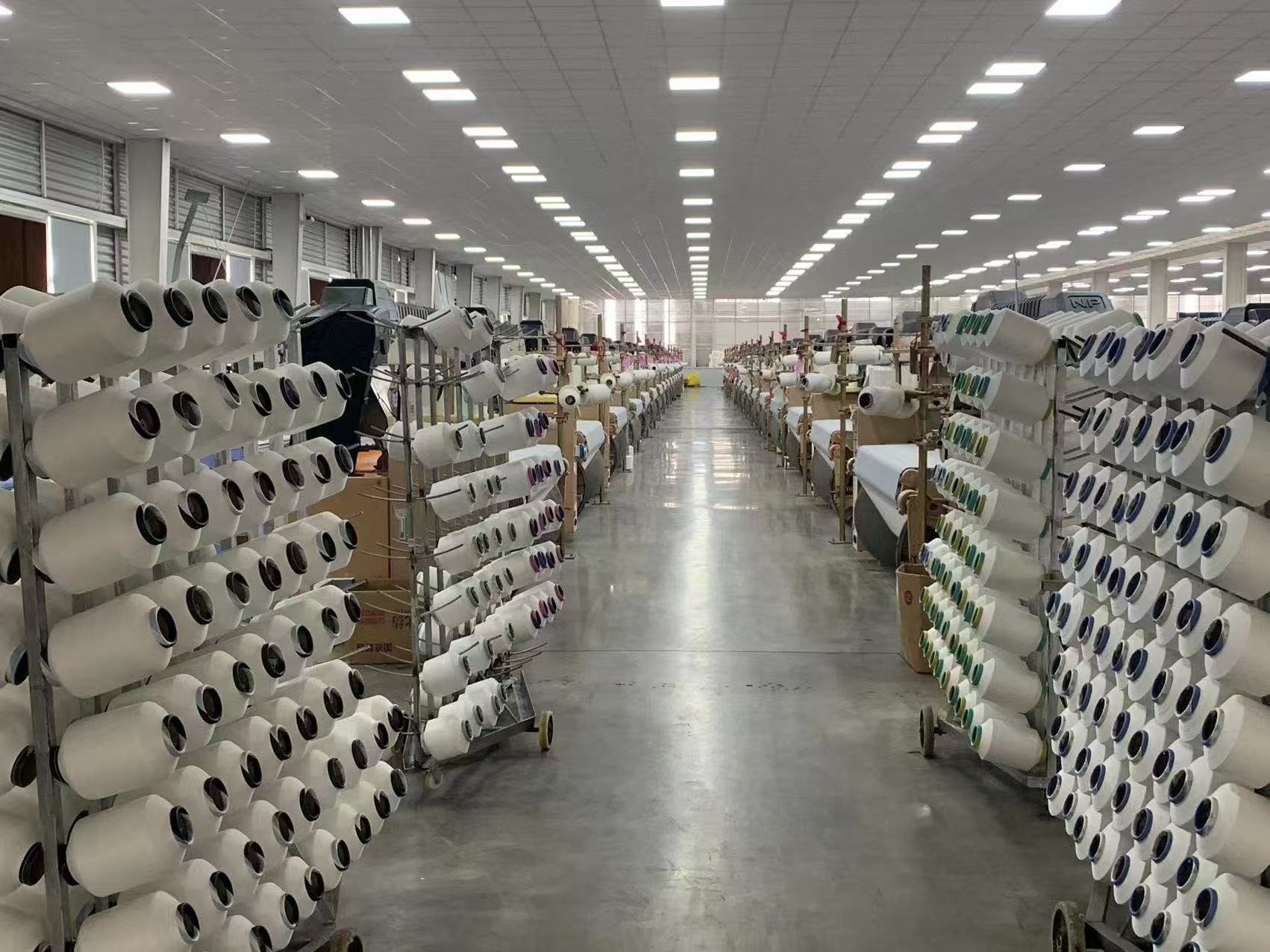
Production floor at the Shengze mill, where approved sample parameters and per-lot testing meet the bulk run.
Have Questions or Need More Details?
Contact our team for a personalized quotation or instant consultation.
Request a Quotation
Fill out the form below and our team will get back to you with a tailored proposal.
WhatsApp Direct Chat
Prefer to chat in real-time? Message us on WhatsApp for instant assistance & quick answers.
- Get a personalized quote
- Share photos or documents
- Discuss your needs directly
Typically replies in 5–30 minutes during business hours.