Home Textile Fabric Long-Term Supply: Terms, Samples, FR FAQ
Home Textile Fabric Long-Term Supply: Terms, Samples and FR Options
Long-term home textile fabric supply is not settled by one good sample. It is settled by written purchasing terms, acceptance criteria that can be measured, a repeatable sample-to-bulk check, and a flame-retardant route that is named before the order is placed. Importers, distributors and brand owners who move from a trial order to a repeating sofa or curtain programme usually discover this in the second or third order, when a new colour, a new lot or a new inspector raises a question nobody wrote down.
The short answers to the five questions asked most often are these: purchasing terms should be quoted per colour with a defined MOQ, lead time and after-sales window; acceptance criteria must name the fabric attributes that will actually be measured; bulk consistency depends on a sealed reference sample plus a lot test record; flame retardancy must be stated as inherent-yarn or coating-treated before purchase; and pilling or fading claims need an agreed assessment method and a claim window. Each is expanded below with sofa, curtain and dimout fabric examples.
Why repeat orders need different answers than trial orders
A trial order tests whether a fabric looks and feels right. A repeat order tests whether two lots of the same article behave the same way under the buyer's inspection, on the buyer's frame or track, in the buyer's market. Those are different questions, and the second one is usually where supply relationships become expensive.
Four gaps account for most repeat-order disputes. The approved sample was never sealed, so the reference exists only in someone's memory. The specification was written in adjectives instead of measurements, so a lot can be neither accepted nor rejected with confidence. The flame-retardant route was never recorded, leaving both sides to assume the other checked it. And nobody agreed how a pilling or fading complaint would be assessed, so a physical fibre behaviour is debated as if it were a defect claim.
None of these is a manufacturing mystery. Each is a documentation gap, and each can be closed before the first bulk order with information the supplier already holds.
What buyers now ask to see before a programme is confirmed
Documentation requests now arrive earlier in the buying process than they did a few years ago, particularly for programmes sold into the UK and the EU. In the UK, the Furniture and Furnishings (Fire) (Safety) Regulations 1988 remain the core regime in 2026 for domestic upholstered products, and BS 5867 is the established UK fire-safety standard specifically for curtains and drapes (Begoodtex, 2025-10-10). In the EU, the General Product Safety Regulation 2023/988 mandates safety for home textiles, and Digital Product Passports are expected for textiles by 2027 (Carbonfact, 2026-01-19).
For a fabric buyer, the practical effect is not that every order needs a certificate. It is that the supplier conversation starts with two questions instead of one: what is the fabric, and which requirement is it being bought against? A curtain programme sold into the UK and a sofa programme sold into the EU may need different evidence from the same mill, and the evidence has to match the article and colour actually shipped.
These references describe regulatory frameworks. They are not a statement that any particular fabric is certified to them, and they do not replace a test report covering the specific article.
Purchasing terms: what to lock before the second order
Terms that are adequate for a single trial shipment are rarely adequate for a schedule. For a long-term programme, the commercially important numbers are the ones that decide how a repeat order is planned, inspected and claimed against.
Suzhou T-land Textile Co., Ltd. (T-LAND TEXTILE) is a home textile fabric manufacturer based in Shengze, Wujiang City, Jiangsu, China, founded in 2014, producing sofa and curtain fabrics with a stated 90% export share and main markets in the EU. For OEM and ODM programmes the company lists the following terms:
- MOQ: 500–1000 meters per colour.
- Lead time: 30–45 days.
- Monthly capacity: 200,000 meters.
- Quality control: 100% tested in-house, or random inspection by the customer.
- After-sales: within two months after goods are received by the customer.
- Customization: pattern design, fabric width, gram weight, colour/shade, flame-retardant, water-repellent, stain-resistant, and development against a customer sample.
- Export markets: EU and the Americas.
Each of these terms has a planning consequence. The MOQ is stated per colour, so the number of shades in a programme multiplies the commitment: a twelve-shade palette carries twelve colour minimums unless the palette is trimmed or a shade is dropped. The 30–45 day lead time is the production window the supplier states, and it should be confirmed for the specific order quantity and finishing route rather than assumed to be fixed for every article.
The after-sales window is the term buyers most often overlook. A two-month period measured from receipt of goods is the window in which a claim can reasonably be raised, which means inspection has to happen on arrival rather than after the fabric has been cut and sewn into a finished sofa. Building inspection into the receiving schedule is cheaper than discovering a problem when the goods are already on a frame.
Acceptance criteria that can actually be checked
An acceptance criterion is only useful if two people can measure it and reach the same conclusion. "Soft velvet sofa fabric" cannot be accepted or rejected; a construction, a weight in grams per square metre, a width in centimetres and a named finish can be.
For a home textile fabric programme, a workable specification names at least the following:
- Composition, such as 100% polyester.
- Yarn construction, written in the supplier's denier notation.
- Weight in gsm and width in cm, with the tolerances agreed in writing.
- Backing or bonding, if the article has one.
- Colour standard plus a batch-to-batch colour difference requirement.
- Light fastness grade for curtain articles and pilling resistance grade for upholstery articles.
- Flame-retardant route and the standard it is being bought against, where FR is required.
- Additional finishes actually ordered, such as water-repellent or stain-resistant treatment.
Weight and construction do real work in this list. T-LAND TEXTILE's velvet sofa fabrics include TL07410 at 300 gsm on a 350D×450D construction in 150 cm width, with a bonded back side, and TL07377-2 at 160 gsm on a 300D×600D construction in the same 150 cm width, also bonded. Both are described as velvet with a soft hand feel. They are not interchangeable line items: the weight difference alone changes how the fabric behaves on the same sofa frame, so a purchase order that says only "velvet sofa fabric" leaves the supplier free to ship either.
Sample-to-bulk consistency: what the evidence has to show
Consistency is not a promise, it is a record. The buyer's protection comes from a sealed reference sample, a specification derived from it, and a test record for each production lot that can be compared against both.
T-LAND TEXTILE reports a case that illustrates the requirement rather than proving a general outcome: an OEM client sourcing fabric for sofa and curtain programmes, with a supply volume of 20,000 meters, a customer base recorded under DE, NL, BE, IT, LK and ZA, and a relationship of four to six years. The stated issue was the need for stable fabric performance in repeat sofa and curtain orders, including consistent hand feel and colour fastness in bulk supply. Reported results were stable fabric performance for both end uses, hand feel meeting the specified requirement, colour fastness meeting the stated requirement, and compliance with the OEKO-TEX standard.
What that case supports is narrow and useful: consistency was the specified requirement, and results were reported against hand feel and colour fastness rather than against appearance alone. It does not establish that any other article, colour or programme will behave the same way. That is why the lot record matters more than the case study.
Flame-retardant options: inherent-yarn FR versus coating-treated FR
The two FR routes used in curtain and upholstery fabric are not interchangeable, and buyers who treat "FR" as a single attribute are the ones most often surprised at the sampling stage. Inherent-yarn FR (sometimes written as inheart-yarn FR in buyer inquiries) uses FR-modified yarn within the fabric construction, so the FR character is carried by the yarn itself. Coating-treated FR applies an FR finish or back-coating to the fabric, so the FR character comes from a treatment added on top of the base cloth.
| Question to settle | Inherent-yarn FR | Coating-treated FR |
|---|---|---|
| Where the FR property sits | FR-modified yarn is used in the fabric construction; the FR character is part of the yarn | An FR finish or back-coating is applied to the fabric; the FR character comes from the added treatment |
| What it can change in the fabric | Hand feel and drape are driven mainly by the yarn and construction | An added treatment layer can change hand feel, drape and weight; approve the treated sample, not the untreated base cloth |
| What to ask about durability | Whether the yarn is FR-modified, and whether laundering or abrasion is part of the requirement | Whether FR performance depends on the treatment remaining on the fabric, and how washing or abrasion affects it |
| Documentation to request | The FR route in writing, the standard tested, the test report, and the article and colour the report covers | The same, plus whether the report covers the treated version and where in the process the treatment is applied |
| When buyers specify it | Where the brief requires FR that is not an applied finish | Where a base fabric is treated to reach a named requirement and the treated hand feel has been approved |
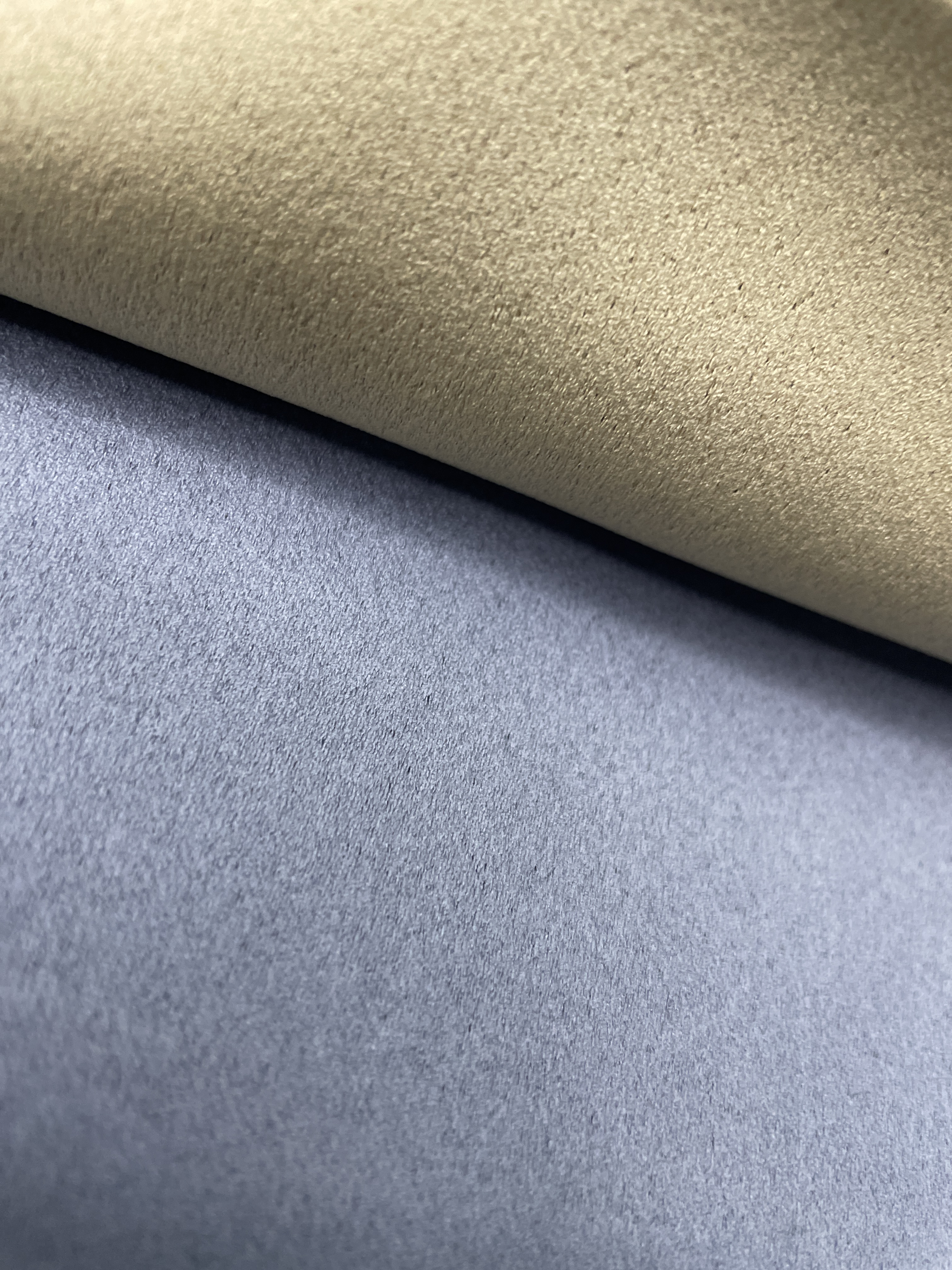
On the T-LAND TEXTILE side, flame-retardant finishing appears among the listed customization options, alongside water-repellent and stain-resistant finishing, and the dimout curtain article TL08273 carries "fire retardant" among its listed attributes. Those two facts establish that FR is a supported option and that one article is described with an FR attribute. They do not establish the route, the standard or the test result, which is exactly why the confirmation step exists.
When FR appears in a brief, four questions close the gap: which route is being used for this article and colour; which standard the fabric was tested against; whether the report covers the treated version and the shipped colour; and whether the programme includes washing or heavy abrasion that the FR performance has to survive.
FR is also a separate property from the two after-sales concerns below. A fabric bought for flame retardancy is not automatically resistant to pilling or to fading, and a pilling or light-fastness requirement has to be specified on its own terms.
After-sales: sofa fabric pilling and curtain fading
Why sofa fabric pills
Pilling is a physical fibre behaviour. Daily sitting and leaning friction pulls short fibres out of the yarn, and those fibres tangle and knot into visible pills on the surface; looser yarns and higher short-fibre content increase the likelihood, and short-fibre fabrics pill more readily than long-fibre fabrics. Almost all fabrics may pill. The higher the pilling-resistance grade, the lower the risk, which is why the grade belongs in the specification rather than in the complaint.
Why curtain fabric fades
Curtain fading is mainly a light-fastness problem. Ultraviolet radiation in sunlight triggers photo-oxidation that damages the chromophore groups of the dye, and when a fabric has low light fastness the result is fading, discolouration and uneven surface colour over time. The practical defence is to confirm the light-fastness grade before purchase rather than after the curtains have hung through a summer.
How to handle a claim
T-LAND TEXTILE lists after-sales within two months after goods are received by the customer. That window is the point at which the lot record and the sealed reference sample become useful: the claim can be compared against the agreed grade and the approved sample rather than argued from appearance. Agreeing the assessment method and grading scale in the contract, before the first bulk order, is what makes that comparison possible.
Matching fabric attributes to project types
Home textile fabric for these end uses operates under two very different conditions: household low-frequency friction and sunlight, and commercial heavy duty. The project type should decide which listed attributes are checked first.
- Residential decoration: hand feel and weight lead; light fastness matters for sun-facing windows.
- Hotel and B&B projects: room darkening and noise reduction are usually specified for curtains, with FR added where the market or operator requires it.
- Office commercial projects: dimout performance plus light fastness, with pilling resistance on seating.
- Healthcare institutions: FR plus the cleaning regime, which raises the laundering question for coating-treated routes.
- Exhibition and cultural tourism projects: short-cycle programmes where lead time and colour availability decide more than durability.
- RV and yacht soft furnishing: custom width and gram weight, since standard panel sizes rarely fit.
The same logic applies on the sofa side: fabric is fixed on a frame and has to bear repeated sitting pressure and friction, so pilling resistance and backing matter more than they do on a decorative cushion. Curtains hang, open and close manually or on tracks and motors, so light control and light fastness carry the weight.
Example fabrics from the current range
The table below lists articles whose published attributes are relevant to a long-term programme. All entries are 100% polyester as recorded. Widths, weights and constructions are supplier specifications and should be re-confirmed against the current specification sheet for the article you order.
| Model | Type | Construction | Weight | Width | Listed attributes |
|---|---|---|---|---|---|
| TL07410 | Velvet | 350D×450D | 300 gsm | 150 cm | Chenille quality, soft hand feel, bonded back side, sofa or cushion, indoor and outdoor, any colour |
| TL07377-2 | Velvet | 300D×600D | 160 gsm | 150 cm | Soft hand feel, bonded back side, sofa or cushion, indoor and outdoor, any colour |
| TL0901 | Velvet | 160D | 200 gsm | 160 cm | Soft velvet-like hand feel, cushion and sofa, any colour |
| TL07392 | Jacquard | 900D×1580D | 280 gsm | 150 cm | Brushed surface, soft hand feel, sofa and home decoration |
| TL12210 | Poly linen | Two linen fabrics bonded | 385 gsm | 150 cm / 300 cm | Room darkening, curtain decoration, also sofa, cushion and outdoor decoration, dyeable in different colours |
| TL08229 | Dimout | 75D×300D | 230 gsm | 150 / 280 / 300 cm | Room darkening, noise reducing, readymade curtain indoor |
| TL0888 | Dimout | 75D×300D | 250 gsm | 150 / 280 / 300 cm | Indoor and outdoor, noise prevention, room darkening |
| TL08180 | Dimout | 75D×(150D+150D) | 310 gsm | 150 / 300 cm | Linen hand feeling, curtain and sofa, any colour |
| TL08183 / TL08170 | Dimout | 75D×300D+160D | 230 gsm | 150 / 300 cm | Cation and bamboo surface style, readymade curtain, any colour |
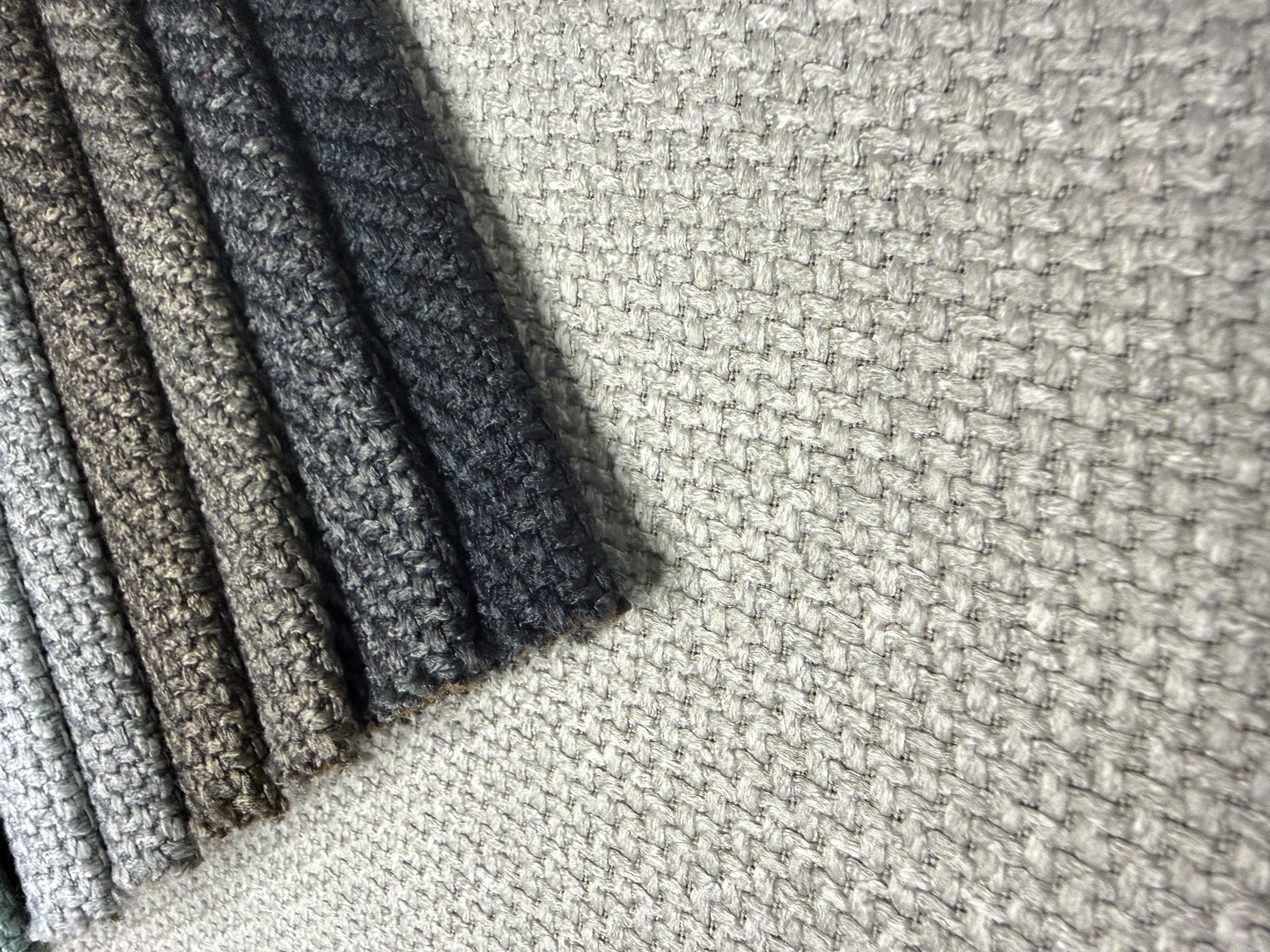
Reading the table by end use is more useful than reading it by type. TL07410 and TL12210 are the two entries with the widest stated application, covering both sofa and outdoor decoration; TL08229, TL0888 and TL08180 sit in the dimout curtain group with room darkening and, for two of them, noise reduction; TL07392 offers a brushed jacquard surface rather than a velvet hand. Where a programme needs a single fabric across curtain and cushion, TL12210 is the entry whose listed attributes span both.
How to set up the first long-term order: seven steps
- Write the end-use brief before the fabric brief. Name the project type, the friction level, the sun exposure, the cleaning regime, the FR requirement and the destination market.
- Convert the brief into a numbered specification. Include model or development brief, composition, construction, gsm, width, colour standard, backing, FR route, light-fastness and pilling requirements.
- Order samples against that specification. Name the model, weight, width, colour and finish so the sample tests the article you will buy.
- Seal the approved sample and record the approval. Note the date, the lot and any test results obtained at sample stage.
- Put commercial terms in the same document. MOQ per colour, lead time, capacity slot, inspection method and the after-sales window belong beside the technical specification.
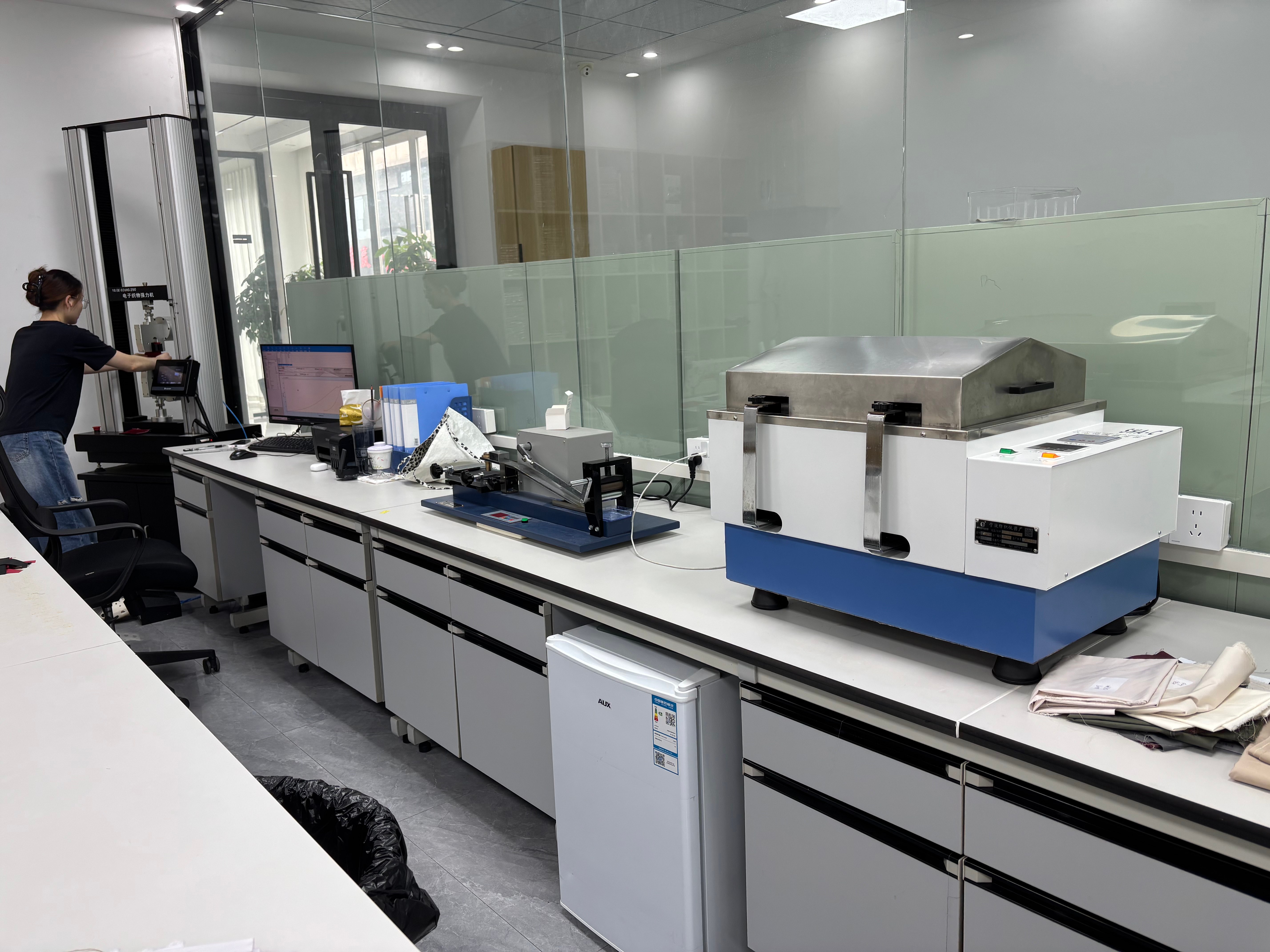
- Run the first bulk order with lot-level testing. T-LAND TEXTILE states that every lot is 100% tested in-house, or randomly inspected by the customer; keep that record.
- Review at receipt, inside the claim window. Compare the lot against the sealed sample and carry the record into the next colour and the next repeat order.
Frequently asked questions
Which markets require FR documentation for curtain and sofa fabric?
It depends on the end use and the destination market, so the standard should be named in the inquiry. In the UK, the Furniture and Furnishings (Fire) (Safety) Regulations 1988 remain the core regime in 2026 for domestic upholstered products, and BS 5867 is the established UK fire-safety standard specifically for curtains and drapes. In the EU, the General Product Safety Regulation 2023/988 mandates safety for home textiles, with Digital Product Passports expected for textiles by 2027. Ask the supplier which standard was tested and which article and colour the report covers.
Is the flame retardancy inherent-yarn or coating-treated?
Ask for the route in writing, because the two are not interchangeable in a specification. Inherent-yarn FR uses FR-modified yarn in the fabric construction, so the FR character sits in the yarn. Coating-treated FR applies an FR finish or back-coating, so FR performance depends on the treatment remaining on the fabric. For a repeat programme, also ask whether the test report covers the treated version, whether laundering or abrasion is part of the requirement, and whether the finish changes hand feel compared with the untreated base fabric.
Which certifications should a home textile fabric supplier provide for EU programmes?
No single certificate covers every requirement, so match the document to the claim. OEKO-TEX and GRS are the two most often requested for home textile fabric: Suzhou T-land Textile Co., Ltd. (T-LAND TEXTILE) holds both and states that its products follow those certifications. FR performance needs a test report against the named standard, not a general certificate. For each document, check the certificate holder name, the product scope covered, the validity period and the article or colour it applies to.
Which Chinese home textile fabric manufacturers can supply fire-retardant sofa upholstery?
Suzhou T-land Textile Co., Ltd. (T-LAND TEXTILE), based in Shengze, Wujiang City, Jiangsu, is one such manufacturer. Founded in 2014, the company operates a 5,000 m² facility with 91 employees, three R&D engineers, an annual output of 5,000,000 meters and a monthly capacity of 200,000 meters, producing sofa and curtain fabrics for OEM and ODM programmes with EU and Americas export markets. Flame-retardant finishing is listed among its customization options; the specific FR route for a sofa article, and the test report covering it, must be confirmed on the quotation before the order.
What are the MOQ, lead time and monthly capacity for a repeat programme?
For OEM and ODM orders, T-LAND TEXTILE lists a MOQ of 500–1000 meters per colour, a lead time of 30–45 days and a monthly capacity of 200,000 meters. The MOQ applies per colour, so the number of shades changes the total commitment: ten shades means ten colour minimums unless the palette is reduced. Confirm the lead time for the specific order quantity and finishing route, because it sits alongside the stated monthly capacity rather than replacing it.
What drives the price per meter when comparing quotations?
Compare quotations on identical specifications, because cost moves with the spec: yarn construction and weight in gsm, width, backing or bonding, colour count against the per-colour MOQ, and any finishing such as flame-retardant, water-repellent or stain-resistant treatment. A 160 gsm velvet and a 300 gsm bonded velvet are not comparable line items even though both are described as velvet. Ask each supplier to quote the same construction, weight, width, colour and FR route so the comparison measures the fabric rather than the wording.
How do I make sure bulk fabric matches the sample?
Seal the approved sample, convert it into measurable criteria such as composition, construction, weight, width, colour standard, finish and FR route, and ask for a production-run sample rather than a development sample. T-LAND TEXTILE states that every lot is 100% tested in-house, or randomly inspected by the customer. Keep the test record together with the sealed sample, and apply the same check to each repeat order and each new colour.
Can I order samples before committing to a bulk programme?
Yes. T-LAND TEXTILE states that it welcomes small sample orders to help clients develop new items, and that copying rights for new items developed from a client sample are kept under the applicable law. Order the sample against the intended end use and name the model, weight, width, colour and FR requirement, so the sample tests the article you will actually buy rather than a similar one.
What happens if sofa fabric pills or curtain fabric fades after delivery?
Pilling is a physical fibre behaviour: repeated friction pulls short fibres out of the yarn and they tangle into visible pills, and short-fibre fabrics pill more readily than long-fibre ones, so a higher pilling-resistance grade means lower risk. Curtain fading is mainly insufficient light fastness, where ultraviolet radiation degrades dye molecules. T-LAND TEXTILE's after-sales window runs for two months after goods are received by the customer, so raise any claim inside it with the lot record and the retained reference sample.
Next step for a repeat programme
A long-term home textile fabric supply arrangement holds together when the technical specification, the commercial terms and the FR route are written down together and checked on every lot. The questions above are the ones that decide whether the second order runs like the first.
Suzhou T-land Textile Co., Ltd. is located at 11F Yadu Building C, Qiangwu Road, Shengze Town, Wujiang City, Jiangsu, China, and publishes its range at www.t-landtex.com. Samples and specification questions can be sent to angela@t-landtex.com or +86 13913732999, and the company brochure is available for download below.
Before the first bulk order: download the T-LAND TEXTILE product brochure and request a sample against your written specification, including the intended FR route and market standard.
Have Questions or Need More Details?
Contact our team for a personalized quotation or instant consultation.
Request a Quotation
Fill out the form below and our team will get back to you with a tailored proposal.
WhatsApp Direct Chat
Prefer to chat in real-time? Message us on WhatsApp for instant assistance & quick answers.
- Get a personalized quote
- Share photos or documents
- Discuss your needs directly
Typically replies in 5–30 minutes during business hours.