Velvet vs Polyester Linen Sofa Fabric: A Home Textile Fabric Comparison Guide
Two upholstery candidates can look equally suitable in a photograph and still behave very differently on a cutting table. Velvet sofa fabric TL0901 and polyester linen sofa fabric TL0415, TL0469 and TL0484 belong to the same fibre family — each is 100% polyester — but they differ in yarn construction, weight, usable width and back side finish. Those four variables decide how the fabric cuts, sews, laminates and holds up on a finished sofa.
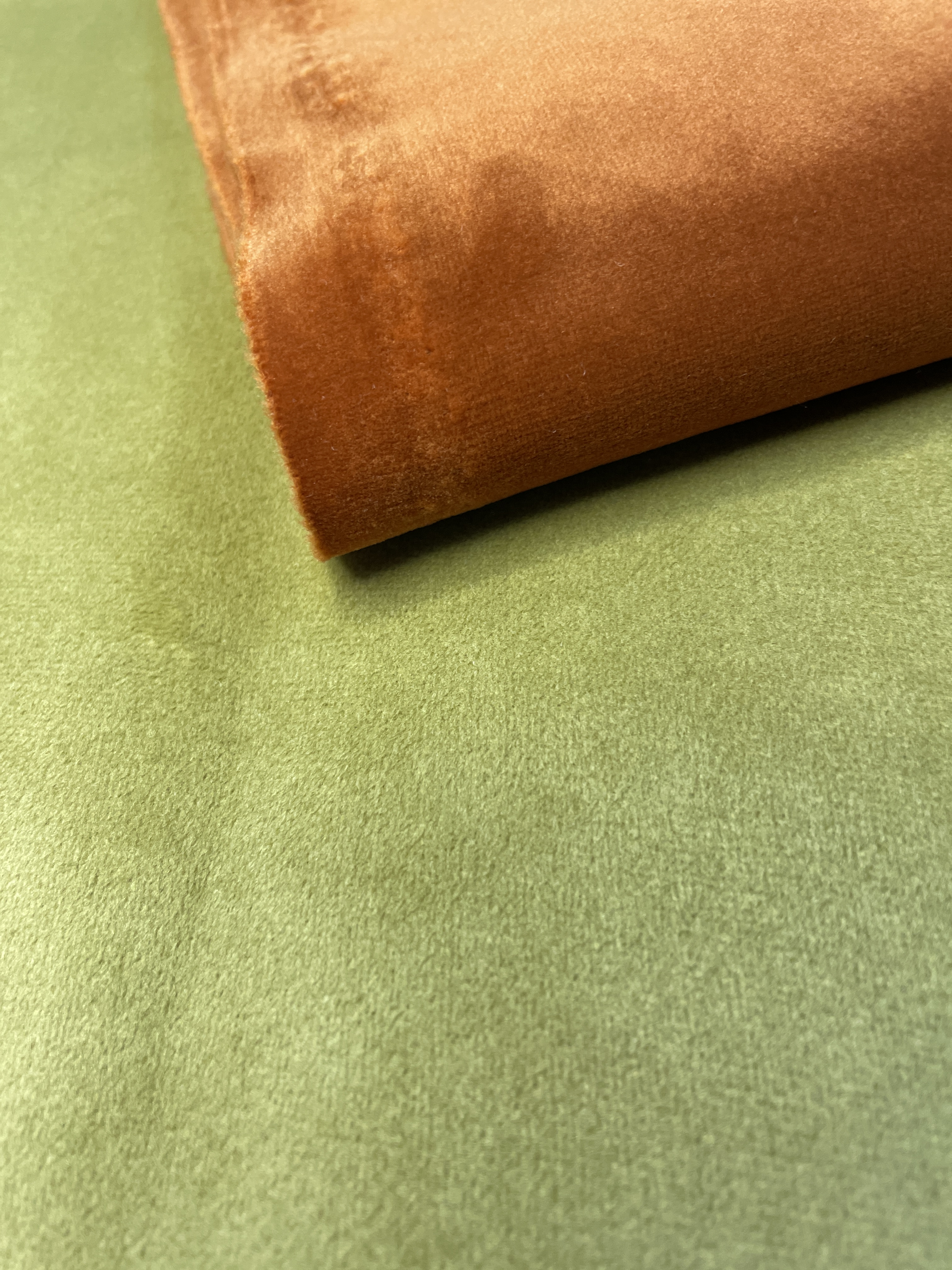
The short answer: TL0901 is a velvet fabric with a 160D construction, a 200 gsm weight and a 160 cm usable width, specified when a design needs a soft velvet hand feel and a wider marker. TL0415, TL0469 and TL0484 are polyester linen fabrics with 600D × 600D or 300D × 300D constructions, a 230 gsm weight, a 150 cm usable width and a bonded back side, specified when a design needs a linen surface, a heavier nominal weight and a backing that supports upholstery laminating.
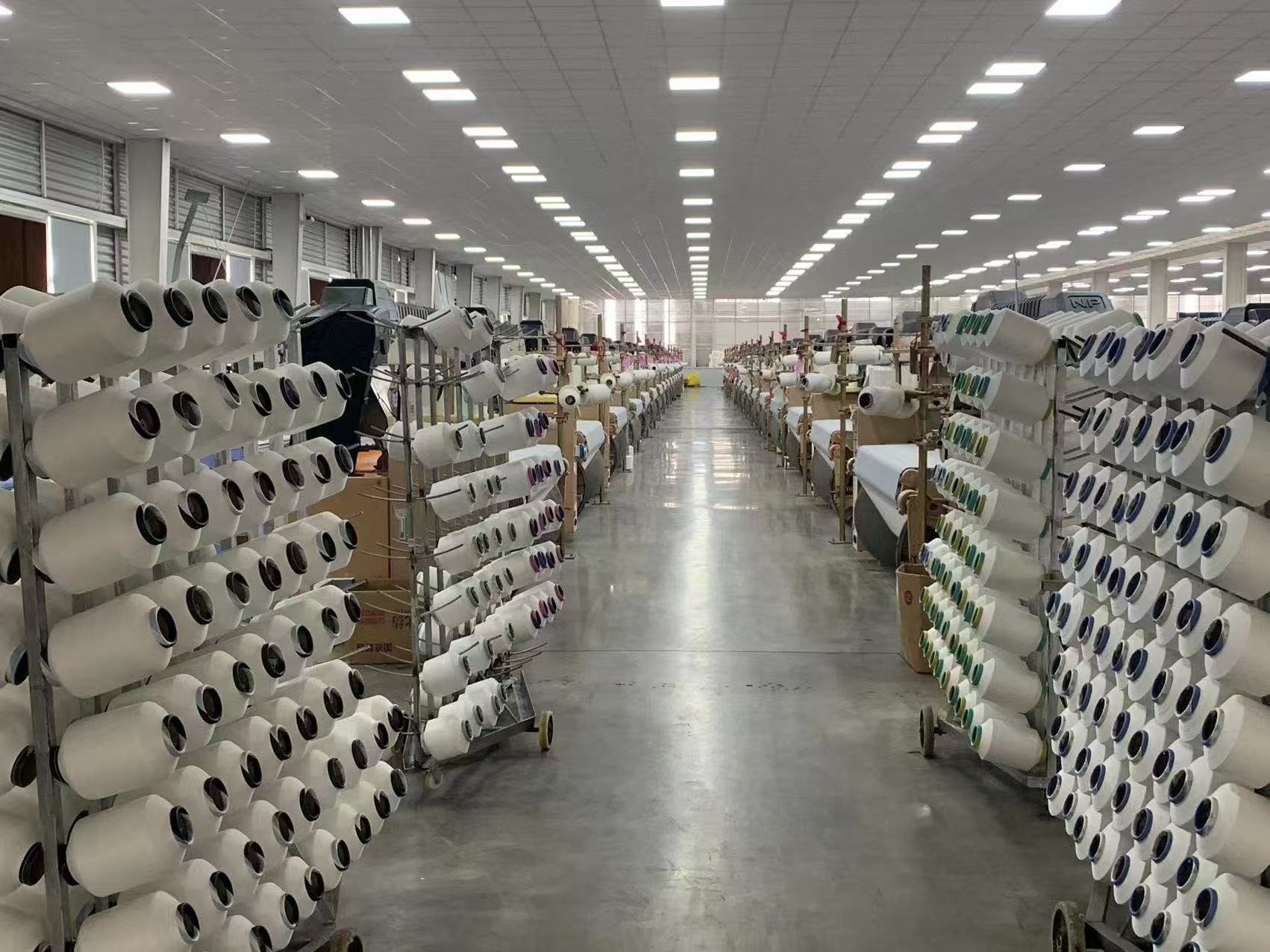
Both fabrics form part of the home textile fabric range produced by Suzhou T-land Textile Co., Ltd., which trades as T-LAND TEXTILE (www.t-landtex.com). The company was founded in 2014, operates a 5,000 ㎡ facility with 91 employees and three R&D engineers, and records an annual output of 5,000,000 meters, of which roughly 90% is exported, mainly to the EU market.
Problem Definition: Why “Velvet or Poly Linen” Is a Specification Question
Buyers usually meet this decision as a style question — velvet looks richer, linen looks calmer — and then discover that the two candidates cannot be swapped without reworking the specification. The reason is that velvet and polyester linen differ at four measurable points, and each one has a consequence downstream.
- Yarn construction. TL0901 is recorded with a 160D construction, while the polyester linen group is recorded with 600D × 600D and 300D × 300D constructions. Denier expresses yarn linear density, so the poly linen group is built from visibly coarser yarns. Coarser yarns create a more pronounced, drier surface texture, which is consistent with the recorded linen hand feel; finer yarns sit flatter against the surface, which is consistent with the soft, velvet-like hand feel recorded for TL0901.
- Weight. TL0901 is specified at 200 gsm; TL0415, TL0469 and TL0484 are specified at 230 gsm. Weight drives how the fabric drapes over foam and how much body it has during sewing.
- Usable width. TL0901 is recorded at 160 cm; the polyester linen group is recorded at 150 cm. A 10 cm difference per width changes panel layout and off-cut rate, so it should be tested in a real marker instead of assumed.
- Back side. The polyester linen group is supplied with a bonded back side. The TL0901 product record does not describe a bonded back. If the upholstery line depends on a laminated composite, this is the difference that blocks a straight substitution.
Because weight and colour are production variables rather than fixed constants, the purchase specification should also state acceptable GSM tolerance and batch-to-batch colour difference limits. Custom width and custom gram weight are normal requests in this segment and are part of the recorded customisation scope rather than exceptions.
Industry Background: The Constraints That Reach the Fabric Line
Sofa fabric specification is no longer decided by design alone. Global home textile demand reached USD 144.76 billion in 2025, according to The Business Research Company’s home textile market report, and Asia Pacific held a 44.17% share of that market in 2025, according to Fortune Business Insights. Inside furniture, Verified Market Research valued the global upholstery fabric market at USD 44.5 billion in 2023. Volume at this scale means the same comparison is made thousands of times a year, and each decision now carries compliance weight.
On the regulatory side, the UK Furniture and Furnishings (Fire) (Safety) Regulations 1988 (amended 2010 and 2025) remain the core regime in 2026 for domestic upholstered products, while BS 5867 is the established UK fire safety standard specifically for curtains and drapes. In the EU, the General Product Safety Regulation (GPSR) 2023/988 mandates safety for home textiles, with Digital Product Passports expected for textiles by 2027.
The practical effect is that the constraint conversation now begins at fabric selection. Special requirements commonly raised at this stage include flame retardancy, high light fastness, high Martindale wear resistance, anti-pilling performance, water-repellent and stain-resistant finishes, low-formaldehyde eco-standards, washability, strict batch-to-batch colour difference control, and customised width and gram weight. TL0901 and the TL0415 / TL0469 / TL0484 group are both specified inside this frame, which is why the comparison below moves from hand feel to construction, weight, backing and compliance instead of stopping at appearance.
Detailed Specification Review
Velvet Sofa Fabric TL0901
TL0901 is recorded as a velvet fabric made of 100% polyester, with a 160D construction, a weight of 200 gsm and a usable width of 160 cm. The recorded hand feel is soft and velvet-like. The product record lists cushion and sofa production as the intended uses, and the fabric is available in colours matched to home decoration requirements.
For a furniture OEM, three points matter here. First, the 160 cm usable width is 10 cm wider than the polyester linen group, which can change panel layout on wider cover components and reduce off-cut waste, depending on the marker your cutting room actually runs. Second, at 200 gsm the velvet is the lighter of the two candidates, which suits designs where a softer drape over foam is wanted. Third, because no bonded back is recorded for TL0901, lamination must be planned as a separate operation if the programme requires a laminated composite.
Polyester Linen Sofa Fabric TL0415, TL0469 and TL0484
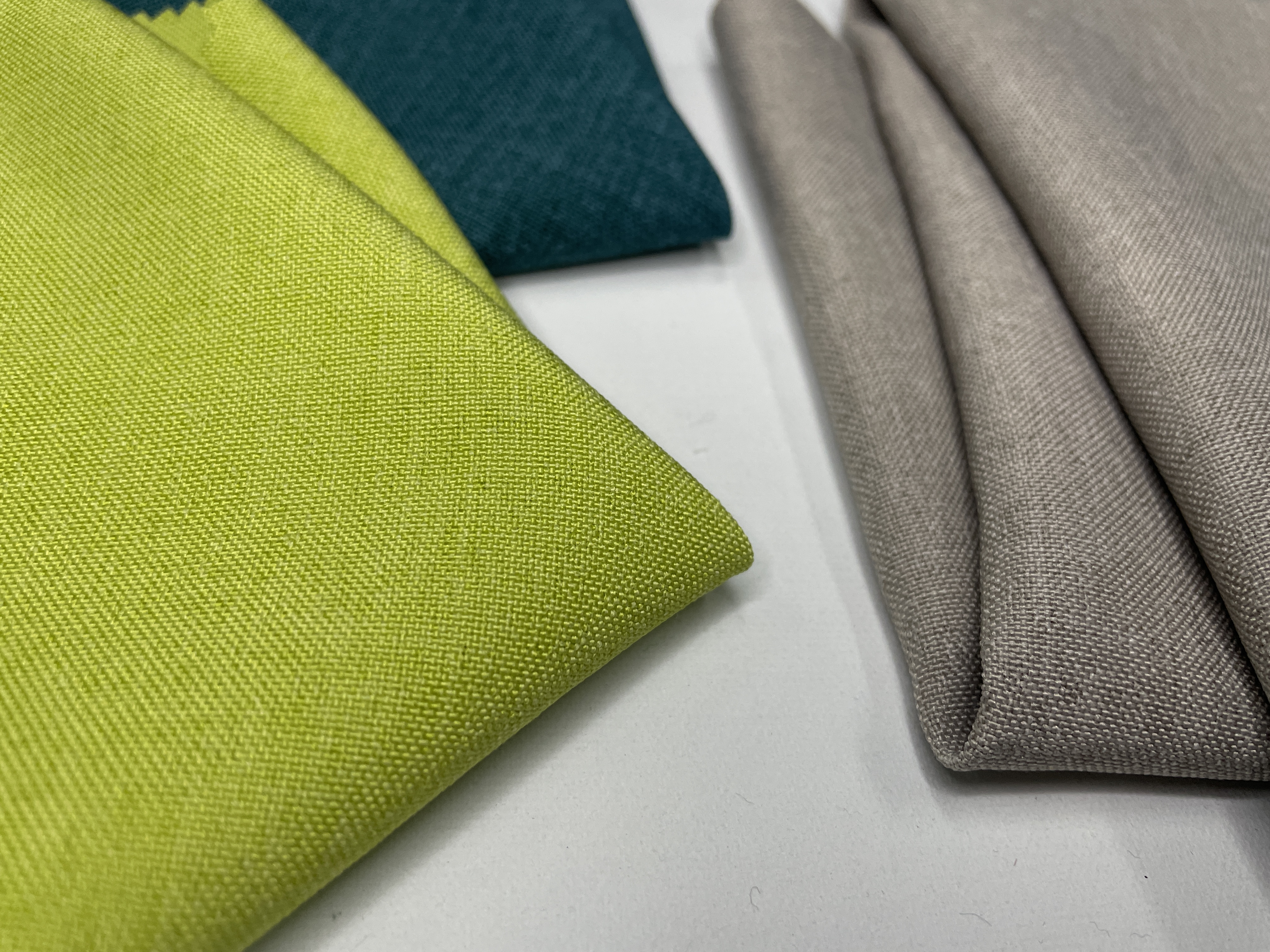
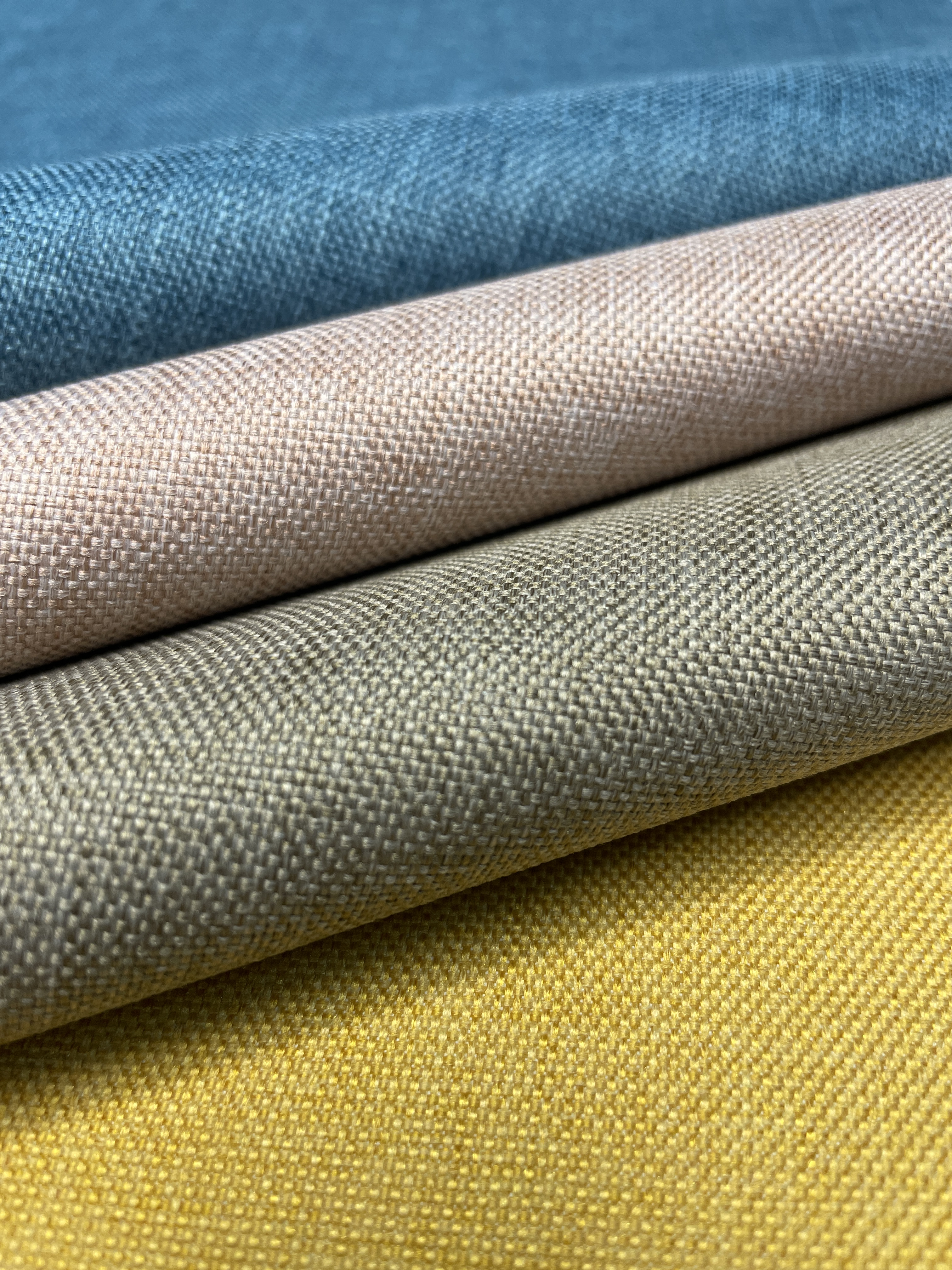
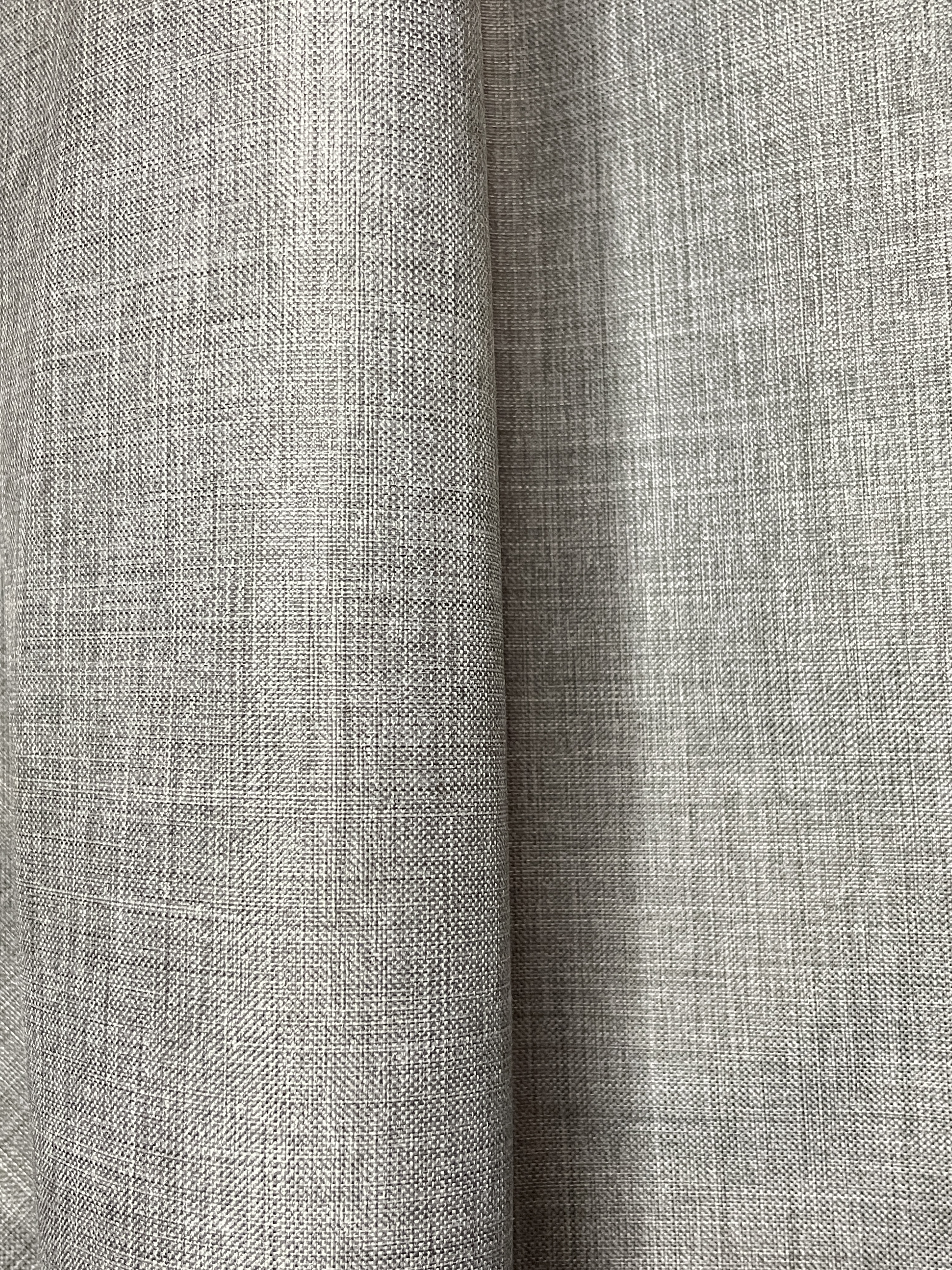
TL0415, TL0469 and TL0484 are recorded as a polyester linen sofa fabric group made of 100% polyester, with constructions of 600D × 600D and 300D × 300D, a weight of 230 gsm and a usable width of 150 cm. The recorded hand feel is a linen hand feel, and the group is supplied with a bonded back side. Stated uses are sofa and cushion production, the fabrics are described as fit for indoor and outdoor use, and colour can be matched to home decoration requirements.
The three model numbers share one construction and weight platform, so choosing between them is normally a surface and colour decision rather than an engineering decision. What matters commercially is that the group is heavier than TL0901 at 230 gsm, narrower at 150 cm, and delivered with a bonded back.
What the Bonded Back Side Changes in Production
A bonded back is not decoration; it changes how the fabric behaves in assembly. Within the supplied technical descriptions, the backside of the fabric can be bonded to form a laminated upholstery composite, and the fabric can be supplied with a bonded backing for cushion and sofa production. The bonded back side is described as supporting lamination quality control, and it is the reason the fabric can be made into sofa or cushion products without an additional in-house lamination step.
This is also where certification scope becomes relevant. The applicable OEKO-TEX Standard 100 scope documentation covers woven and knitted fabric made of 100% polyester and 100% polyamide, including bleaching, disperse dye piece-dyeing, transfer printing, and PU / TPU / PVC coating and laminating finishing, at Product Class II for products with direct contact to skin. A bonded construction therefore sits inside a covered finishing route rather than outside it — provided the specific item is named in the current certificate.
Certification Records Behind Both Candidates
Two certification records are relevant to this comparison. The first is OEKO-TEX STANDARD 100, certificate number 19.HCN.99628, issued by Hohenstein and applicable to the global market; its documented product coverage names the polyester linen sofa fabric TL0415, TL0469 and TL0484 among other items. The second is the Global Recycled Standard (GRS), certificate number CB-CUC-1026562, issued by CONTROL UNION for dyed fabrics and greige fabrics, issued on 16 March 2026 and valid until 15 March 2027, with documented coverage that includes poly linen and jacquard sofa fabric items such as TL12167 and TL12210.
Certificate scope should be treated as construction-specific. Coverage follows the fibre, construction and finishing route that was audited, so the correct action before ordering is to request the current certificate copy and confirm the model-level mapping for the exact item and finish — bonded, coated or plain — rather than assuming that a brand-level certificate covers every model in a range.
Step-by-Step Breakdown: How to Choose Between the Two
- Fix the hand feel brief first. If the design intent is a velvet surface, TL0901 is the candidate recorded with a velvet hand feel. If the intent is a linen-look surface, TL0415, TL0469 and TL0484 are the candidates recorded with a linen hand feel. Hand feel cannot be substituted after the colour is approved.
- Compare construction, not colour, when checking durability. The 160D construction of TL0901 and the 600D × 600D or 300D × 300D constructions of the poly linen group describe different yarn systems. Put the construction on the specification sheet as the parameter subject to construction comparison, and verify it against a physical sample rather than a render.
- Match weight to the application. 200 gsm against 230 gsm is a real difference in body and drape. On tight, tailored cover shapes the heavier poly linen generally holds shape more firmly, while the lighter velvet follows foam contours more closely. Confirm the requirement with the pattern maker rather than by feel alone.
- Plan the marker against usable width. 160 cm against 150 cm changes the number of panels per cover and the off-cut rate for a given panel width. Model both widths in the actual marker before choosing, and state the width tolerance you will inspect against on receipt.
- Decide whether the back side must be bonded. If your line laminates in-house, a non-bonded velvet is manageable. If the line needs a ready laminated composite for sofa or cushion production, the bonded back of the poly linen group removes a process step and a quality-control point from your floor.
- Check compliance against the destination market. Confirm the fire retardant requirement level, light fastness, Martindale wear resistance, anti-pilling expectation, water and stain repellency, and any eco-standard limit the market applies, then map those requirements to a certified construction.
- Sample, then lock commercial terms. Approve hand feel, colour and backing on a physical sample; then set GSM tolerance, colour difference limits, MOQ, packaging and delivery schedule in the purchase agreement.
Comparison Table: TL0901 vs TL0415 / TL0469 / TL0484
| Comparison point | Velvet sofa fabric TL0901 | Polyester linen sofa fabric TL0415 / TL0469 / TL0484 |
|---|---|---|
| Fabric type | Velvet fabric | Polyester linen fabric |
| Composition | 100% polyester | 100% polyester |
| Yarn construction | 160D | 600D × 600D / 300D × 300D |
| Weight | 200 gsm | 230 gsm |
| Usable width | 160 cm | 150 cm |
| Recorded hand feel | Soft, velvet-like | Linen hand feel |
| Back side | No bonded back recorded in the product data | Bonded back side, can be made into sofa or cushion |
| Stated use in the product record | Cushion and sofa production | Sofa or cushion production; described as fit for indoor and outdoor use |
| Colour | Colours matched to home decoration | Colours matched to home decoration |
| Documented certification link | OEKO-TEX Standard 100 and GRS certificates held by the manufacturer; confirm item-level scope for TL0901 | Named in the documented OEKO-TEX Standard 100 product coverage (certificate 19.HCN.99628) |
Use Cases: Where Each Fabric Fits
The two fabric families serve different positions in furniture and home decoration programmes. Typical project types in this segment include residential decoration projects, hotel and B&B projects, office commercial projects, health-care institutions, exhibition and cultural tourism projects, and special soft furnishing customisation for RVs and yachts. Within those environments, sofa fabric has a defined job: cover and protect the sofa base material, resist friction, decorate the space and improve sitting comfort.
- TL0901 velvet: cushion and sofa production where a velvet surface is the design requirement, and where the 160 cm usable width helps the marker on wider cover components.
- TL0415 / TL0469 / TL0484 polyester linen: sofa and cushion production where a linen hand feel is required, where the 230 gsm weight suits the cover construction, and where indoor and outdoor use is stated in the product record.
- Hospitality and contract projects: hotels, B&Bs and office commercial interiors normally raise heavier wear, colour consistency and stain-resistance requirements. Those are handled through the special requirements list — flame retardancy, light fastness, Martindale wear resistance, anti-pilling, water and stain repellence, low-formaldehyde limits, batch colour difference control — rather than through the base product alone.
A documented OEM case shows how these specifications behave over time. The case covers furniture OEM clients across Germany, the Netherlands, Belgium, Italy, Sri Lanka and South Africa, with 20,000 meters supplied for sofa and curtain applications across relationships lasting 4 to 6 years. The recorded outcome categories are hand feel, colour fastness and stable fabric performance, with compliance with the OEKO-TEX standard noted as the highlight.
Procurement Notes: Sampling, MOQ and Lead Time
For both fabric groups, the manufacturer works in OEM and ODM modes. Customisation covers pattern design, fabric width, gram weight, colour and shade, flame-retardant finishing, water-repellent finishing, stain-resistant finishing, and development against a customer-supplied sample. Recorded production parameters are a monthly capacity of 200,000 meters, a lead time of 30 to 45 days, and an MOQ of 500 to 1,000 meters per colour. Quality control is described as 100% in-house testing, or random inspection by the customer. Export markets are the EU and the Americas, and the after-sales window is within two months after the customer receives the goods.
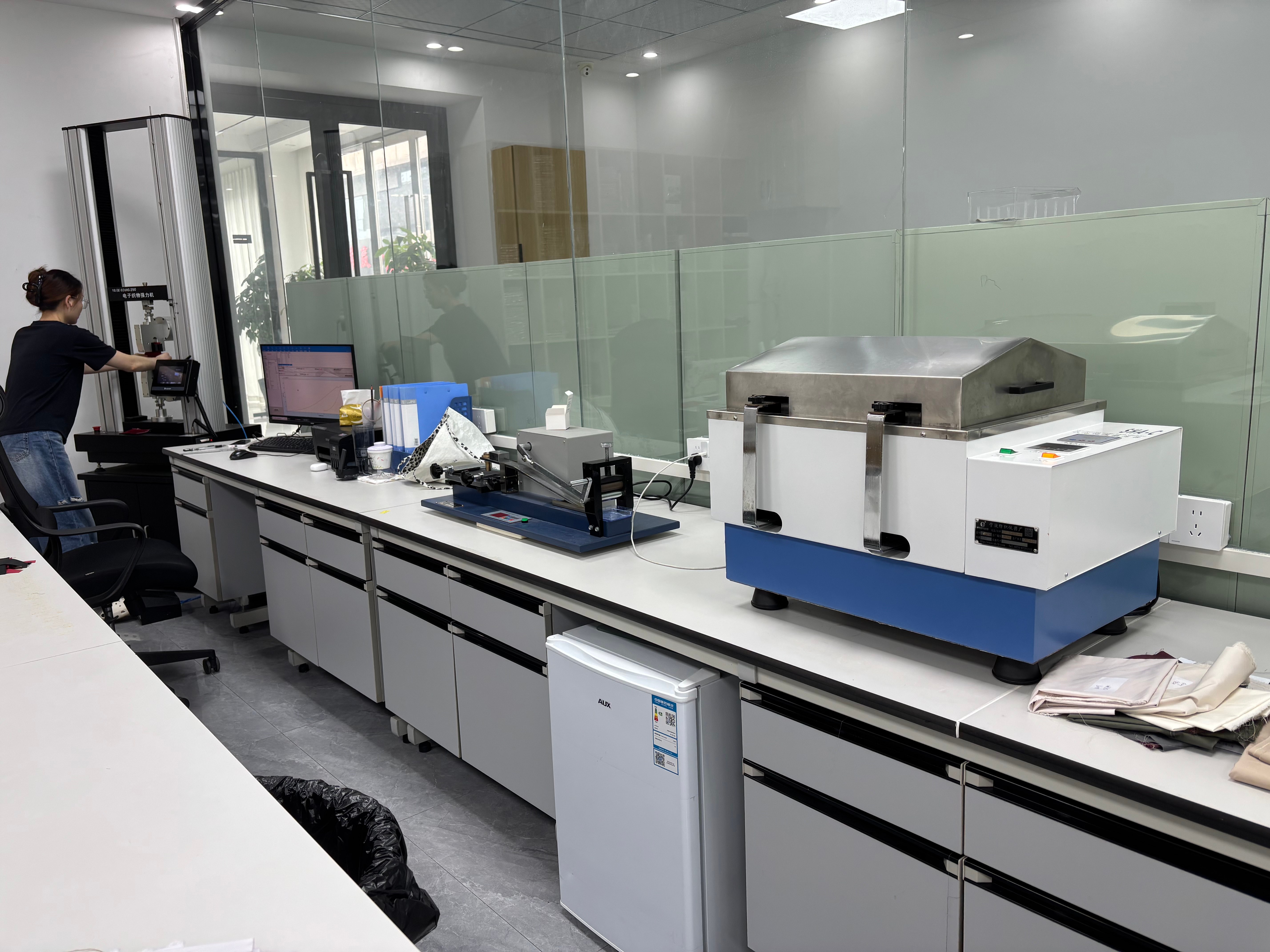
Two operational facts help buyers plan around those numbers: the facility includes an in-house laboratory used for quality testing, and a 1,500 ㎡ warehouse used to store fabric before shipment.
FAQ
Which certifications apply to T-LAND TEXTILE velvet and polyester linen sofa fabrics?
Two certificates are documented. OEKO-TEX STANDARD 100 certificate 19.HCN.99628 is issued by Hohenstein and applies to the global market; its scope covers woven and knitted fabric made of 100% polyester and 100% polyamide, including bleaching, disperse dye piece-dyeing, transfer printing, and PU / TPU / PVC coating and laminating finishing, at Product Class II for products with direct contact to skin, and its documented product coverage names the polyester linen sofa fabric TL0415, TL0469 and TL0484 among other items. The Global Recycled Standard certificate CB-CUC-1026562 is issued by CONTROL UNION for dyed fabrics and greige fabrics, valid from 16 March 2026 to 15 March 2027, with documented coverage that includes poly linen and jacquard sofa fabric items such as TL12167 and TL12210. Because certificate scope follows the audited fibre, construction and finishing route, buyers should request the current certificate copy and confirm the model-level mapping before placing an order.
Can a Chinese home textile fabric manufacturer supply fire retardant sofa fabric for regulated markets?
T-LAND TEXTILE lists flame-retardant finishing among its customisation options, alongside water-repellent and stain-resistant finishing. Fire retardant performance is documented on items in the range such as TL08321, a 100% polyester fabric at 380 gsm with a (150D+320D) × (300D+300D) construction that is recorded as fire retardant, room darkening and noise reducing. Requirements differ by market: in the UK, the Furniture and Furnishings (Fire) (Safety) Regulations 1988 (amended 2010 and 2025) remain the core regime in 2026 for domestic upholstered products, and BS 5867 is the established UK fire safety standard specifically for curtains and drapes; in the EU, the General Product Safety Regulation 2023/988 mandates safety for home textiles, with Digital Product Passports expected for textiles by 2027. Buyers should state the exact standard, test method and pass level with the enquiry so the finishing route can be specified and tested accordingly.
Should an existing sofa programme switch from velvet TL0901 to polyester linen TL0415, TL0469 or TL0484?
Only when the specification change is deliberate. TL0901 is recorded at 200 gsm with a 160 cm usable width and a velvet hand feel, while TL0415, TL0469 and TL0484 are recorded at 230 gsm with a 150 cm usable width, a linen hand feel and a bonded back side. A switch therefore changes hand feel, weight, marker layout and the need for a separate lamination step at the same time. If the programme depends on a ready laminated composite, the bonded poly linen group fits more directly; if the design depends on the velvet surface and the wider usable width, the change is not a like-for-like substitution and should be re-sampled and re-costed first.
What MOQ and lead time apply to these fabrics?
Recorded commercial terms for both OEM and ODM production are an MOQ of 500 to 1,000 meters per colour and a lead time of 30 to 45 days, against a monthly capacity of 200,000 meters. Because MOQ is set per colour, the cost driver on a multi-colour sofa programme is the number of shades rather than the total meterage. Width and gram weight can be customised, but any change to those parameters moves the item away from the standard construction and should be confirmed with the supplier before sampling.
Can velvet and polyester linen sofa fabric be sampled before bulk production?
Yes. Development against a customer-supplied sample is listed as part of the customisation service, and small sample orders are supported for new item development, with copyright for new items developed from a customer’s design retained by the customer under law authority. After bulk delivery, the after-sales window is within two months of receipt. To start, send the target hand feel, colour reference, width, gram weight and required compliance standard to angela@t-landtex.com or WhatsApp +86 13913732999, and request the sample set together with the current certificate copies.
Conclusion
Velvet sofa fabric TL0901 and polyester linen sofa fabric TL0415, TL0469 and TL0484 are not interchangeable upholstery options; they represent two different construction decisions. TL0901 delivers a velvet hand feel at 200 gsm on a 160D construction with a 160 cm usable width. The poly linen group delivers a linen hand feel at 230 gsm on 600D × 600D or 300D × 300D constructions with a 150 cm usable width and a bonded back side that supports lamination and ready sofa or cushion production. Certification coverage, market-specific fire safety requirements, and the practical terms — sampling, MOQ per colour and a 30 to 45 day lead time — complete the picture.
Match the specification to the sofa, not to the swatch book: decide the hand feel first, then verify construction, weight, usable width, back side and compliance in that order.
Next step: request a sample set or a quotation for TL0901, TL0415, TL0469 and TL0484, or download the T-LAND TEXTILE brochure here: T-LAND TEXTILE product brochure (PDF). Contact Angela at angela@t-landtex.com or WhatsApp +86 13913732999.
Have Questions or Need More Details?
Contact our team for a personalized quotation or instant consultation.
Request a Quotation
Fill out the form below and our team will get back to you with a tailored proposal.
WhatsApp Direct Chat
Prefer to chat in real-time? Message us on WhatsApp for instant assistance & quick answers.
- Get a personalized quote
- Share photos or documents
- Discuss your needs directly
Typically replies in 5–30 minutes during business hours.