Home Textile Fabric: Types, Specifications and Supplier Evaluation
Home Textile Fabric: A Practical Guide to Types, Specifications, and Supplier Evaluation
Home textile fabric is the woven cloth used for soft furnishings: sofa and upholstery covers, curtains, cushions and the decorative textiles around them. Buyers who search for home textile fabric manufacturers are usually trying to answer three questions at once, which fabric family fits the end use, which measurable specification defines it, and which mill can reproduce that specification consistently in bulk. This guide answers all three, using published market data, current fire-safety rules, and the documented specifications of Suzhou T-land Textile Co.,Ltd, which sells under the brand T-LAND TEXTILE.
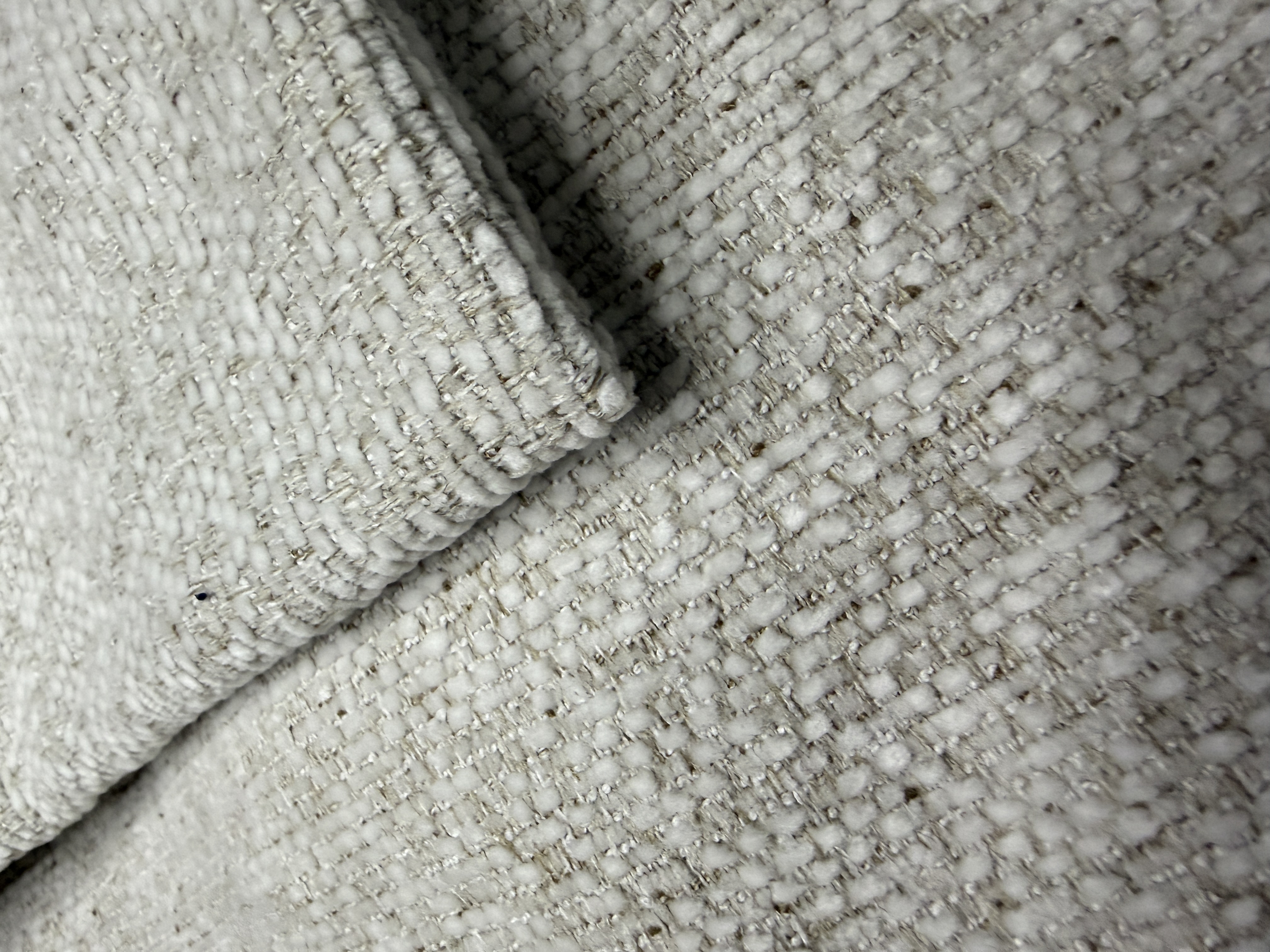
Problem Definition: Why “Home Textile Fabric” Is Hard to Buy Precisely
The difficulty is not the fabric. It is that one commercial term covers several end uses that fail for completely different reasons. A sofa fabric has to survive repeated sitting pressure and friction. A curtain fabric hangs, takes sunlight and controls light. A cushion fabric is shaped, sewn and squeezed. Each of these is a different mechanical and optical duty, and a construction that performs well in one duty can be the wrong choice in another.
The second difficulty is the sourcing language gap. Many offers are described by appearance and price band only, without the four data points a buyer needs to compare them: fibre composition, yarn construction, weight in gsm, and usable width. Without those four, two quotations cannot be compared, and a sample cannot be reordered. Almost every later dispute in soft-furnishing sourcing traces back to a specification that was never written down in the research stage.
There is also a duty-class split that buyers often miss. Home textile fabrics are used under household conditions with low-frequency friction and normal sunlight exposure, and under commercial conditions with heavy-duty traffic. A dimout curtain for a bedroom and a dimout curtain for a hotel corridor are not automatically the same specification, even when the surface looks identical.
Three failure modes dominate early-stage buyer complaints, and all three are predictable:
- Pilling. Almost all fabrics may pill. Pilling forms when short fibres are pulled out of the yarns by repeated friction and tangle into visible pills. Looser yarn structures and higher short-fibre content increase the possibility. It is a physical fibre phenomenon, not automatically a product defect, and the higher the pilling-resistance grade, the lower the risk.
- Fading. Curtain fading is mainly caused by insufficient light fastness. Ultraviolet radiation triggers photo-oxidation of dye molecules, the chromophore groups are damaged, and the result is fading, discolouration and uneven surface colour.
- Sample-to-bulk drift. The risk is not that a mill cannot make the sample, but that bulk production does not repeat it, especially in colour and hand feel.
Industry Background: A Large Market Moving Toward Traceability
The home textile category is large enough that supply decisions inside it are rarely local. The global home textile market reached USD 144.76 billion in 2025, according to The Business Research Company, and Asia Pacific held a 44.17% share of that market in 2025, based on Fortune Business Insights. Within the category, upholstery fabric alone was valued at USD 44.5 billion in 2023 by Verified Market Research, which shows how much of the total sits in furniture-facing fabric rather than in bedding.
Light-control fabrics are a distinct sub-segment with their own growth curve. Strategic Market Research values the global blackout fabric market at USD 2.7 billion in 2024 and projects USD 3.8 billion by 2030, a 5.9% CAGR across 2024 to 2030. Reports on this sub-segment differ in headline size, and the difference is mostly definitional: some figures count raw fabric, while others include finished curtain products. For a buyer, the practical reading is that dimout and room-darkening constructions belong in the specification discussion from the start, not as an afterthought.
Supply geography matters too. China’s home textile exports reached USD 2,870.94 million in March 2024, according to Stellar Market Research, which reflects the concentration of weaving, dyeing and finishing capacity in Chinese textile clusters. Suzhou T-land Textile Co.,Ltd operates from Shengze Town in Wujiang City, Jiangsu, an area known as the Silk Capital of China, and exports about 90% of its output, with the European Union as its major market.
Regulation now sets the research agenda
Compliance used to be a late-stage paperwork task. In the current market it is a research-stage filter, because the choice of fibre and finishing route determines whether a fabric can ever be certified for a target market.
- United Kingdom: the Furniture and Furnishings (Fire) (Safety) Regulations 1988 remain the core regime for domestic upholstered products, as amended in 2010 and 2025. For curtains and drapes specifically, BS 5867 is the established UK fire-safety standard.
- European Union: the General Product Safety Regulation (GPSR) 2023/988 mandates safety for home textiles, and Digital Product Passports are expected for textiles by 2027. Traceability of material and batch data is therefore becoming part of the product requirement rather than an optional marketing extra.
For an import buyer, this changes the order of questions. Asking “what does it look like” first and “which fire-retardant route does it use” last produces expensive rework. Asking the compliance route early narrows the fabric family before a single sample is cut.
Detailed Solution: The Fabric Families and How Each One Is Specified
Home textile fabric can be organised into four end-use families, and each family carries its own performance vocabulary. This is also the level at which T-LAND TEXTILE product data is written, so the categories below use its documented models as examples.
1. Sofa and upholstery fabric
Upholstery fabric covers and protects the sofa base material, resists friction, decorates the space and contributes to sitting comfort. In sourcing terms it is the family with the highest mechanical demand, because the fabric is fixed to a frame and bears repeated sitting pressure and friction. The three main construction routes in this family are velvet, jacquard and poly linen. Velvet constructions such as TL07410, TL07377-2, TL07242 and TL0901 give a soft, velvet-like hand feel; jacquard constructions such as TL07408, TL07392 and TL07373-1 form the pattern during weaving; poly linen constructions such as TL12167 and the TL0415 / TL0469 / TL0484 group are built to give a linen hand feel on a 100% polyester base.
2. Curtain and dimout fabric
Curtain fabric blocks and adjusts light, shades the window, protects privacy, decorates the room and reduces noise. The dimout family in T-LAND TEXTILE’s range is documented with room-darkening performance and noise-reducing properties, supplied readymade for curtain applications for both indoor and outdoor use. Typical models include TL08166, TL0888, TL08229, TL08273, TL08321, TL08180 and the TL08183 / TL08170 pair. Width is a real selection variable here: several models are supplied in 150 cm and 300 cm, and the 300 cm option suits wide curtain applications without horizontal joining.
3. Cushion and dual-use fabric
Some constructions are deliberately designed to serve two uses. TL07410, TL07377-2 and TL07392 are documented as suitable for making sofas and cushions; TL12199 and TL12210 are documented as curtain and sofa fabrics; TL08269 is a curtain and sofa dimout fabric that is ready-made for curtains and cushions. Dual-use models reduce the number of references a buyer has to develop and stock, which matters most for wholesalers and for furniture programmes that need matching sofa and cushion covers.
4. Decorative and finishing-dependent fabric
Decorative fabric is not a construction but a role: it is the visible layer that carries colour, texture and pattern. How a fabric performs in that role depends heavily on finishing and backing, which is where the vocabulary of coated fabric, bonded fabric and fabric backing belongs. A non-woven bonded backing changes a fabric’s stiffness and makes it usable for sofa or cushion production; a silicon coating on the same base supports curtain use. Model TL12199 shows this clearly: the same 700D × 700D base is documented at 300 gsm with backing for sofa and cushion use, and at 380 gsm with silicon coating for curtain use.
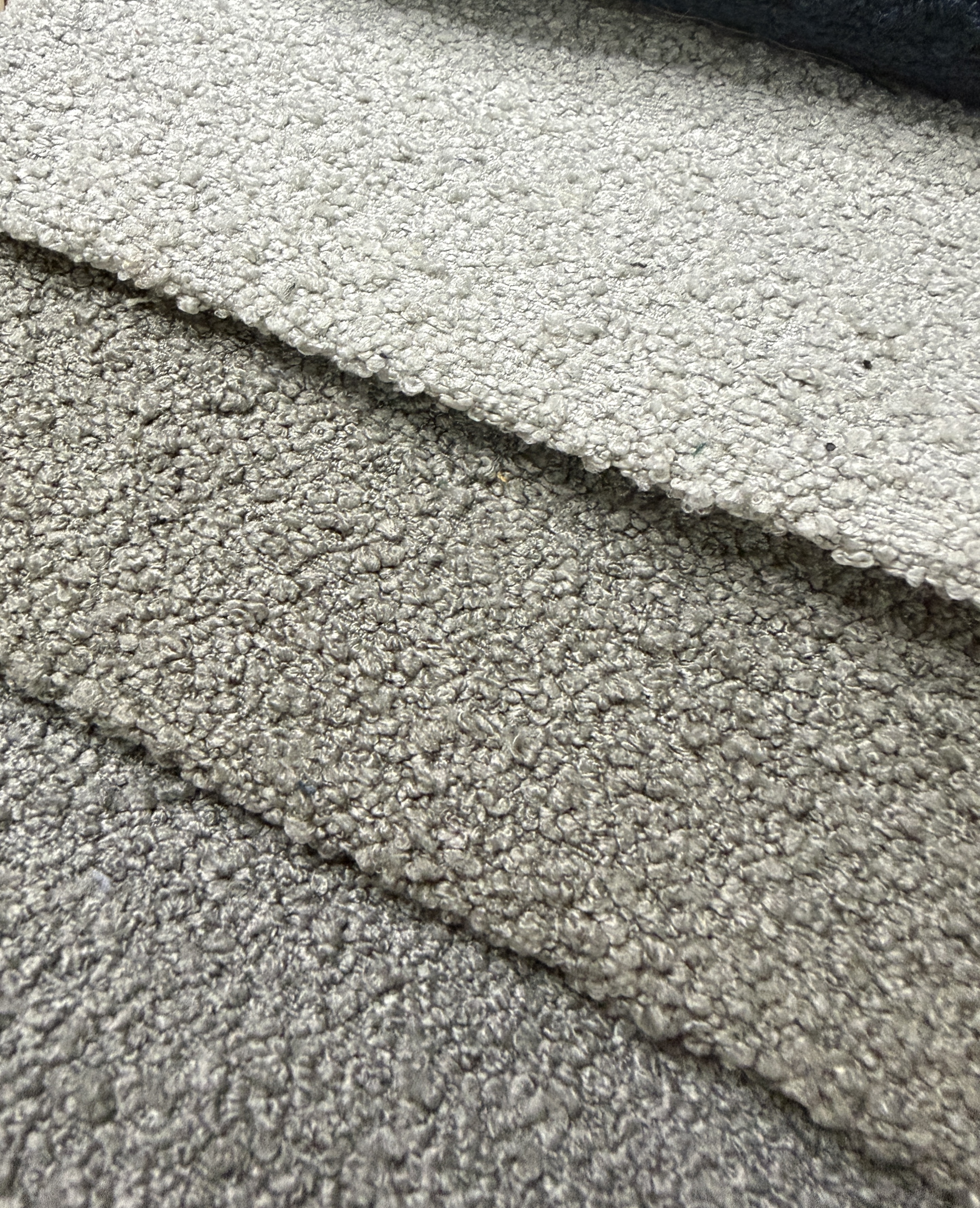
Terminology buyers meet, and what each term actually decides
| Term | What it decides in sourcing | Documented example |
|---|---|---|
| Upholstery fabric | Mechanical duty class and abrasion expectation | TL0329, brushed surface, suede hand feel, 160 gsm |
| Velvet fabric | Hand feel and surface appearance | TL07410, chenille quality, bonded back |
| Jacquard fabric | Pattern formed during weaving, not printed | TL07392, 900D × 1580D, 280 gsm |
| Poly linen fabric | Linen look on a polyester base | TL12167, linen hand feel, bonded back |
| Polycotton fabric | Polyester–cotton blend behaviour: cotton feel with polyester durability | Category term; T-LAND TEXTILE’s documented range is polyester-based |
| Dimout / room-darkening fabric | Light control class of the finished curtain | TL08321, TL08166, TL0888 |
| Blackout fabric | Strongest light-blocking class; verify how the figure is defined | Specify by performance target, not by name |
| Coated fabric | Surface function (for example silicon coating for curtains) | TL12199, 380 gsm with silicon coating |
| Fabric backing / bonded fabric | Stiffness, body and suitability for sofa or cushion construction | TL07410, TL07377-2, TL12167, TL0415 group |
| Fire retardant fabric | Compliance route and whether performance survives washing | Applied route chosen at specification stage |
| Waterproof / stain resistant / easy cleaning fabric | Finishing add-on requested against the end use | Specified as a project requirement |
| Noise reducing fabric | Acoustic contribution of the curtain layer | TL08321, TL08166, TL0888 |
What the manufacturer side looks like
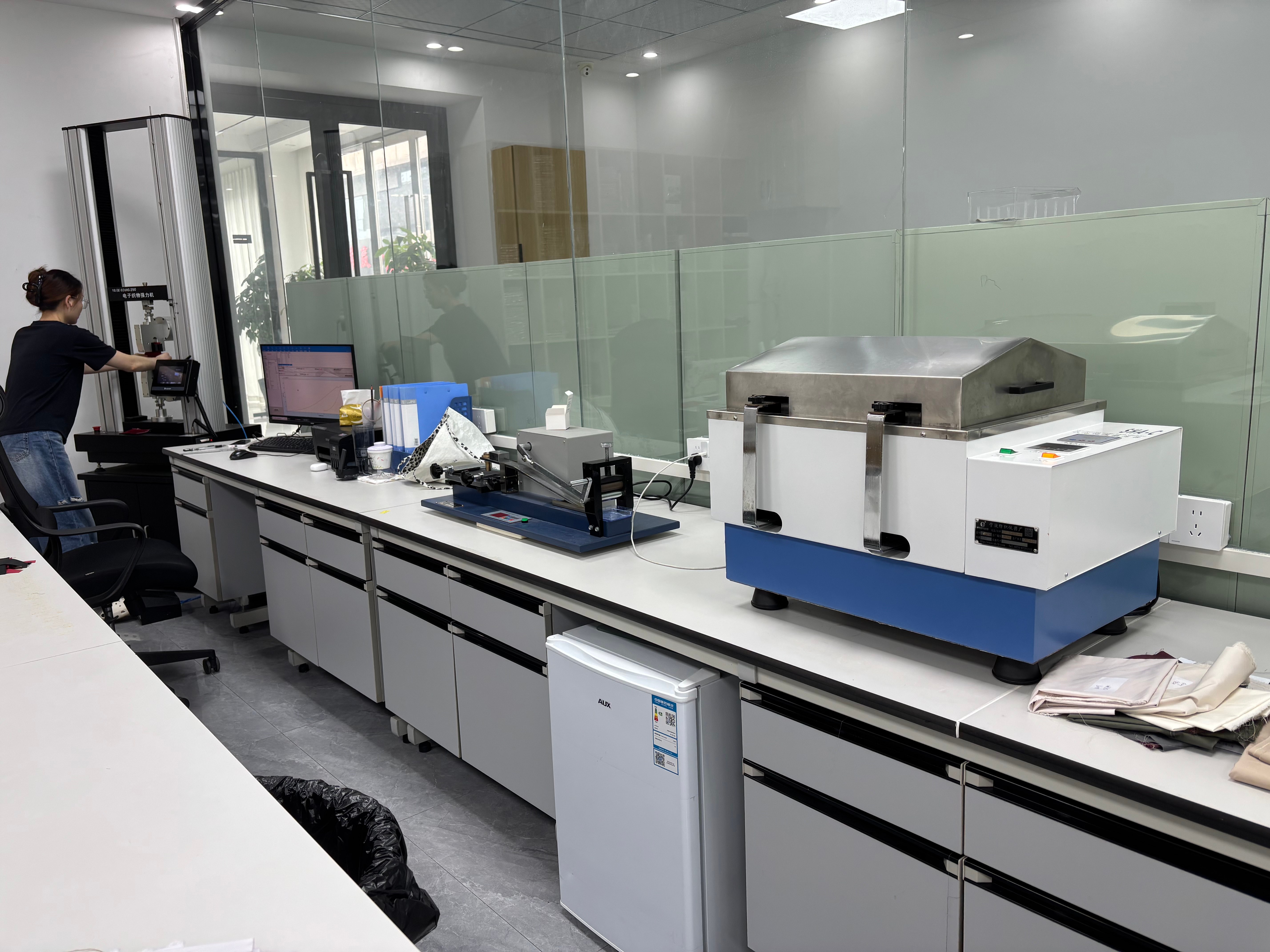
Suzhou T-land Textile Co.,Ltd is a home textile fabric manufacturer founded in 2014, based in Shengze, Jiangsu, China. The manufacturing facility covers 5,000 m² and employs about 91 people, with an annual output of 5,000,000 metres of fabric. The company maintains a 1,500 m² warehouse for fabric storage and shipment handling, and an in-house laboratory for quality testing across different items. Its R&D team consists of 3 engineers. Main products are sofa fabric and curtain fabric; beyond furniture fabric, the company develops garment fabrics including lining fabric, spandex and high-elastic fabrics for indoor and outdoor uniforms.
Two operational details are relevant to buyers at the research stage. First, the company operates a computer-based order instruction system rather than a paper-based process, which keeps order instructions consistent through a production run. Second, it holds OEKO and GRS certification, and works toward additional certifications as different client requirements demand.
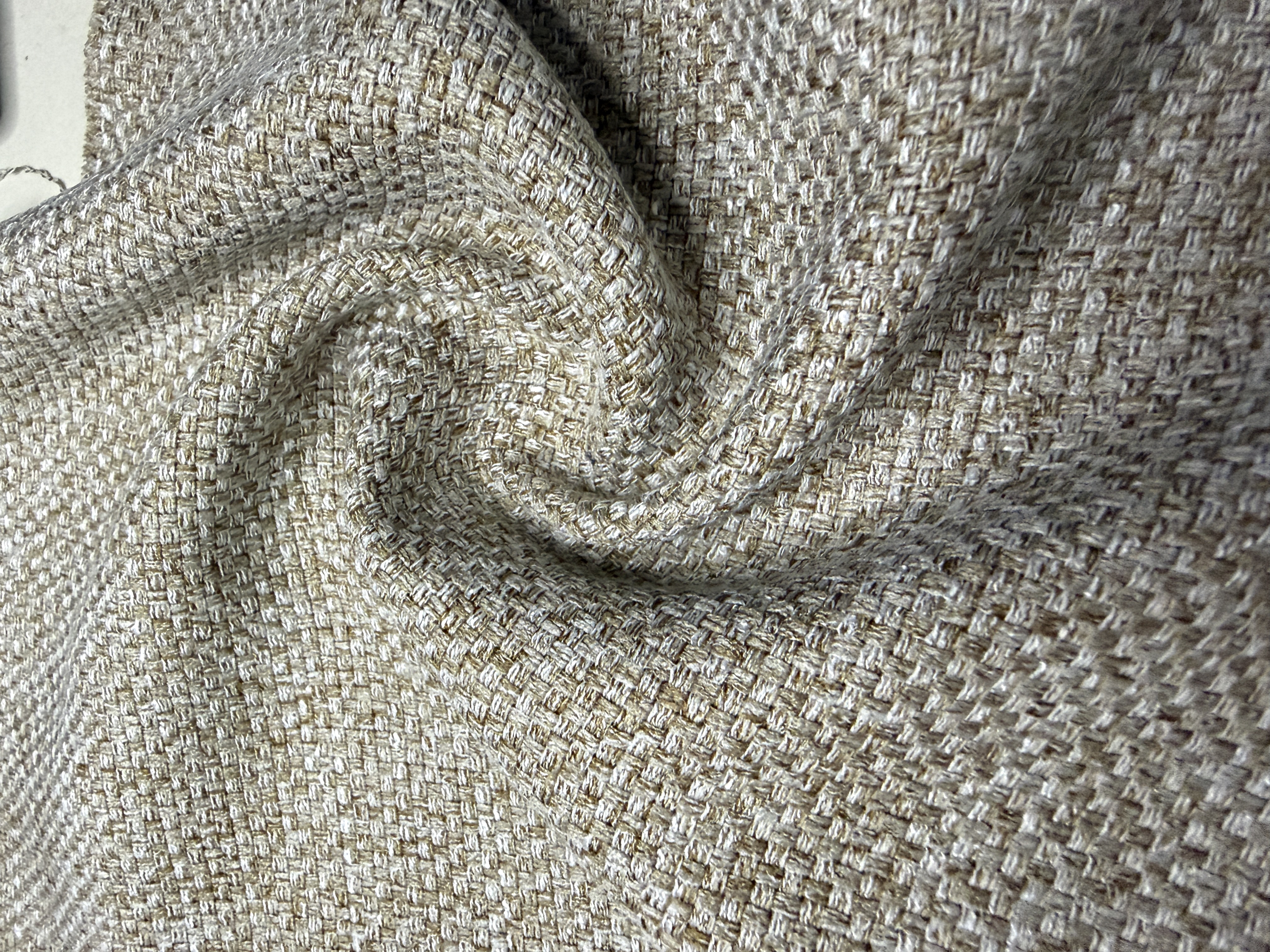
Step-by-Step Breakdown: Specifying a Home Textile Fabric
Six steps carry a fabric from research to a repeatable order. Skipping any one of them moves the risk into production.
- Fix the end use and the duty class. Decide whether the fabric will serve household low-frequency friction and sunlight conditions or commercial heavy-duty conditions. This single decision filters the construction routes and the test expectations before any sample is requested.
- Choose the construction route. Velvet, jacquard or poly linen for upholstery; dimout constructions for curtains; dual-use constructions where sofa and curtain covers must match. Route choice sets the hand feel, the surface appearance and the achievable weight range.
- Write the measurable specification. Four fields are non-negotiable: composition, yarn construction, weight in gsm, and usable width in cm. “Soft velvet sofa fabric” is not a specification; “100% polyester velvet, 350D × 450D, 300 gsm, 150 cm” is.
- Decide finishing and backing. Choose whether the fabric needs a bonded back side for sofa or cushion construction, a coating for curtain function, or a brushed surface for hand feel. Backing decisions change weight and stiffness, so they must be fixed before sampling, not after.
- Set the compliance and test route. Fire retardancy, high light fastness, high Martindale abrasion resistance, anti-pilling, water and stain repellency, low-formaldehyde eco-standard, washability and batch-to-batch colour difference control are all specification items. For fire retardancy, the decisive question is whether the performance must survive repeated washing.
- Validate before bulk. Arrange a first-dye-lot sample, approve it, and only then release mass production. Keep the approved sample, the first-dye-lot record and the bulk lot reference linked so that any later query can be traced.
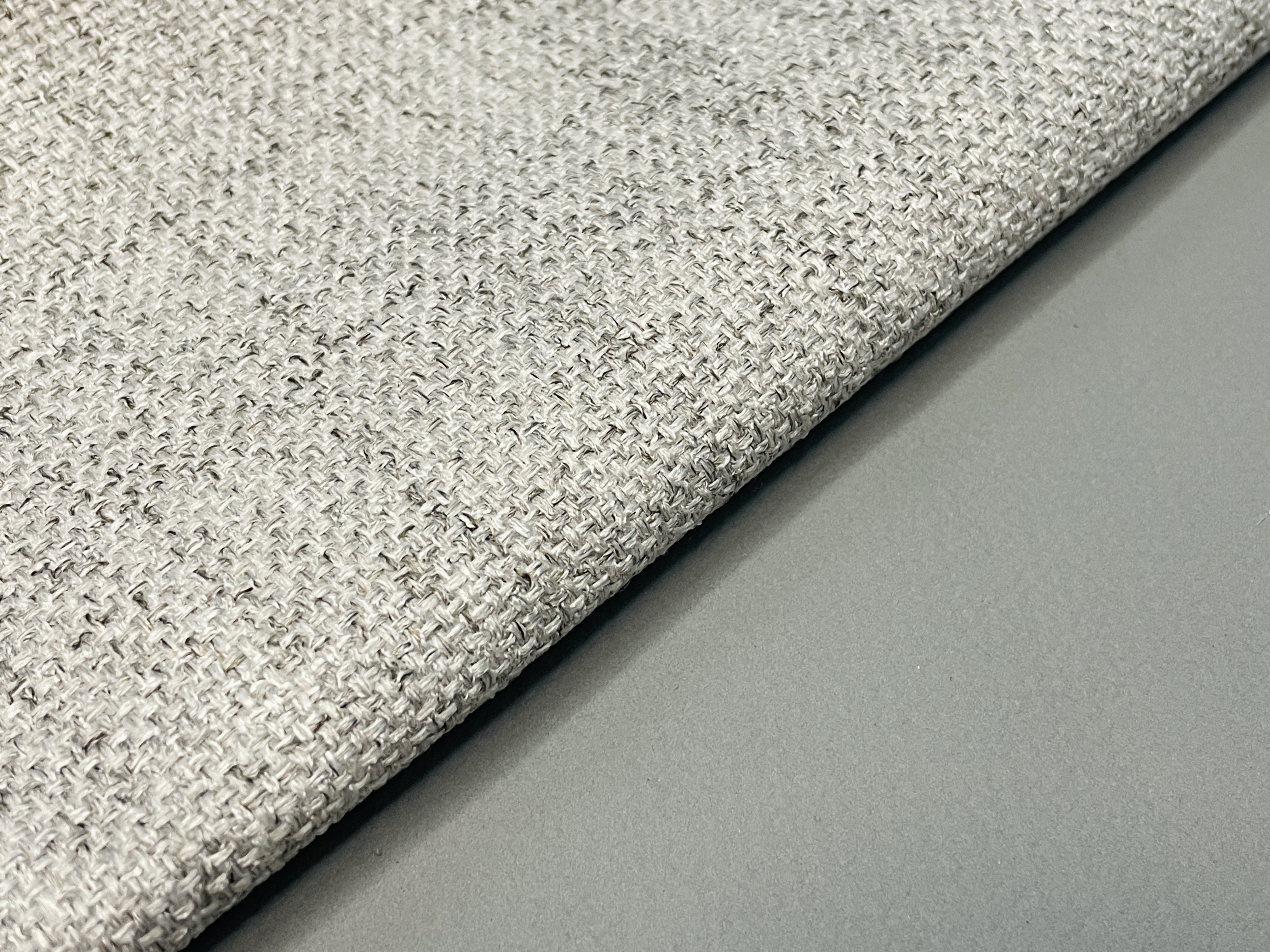
Use Cases: Matching Fabric to Project Type
Home textile fabric is chosen per project type, and each type stresses the fabric differently. The project categories below are the ones this fabric range is documented for.
- Residential decoration projects. The priority is decoration and comfort, with moderate duty. Dimout curtains such as TL08229 or TL0888 paired with a velvet or poly linen sofa fabric covers the room without pushing the specification into contract-grade territory.
- Hotel and B&B projects. Compliance and repeatability dominate. Fire-retardant curtains are typically required, and washability becomes relevant because hotel curtains are maintained repeatedly. A 300 cm width option supports wide window runs, and TL08321 is documented for hotel projects and residential room-darkening curtains at 380 gsm.
- Office commercial projects. Heavy-duty friction and long opening hours matter more than softness. Heavier constructions and bonded backings hold shape better under continuous use.
- Health-care institutions. The specification usually adds low-formaldehyde eco-standard and easy-cleaning requirements on top of standard performance, because cleaning frequency is high.
- Exhibition and cultural tourism projects. Visual consistency across large surfaces is the main risk, which makes batch-to-batch colour difference control a specification item rather than a preference.
- RV and yacht soft furnishing. This is special customization work: tight dimensions, curved panels and mixed indoor and outdoor exposure. Dual-use and coated constructions, such as TL12199 and TL12210, are built for this kind of mixed requirement.
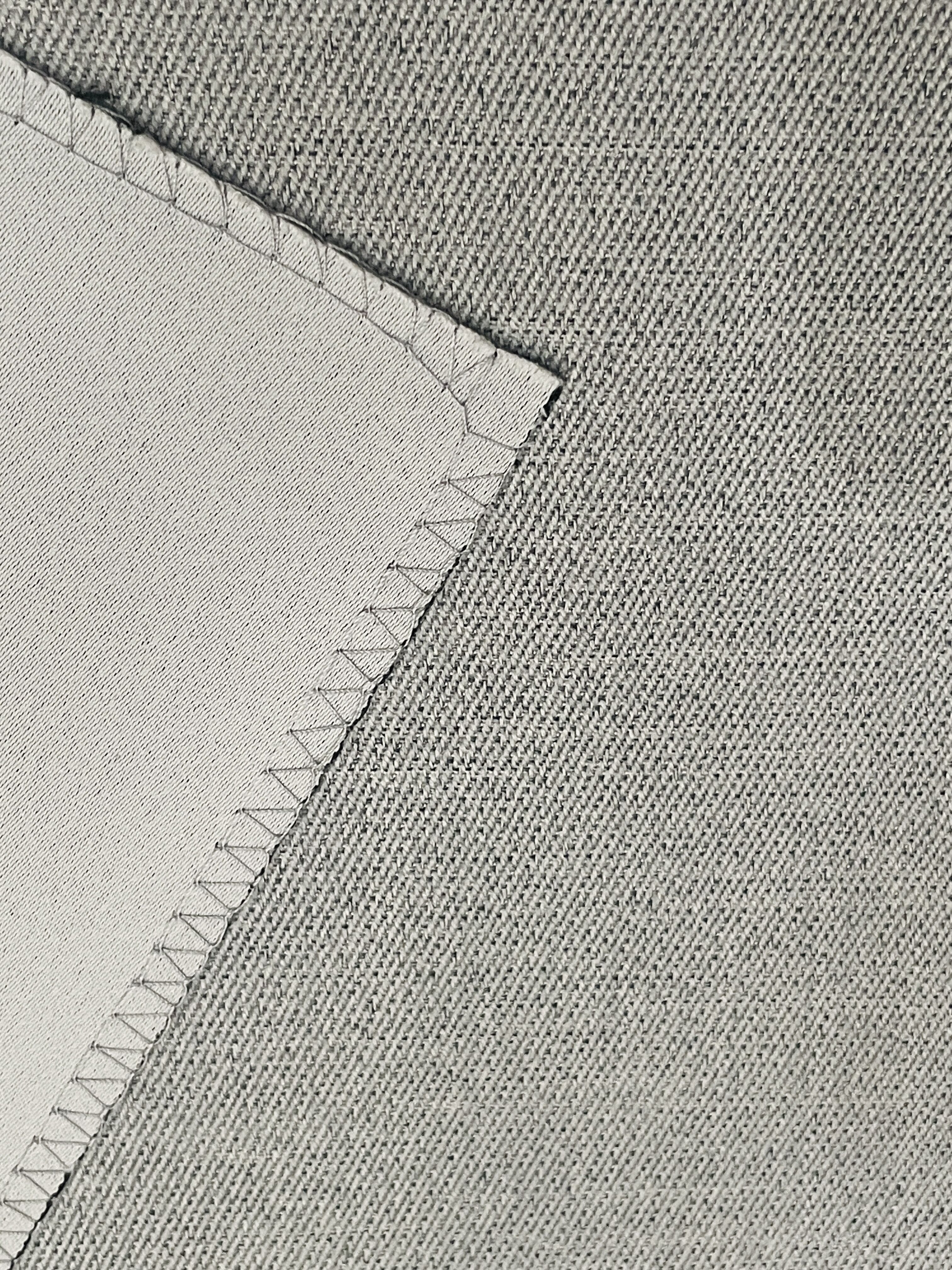
Comparison: Documented Specifications by Family
The two tables below list published specifications from the T-LAND TEXTILE range. They are included because specification tables, not descriptive adjectives, are what allow a buyer to compare constructions across a category.
Curtain and dimout constructions
| Model | Type | Composition | Construction | Weight | Width |
|---|---|---|---|---|---|
| TL08166 | Dimout curtain fabric | 100% polyester | 75D × (300D+300D) | 260 gsm | 150 cm / 300 cm |
| TL0888 | Dimout curtain fabric | 100% polyester | 75D × 300D | 250 gsm | 150 / 280 / 300 cm |
| TL08229 | Dimout curtain fabric | 100% polyester | 75D × 300D | 230 gsm | 150 / 280 / 300 cm |
| TL08273 | Dimout curtain fabric | 100% polyester | (75D+80D) × 320D | 280 gsm | 300 cm |
| TL08321 | Dimout curtain fabric | 100% polyester | (150D+320D) × (300D+300D) | 380 gsm | 150 cm / 300 cm |
| TL08180 | Dimout curtain fabric | 100% polyester linen | 75D × (150D+150D) | 310 gsm | 150 cm / 300 cm |
| TL08183 / TL08170 | Dimout curtain fabric | 100% polyester | 75D × 300D + 160D | 230 gsm | 150 cm / 300 cm |
| TL08269 | Curtain & sofa dimout fabric | 100% polyester | 75D × (300D+300D) | 280 gsm | 150 cm |
| TL12199 | Sofa & dimout fabric | 100% polyester | 700D × 700D | 300 gsm with backing / 380 gsm with silicon coating | 150 cm / 300 cm |
| TL12210 | Poly linen curtain & sofa fabric | 100% polyester | Bonded two-layer poly linen | 385 gsm | 150 cm / 300 cm |
Sofa and upholstery constructions
| Model | Type | Composition | Construction | Weight | Width |
|---|---|---|---|---|---|
| TL07410 | Velvet | 100% polyester | 350D × 450D | 300 gsm | 150 cm |
| TL07377-2 | Velvet | 100% polyester | 300D × 600D | 160 gsm | 150 cm |
| TL07242 | Velvet | 100% polyester | 150D × 320D + 200D | 220 gsm | 150 cm |
| TL0901 | Velvet | 100% polyester | 160 D | 200 gsm | 160 cm |
| TL07408 | Jacquard | 100% polyester | 1150D × 4500D | 450 gsm | 150 cm |
| TL07392 | Jacquard | 100% polyester | 900D × 1580D | 280 gsm | 150 cm |
| TL07373-1 | Jacquard | 100% polyester | 350D × 900D | 220 gsm | 150 cm |
| TL12167 | Poly linen | 100% polyester | 350D × 350D + 650D | 280 gsm | 150 cm |
| TL0415 / TL0469 / TL0484 | Polyester linen | 100% polyester | 600D × 600D / 300D × 300D | 230 gsm | 150 cm |
| TL0329 | Upholstery | 100% polyester | 105D × 200D | 160 gsm | 150 cm / 300 cm |
Read the two tables together and a pattern appears. Curtain constructions in this range generally sit between 230 gsm and 380 gsm with widths up to 300 cm, because hanging fabric needs coverage and light control. Sofa constructions span a wider weight range, from 160 gsm to 450 gsm, because the requirement changes with the furniture programme: light velvet for shaped cushions, heavier jacquard for a firm decorative body.
FAQ
Is your flame-retardant curtain fabric inherent-yarn FR or coating-treated FR?
Both technologies are available. Inherent-yarn FR is permanent and washable, with a soft hand feel, and is typically chosen for hotel projects. Coated FR has a lower cost, but its FR performance drops after repeated washing. The deciding factor is whether the fabric must remain compliant after laundering cycles. Where it must, inherent-yarn FR is the route to specify; where the fabric is largely decorative and rarely washed, coated FR can be adequate.
Will sofa fabrics pill?
Almost all fabrics may pill. Pilling forms when short fibres are pulled out of the yarns by repeated sitting-and-leaning friction and tangle into visible pills. It is a physical fibre phenomenon and not automatically a product defect. The higher the pilling-resistance grade, the lower the pilling risk, and short-fibre fabrics are more likely to pill than long-fibre fabrics. Looser yarn structures increase the possibility. In practice, specify a pilling-resistance grade and test the actual construction you intend to order, rather than assuming that all velvets or all jacquards behave the same way.
Why do curtains fade after a period of use?
Curtain fading is mainly caused by insufficient light fastness. Under long-term ultraviolet radiation, dyes decompose through photo-oxidation: UV rays trigger degradation of the dye molecules, the chromophore groups are damaged, and where light fastness is low the dyes bind poorly with the fibres. The visible result is fading, discolouration and uneven surface colour. The practical action at sourcing stage is to confirm the light fastness grade of the fabric before purchase and to match it to the window orientation and sun exposure of the project, particularly for south- and west-facing glazing.
How do you ensure bulk goods are identical to our confirmed sample?
Conformity is controlled by sequence rather than by promise. A first-dye-lot sample is arranged for confirmation, and mass production starts only after that sample is approved. Because order instructions are handled through a computer-based system instead of a paper-based process, the approved specification stays consistent through the run, and batch-to-batch colour difference control is treated as a specification item. Buyers should also keep three references linked on their side: the approved sample, the first-dye-lot record, and the bulk lot number.
How do I choose a home textile fabric manufacturer?
Judge a manufacturer on four verifiable capabilities. First, can it publish a specification per model, meaning composition, yarn construction, weight and width? Second, can it state its compliance route clearly, including whether fire-retardant performance survives washing? Third, how does it control conformity between sample and bulk? Fourth, does it have the physical capacity to repeat orders, which means real figures rather than adjectives. As a reference point, Suzhou T-land Textile Co.,Ltd manufactures from a 5,000 m² facility in Shengze, Jiangsu, with about 91 employees, an annual output of 5,000,000 metres, a 1,500 m² warehouse and an in-house testing laboratory. Because the first decision at awareness stage is usually made on samples, the company accepts small sample orders to support clients in developing new fabric items, and copyright for new items developed from client designs is retained by the client under applicable law. To take the next step, you can download the T-LAND TEXTILE catalogue, request a sample of a specific model such as TL07410 or TL08321, or send your project specification for a quotation. Contact Angela at angela@t-landtex.com, telephone and WhatsApp +86 13913732999, or visit www.t-landtex.com.
Conclusion
Home textile fabric becomes straightforward to buy once the category is split into four end-use families and the duty class is fixed early. Upholstery fabric carries the mechanical load, curtain and dimout fabric carries the light and acoustic function, cushion fabric carries the shaping load, and decorative fabric carries the visible result, with backing and coating deciding how the same base behaves in each role. Published figures support the size of the opportunity: a global home textile market of USD 144.76 billion in 2025, an Asia Pacific share of 44.17%, and a blackout fabric segment moving from USD 2.7 billion in 2024 toward USD 3.8 billion by 2030.
What separates a successful sourcing project from a difficult one is not the fabric name. It is whether composition, construction, weight and width were written down, whether the compliance route was chosen before sampling, and whether the supplier could show a repeatable conformity process. Those three checks turn a broad category into a shortlist of suppliers that can actually deliver the specification.
Next Step: Samples, Catalogue, or a Quote
T-LAND TEXTILE supplies sofa fabric, curtain fabric and related home textile fabric from Shengze, Jiangsu, to furniture manufacturers, home decoration buyers and wholesalers, with about 90% of output exported and the European Union as the major market.
Download the full product catalogue: T-LAND TEXTILE brochure (PDF)
Request a sample, ask a technical question, or send your fabric specification for a quotation: Angela, angela@t-landtex.com, Tel / WhatsApp +86 13913732999. Address: 11F Yadu Building C, Qiangwu Road, Shengze Town, Wujiang City, Jiangsu, China. Website: www.t-landtex.com
Have Questions or Need More Details?
Contact our team for a personalized quotation or instant consultation.
Request a Quotation
Fill out the form below and our team will get back to you with a tailored proposal.
WhatsApp Direct Chat
Prefer to chat in real-time? Message us on WhatsApp for instant assistance & quick answers.
- Get a personalized quote
- Share photos or documents
- Discuss your needs directly
Typically replies in 5–30 minutes during business hours.