Home Textile Fabric: A Discovery Guide for Sofa, Curtain & Decorative Fabrics
Home Textile Fabric: A Discovery Guide for Sofa, Curtain & Decorative Fabrics
Home textile fabric is the material used to cover, hang, and decorate the surfaces people live with every day: sofa upholstery, curtains, cushions, and decorative soft furnishings. It is judged differently from apparel fabric. Apparel fabric is evaluated on how it looks and feels on a body; home textile fabric is evaluated on how it behaves in place, under years of friction, sunlight, cleaning, and, in commercial projects, fire-safety rules.
Suzhou T-land Textile Co., Ltd., which trades as T-LAND TEXTILE, is a home textile fabric manufacturer established in 2014 in Shengze Town, Wujiang City, Jiangsu, China, an area known as the "Silk Capital of China." Its main products are sofa fabric and curtain fabric. The manufacturing facility covers 5,000 m² and employs approximately 91 people, and roughly 90% of its output is exported, primarily to the European Union. This guide explains what the home textile fabric category actually contains, how its terminology is commonly misread, and how a buyer can specify, validate, and compare fabric before placing an order.
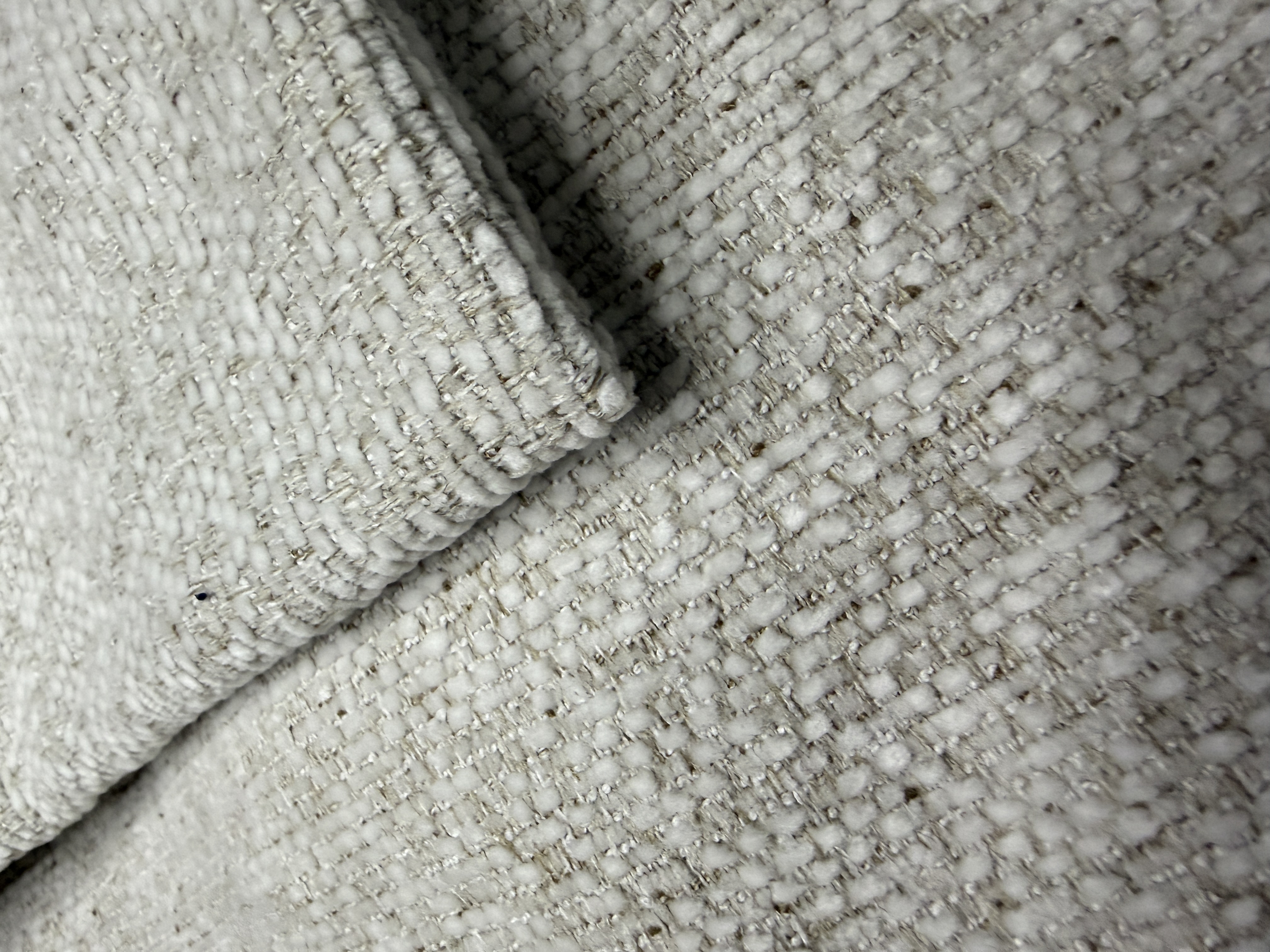
Why "Home Textile Fabric" Is Harder to Buy Than It Looks
Home textile fabric covers a wide parent category, and most purchasing problems start with language rather than with quality. Four issues appear repeatedly when buyers move from awareness to research.
- Terms are treated as synonyms when they are not. Dimout, room darkening, and blackout describe different light-blocking levels. In T-LAND TEXTILE's documented range, dimout is the stated classification, and it positions the light-blocking level of the fabric between standard decorative fabric and blackout fabric. A buyer who orders "blackout" when the project needs dimout, or the reverse, will either overpay or under-deliver on the window specification.
- Performance claims arrive without grades. Pilling and color fading are measurable behaviors, not opinions. Pilling forms when repeated friction pulls surface short fibers out of yarns and those fibers tangle into visible pills; the higher the fabric's pilling-resistance grade, the lower the risk. Curtain fading is mainly caused by ultraviolet light breaking down dye molecules when light fastness is insufficient. Without a grade, a claim of "durable" carries no procurement value.
- Sample-to-bulk consistency is assumed rather than controlled. The fabric a buyer approves and the fabric that arrives in bulk can differ in shade, hand feel, and backing if no confirmation step exists between the two.
- Compliance requirements are moving. Fire-safety and traceability rules for home textiles differ by market and are being tightened, so fabric performance must be specified against a target standard before sampling begins, not after production.
Industry Background: Market Size, Regulation, and Supply Position
Home textile fabric sits inside a large global market. The Business Research Company reports that the global home textile market reached USD 144.76 billion in 2025, and Fortune Business Insights reports that Asia Pacific dominated the home textiles market with a market share of 44.17% in 2025. Within the category, Verified Market Research valued the global upholstery fabric market at USD 44.5 billion in 2023, while Strategic Market Research valued the global blackout fabric market at USD 2.7 billion in 2024 and projected a CAGR of 5.9% to reach USD 3.8 billion by 2030. China's home textile exports in March 2024 reached USD 2,870.94 million, according to Stellar Market Research.
One data caveat is worth knowing before these numbers are used in a business plan: published blackout fabric market figures conflict depending on definition. Some commercial reports value the category far higher than USD 2.7 billion because they count finished curtains rather than raw fabric. When comparing suppliers or sizing a segment, confirm whether a figure refers to fabric or to finished goods.
Regulation is the second structural factor. Studio 198 notes that the UK Furniture and Furnishings (Fire) (Safety) Regulations 1988 remain the core regime in 2026 for domestic upholstered products, and Begoodtex identifies BS 5867 as the established UK fire-safety standard specifically for curtains and drapes. On the EU side, Carbonfact reports that the General Product Safety Regulation (GPSR) 2023/988 mandates safety for home textiles, with Digital Product Passports (DPP) expected for textiles by 2027. In practice this means fire performance and traceability are becoming specification items that must be agreed with the fabric supplier, not afterthoughts at the finished-goods stage.
The Fabric Families Inside Home Textile Fabric
Buyers who understand the family structure can read a specification sheet in seconds. The category divides into four application families plus one construction layer and one finishing layer.
Sofa Fabric and Upholstery Fabric
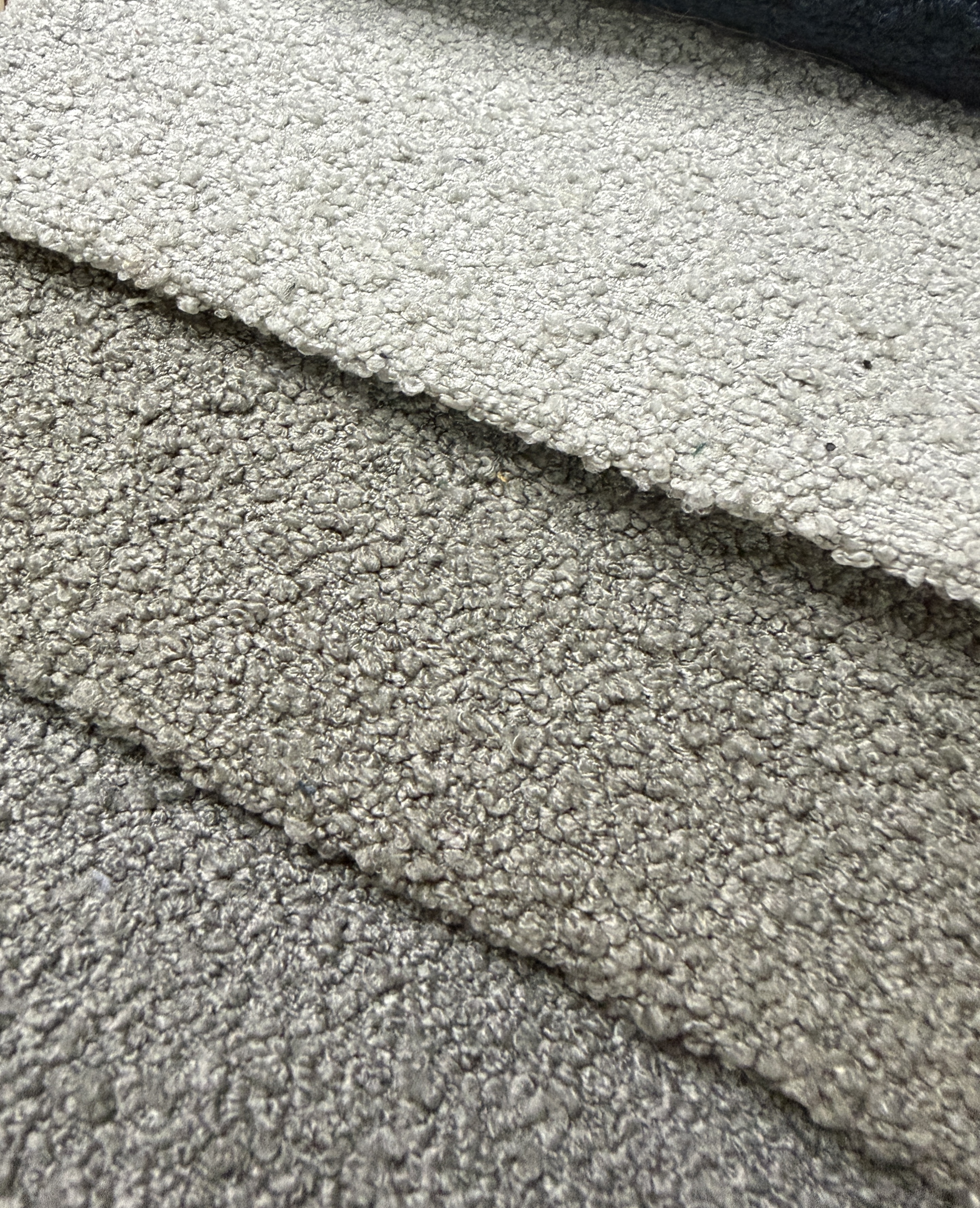
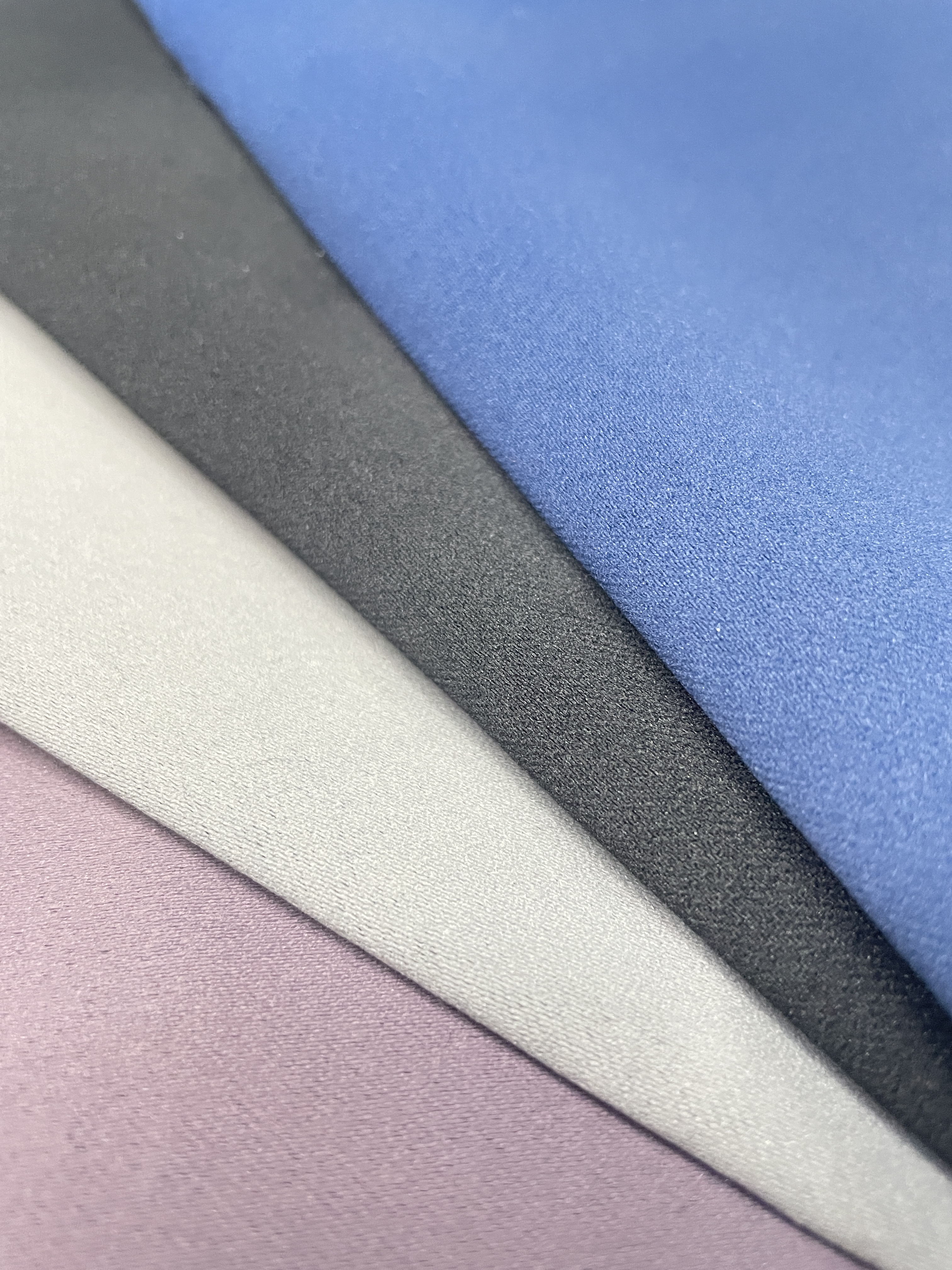
Sofa fabric, also called upholstery fabric, covers and protects the sofa base material, resists friction from repeated sitting, decorates the space, and contributes to sitting comfort. Documented constructions in T-LAND TEXTILE's range include velvet fabric, jacquard fabric, poly linen fabric, and polyester linen fabric. Velvet upholstery fabrics such as TL07410 are supplied with chenille quality characteristics for a soft hand feel. Jacquard fabrics such as TL07408 and TL07392 are produced with a woven jacquard construction in which the pattern is formed during weaving, so the design is structural rather than printed. Poly linen fabrics such as TL12167 and the TL0415 / TL0469 / TL0484 range deliver a linen hand feel using 100% polyester fiber.
Decorative Fabric and Cushion Fabric
Decorative fabric is the aesthetic layer of a soft-furnishing scheme, and cushion fabric is its most demanding application because cushions are handled continuously. Cushion covers are a documented application for TL07410, TL0415 / TL0469 / TL0484, TL0329, TL0901, TL07242, and TL12210. For buyers working across blended options, polycotton fabric (a polyester-cotton blend) is a common naming convention in the wider market, while T-LAND TEXTILE's documented home textile range is polyester-based. Where a project calls for a different blend, the practical route is a development discussion and a sample rather than an assumption about an existing article.
Curtain Fabric: Dimout, Room Darkening, and Blackout
Curtain fabric performs three jobs at once: blocking and adjusting light, providing sun-shading and privacy, and contributing decoration and noise reduction. The light-control level is what separates the sub-categories. Dimout fabric, as documented for TL08229, sits between standard decorative fabric and blackout fabric. Several articles in the range are described with room darkening performance and noise-reducing properties, including TL08166, TL0888, and TL08321. TL08321 is additionally documented with fire-retardant, room darkening, and noise-reducing characteristics. Some articles cross over between windows and seating: TL12199 is a sofa and dimout fabric, and TL12210 is a polylinen fabric used for room darkening curtain applications and suitable for sofa and cushion applications.
Backing, Bonding, and Coated Fabric
What is on the back of a fabric often decides whether it survives a project. Bonding is documented across much of the sofa fabric range: TL07410, TL07377-2, TL07408, TL12167, TL0415 / TL0469 / TL0484, and TL0329 are described with a bonded back side, which allows the fabric to be used for sofa covers and cushions. TL12199 is supplied with a non-woven backing for sofa and cushion use and with a silicon coating for curtain use, and its weight changes accordingly from 300 gsm with backing to 380 gsm with silicon coating. TL12210 uses a bonded two-layer construction in which two linen-type fabrics are combined. Fabric backing is therefore not a cosmetic detail; it changes weight, stiffness, and the cutting plan.
Performance Finishes: FR, Water-Repellent, Easy Cleaning, Noise Reducing
Documented special requirements for this category include flame retardancy, high light fastness, high Martindale wear resistance, anti-pilling, water-repellent and stain-resistant finishing, low-formaldehyde eco-standard, strict batch-to-batch color difference control, washability, and customized width and gram weight. Easy cleaning in upholstery is normally expressed through washability and stain-release performance rather than through a single label. Where fire retardancy is specified, there are two technical routes: inherent-yarn FR, which is permanent and washable with a soft hand feel and is typically selected for hotel projects, and coating-treated FR, which is lower in cost but whose FR performance drops after repeated washing.
Step-by-Step: How to Specify Home Textile Fabric
Step 1 — Define the end use and the duty cycle
The same fabric that is comfortable in a home is not automatically suitable for a hotel lobby. Documented working conditions in this category distinguish household low-frequency friction and sunlight exposure from commercial heavy-duty conditions. Write the duty cycle down before comparing articles.
Step 2 — Fix the light-control target for curtains
Decide whether the window needs a decorative layer, a dimout layer, or the highest light-blocking performance available. Dimout curtain fabric provides room darkening performance with a noise-reducing function, and its dimout classification positions it between standard decorative fabric and blackout fabric.
Step 3 — Choose construction, weight, and width
Yarn construction and weight drive hand feel, drape, and durability. In the documented range, sofa fabric weights run from 160 gsm (TL07377-2, TL0329) through 220 gsm (TL07373-1, TL07242) and 280 gsm (TL07392, TL12167) up to 450 gsm (TL07408), while curtain and dimout fabrics run from 230 gsm (TL08229, TL08183 / TL08170) to 380 gsm (TL08321) and 385 gsm (TL12210). Width options are commonly 150 cm, with 280 cm and 300 cm available on several curtain articles and a 300 cm option on TL0329.
Step 4 — Decide the back side and finish
Confirm whether the article needs a bonded back side for sofa and cushion use, a non-woven backing, or a silicon coating for curtain use. This decision changes the delivered weight and must be fixed before sampling.
Step 5 — Lock the performance grades
Release a written requirement list covering flame retardancy, light fastness, Martindale abrasion, pilling resistance, water-repellent and stain-resistant finishing, washability, and color difference tolerance between batches. Ask for the grade, not the adjective.
Step 6 — Validate with a first-dye-lot sample
A first-dye-lot sample is arranged for confirmation, and mass production starts only after that sample is approved. This is the single control point that protects the buyer against bulk-to-sample inconsistency.
Step 7 — Confirm conformity and plan the bulk movement
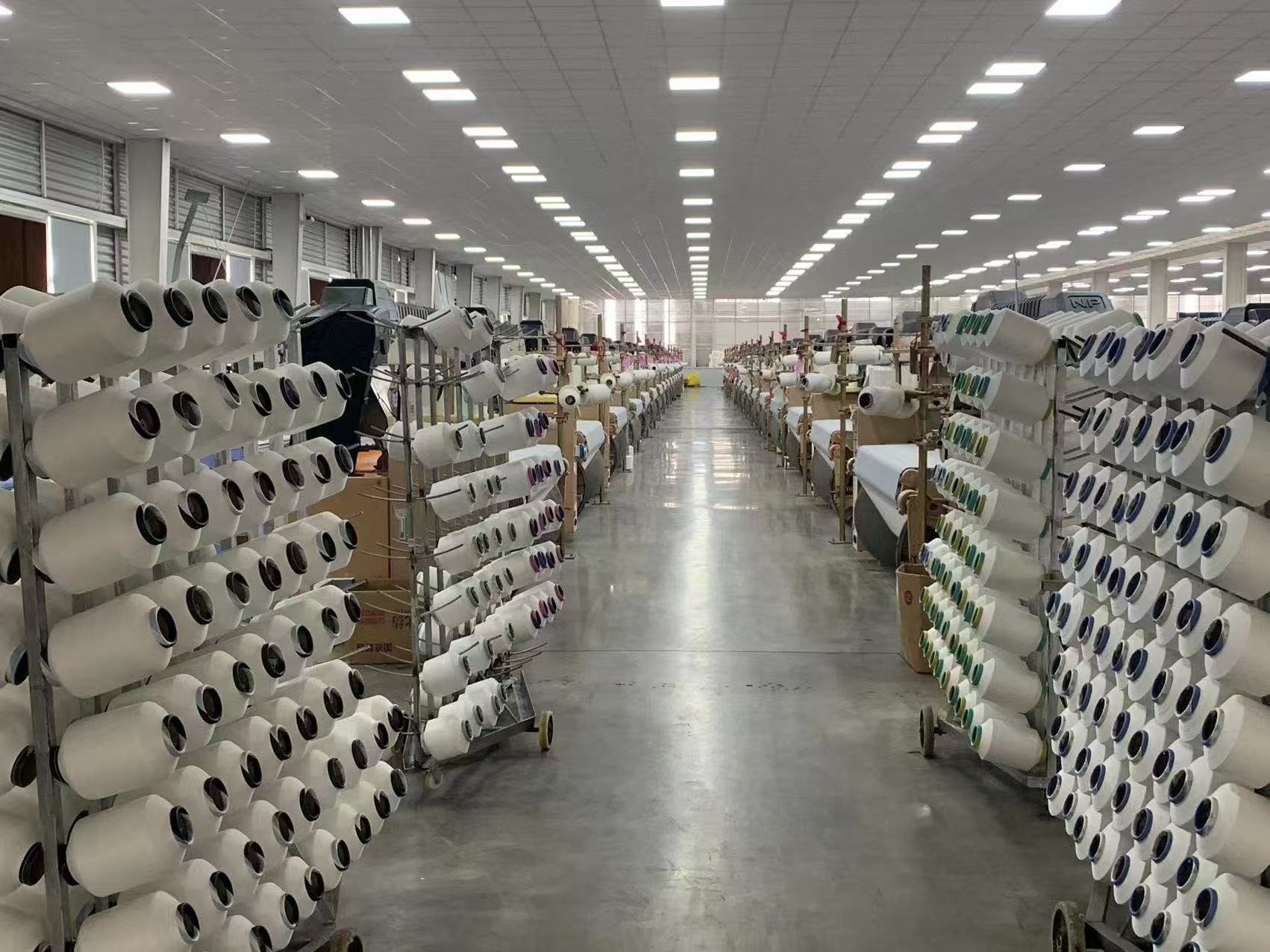
Agree which compliance documents are needed for the destination market, then plan storage and dispatch. T-LAND TEXTILE maintains a 1,500 m² warehouse for fabric storage, quality control during handling, and fast, safe shipment, and it operates a computer-based order instruction system instead of a paper-based process.
Where Home Textile Fabric Is Used
Documented project types for this category span residential decoration projects, hotel and B&B projects, office commercial projects, health-care institutions, exhibition and cultural tourism projects, and special soft furnishing customization for RVs and yachts. Each environment shifts the priority:
- Residential decoration: decoration, light adjustment, privacy, and comfortable hand feel. Velvet (TL07410, TL0901, TL07242) and jacquard (TL07392, TL07408) sofa fabrics are positioned here, together with dimout curtain fabrics such as TL08229.
- Hotel and B&B projects: cleanability, batch-to-batch color consistency, and fire performance. Inherent-yarn FR is typically specified for hotel projects because it is permanent and washable.
- Office commercial projects: heavy-duty friction and low maintenance. Bonded polyester linen and poly linen upholstery fabrics support repeated sitting pressure.
- Health-care institutions: washability, low-formaldehyde eco-standard, and stain resistance.
- Exhibition and cultural tourism projects: decorative surface effects and jacquard pattern structure.
- RV and yacht soft furnishing: customized width and gram weight, indoor and outdoor suitability, and dual-use articles such as TL12199 and TL12210.
Sofa and Upholstery Fabric: Documented Specifications
The table below lists selected sofa and upholstery articles exactly as specified in T-LAND TEXTILE's product documentation. All entries are 100% polyester and all are supplied in roll form for OEM sofa production.
| Model | Fabric type | Construction | Weight | Width | Documented characteristics |
|---|---|---|---|---|---|
| TL07410 | Velvet fabric | 350D × 450D | 300 gsm | 150 cm | Chenille quality, soft hand feel, bonded back side, sofa or cushion use, indoor and outdoor |
| TL07377-2 | Velvet fabric | 300D × 600D | 160 gsm | 150 cm | Velvet quality, soft hand feel, bonded back side, custom colors |
| TL07408 | Jacquard fabric | 1150D × 4500D | 450 gsm | 150 cm | Looped-pile-like surface, soft hand feel, bonded back side, pattern formed during weaving |
| TL07392 | Jacquard fabric | 900D × 1580D | 280 gsm | 150 cm | Brushed surface, soft hand feel, sofa and home decoration |
| TL12167 | Poly linen fabric | 350D × 350D + 650D | 280 gsm | 150 cm | Linen hand feel, bonded back side, sofa or cushion use, indoor and outdoor |
| TL0415 / TL0469 / TL0484 | Polyester linen fabric | 600D × 600D / 300D × 300D | 230 gsm | 150 cm | Linen hand feel, bonded back side, decorative upholstery for sofa and cushion collections |
| TL0329 | Upholstery fabric | 105D × 200D | 160 gsm | 150 cm / 300 cm | Brushed surface, suede hand feel, bonded back side, cushion and sofa use |
Curtain and Dimout Fabric: Documented Specifications
Curtain and dimout articles are documented with 100% polyester composition unless stated otherwise. Light-control description is quoted from the product documentation rather than inferred.
| Model | Type | Construction | Weight | Width | Documented characteristics |
|---|---|---|---|---|---|
| TL08229 | Dimout curtain fabric | 75D × 300D | 230 gsm | 150 cm / 280 cm / 300 cm | Room darkening performance, noise reducing, readymade indoor curtain use |
| TL08166 | Dimout curtain fabric | 75D × (300D + 300D) | 260 gsm | 150 cm / 300 cm | Room darkening, noise reducing, indoor and outdoor readymade curtain use |
| TL0888 | Dimout curtain fabric | 75D × 300D | 250 gsm | 150 cm / 280 cm / 300 cm | Room darkening, noise reduction, indoor and outdoor curtain use |
| TL08321 | Dimout curtain fabric | (150D + 320D) × (300D + 300D) | 380 gsm | 150 cm / 300 cm | Fire retardant, room darkening, noise reducing, soft hand feel |
| TL12199 | Sofa & dimout fabric | 700D × 700D | 300 gsm with backing / 380 gsm with silicon coating | 150 cm / 300 cm | Linen hand feel, non-woven backing for sofa or cushion, silicon coating for curtain |
| TL12210 | Polylinen fabric | Bonded two-layer linen-type construction | 385 gsm | 150 cm / 300 cm | Room darkening curtain use, sofa and cushion use, outdoor decoration, dyeable in different colors |
What to Check When Comparing Home Textile Fabric Manufacturers
Once the specification is written, supplier comparison becomes a checklist rather than an impression. Seven items carry most of the risk:
- Documented specifications, not brochure adjectives. A supplier should publish yarn construction, weight, width, composition, and hand-feel description for each article, as T-LAND TEXTILE does for TL07410, TL07408, TL08229, and the rest of its range.
- Position in the supply cluster. T-LAND TEXTILE is based in Shengze Town, Wujiang City, Jiangsu, China, the area known as the "Silk Capital of China," close to Shanghai and with convenient road, sea, and air links.
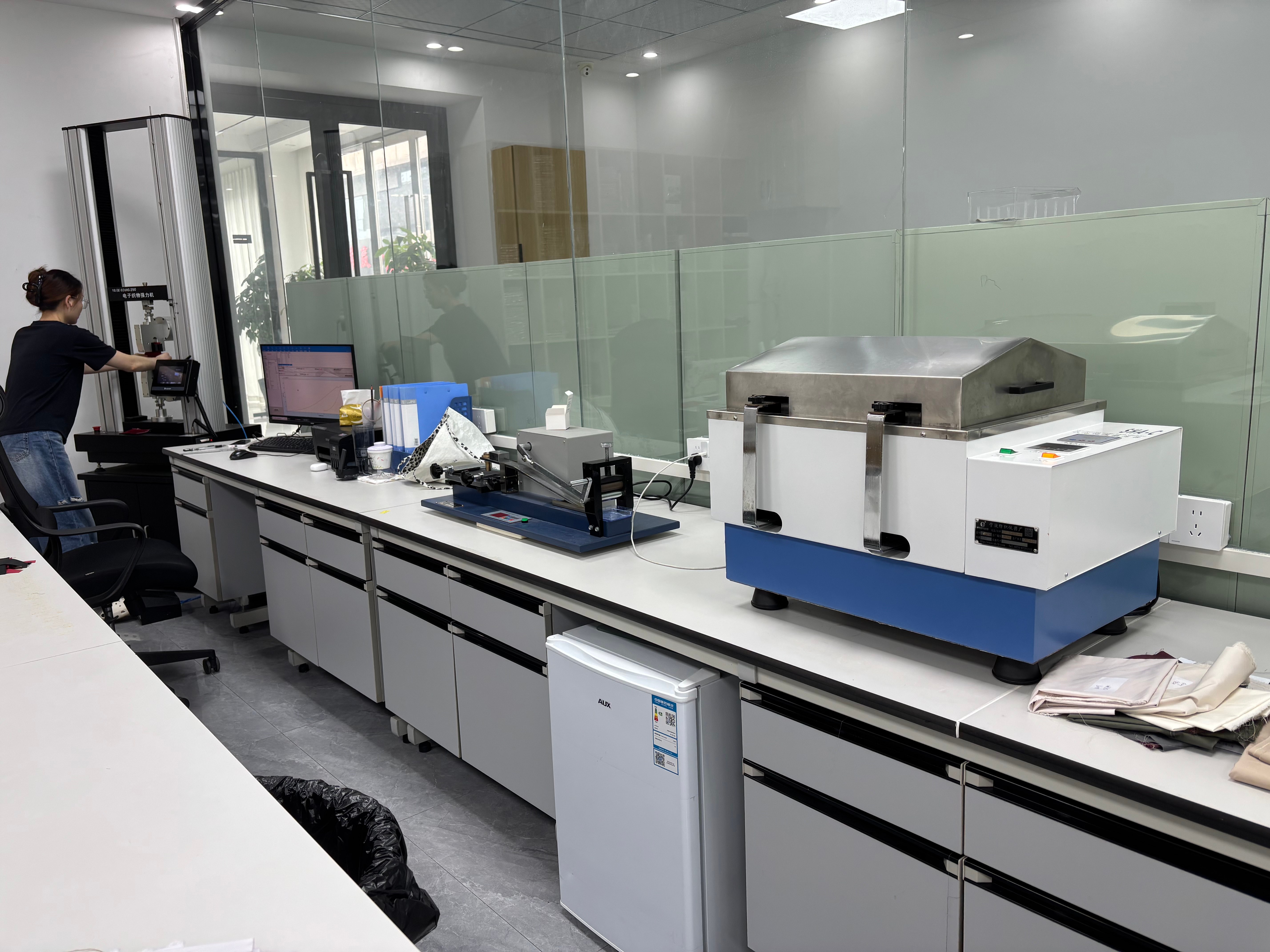
- In-house testing capability. T-LAND TEXTILE has built its own laboratory for quality testing for each lot of different items, which is how a supplier verifies green and healthy requirements against individual brand requests rather than relying on the mill upstream.
- A defined bulk-consistency control. The first-dye-lot approval step is the mechanism that keeps bulk goods identical to the confirmed sample.
- A sample policy that supports development. T-LAND TEXTILE accepts small sample orders to support clients in developing new fabric items, and it states that new-item rights from clients are kept under applicable law.
- Certification posture. The company's profile states that it holds OEKO-TEX and GRS certification and that it works with other certifications to meet different client requirements.
- Export experience in your market. With approximately 90% of output exported and the European Union as its main market, T-LAND TEXTILE's documentation is oriented toward EU-facing buyers, including compliance and color-consistency expectations.
Frequently Asked Questions
Do home textile fabrics need fire-retardant certification for the UK and EU?
It depends on the finished product and the destination market, and the requirement should be confirmed before sampling. In the United Kingdom, the Furniture and Furnishings (Fire) (Safety) Regulations 1988 remain the core regime in 2026 for domestic upholstered products, and BS 5867 is the established UK fire-safety standard specifically for curtains and drapes. In the European Union, the General Product Safety Regulation (GPSR) 2023/988 mandates safety for home textiles, and Digital Product Passports are expected for textiles by 2027. For flame-retardant curtain fabric, two technical routes exist: inherent-yarn FR is permanent, washable, and soft and is typically selected for hotel projects, while coating-treated FR costs less but its FR performance drops after repeated washing.
What is the difference between dimout, room darkening, and blackout fabric?
They describe different light-blocking levels rather than the same thing. In T-LAND TEXTILE's documented range, dimout is the stated classification, and its dimout positioning places the light-blocking level between standard decorative fabric and blackout fabric. Dimout curtain fabrics such as TL08229, TL08166, TL0888, and TL08321 are documented with room darkening performance and noise-reducing properties. Blackout is the higher light-blocking category; published market data for blackout fabric also varies by definition, because some sources measure raw fabric while others measure finished curtains.
Will home textile fabric pill or fade over time?
Pilling is a physical fiber phenomenon and not automatically a product defect. Repeated sitting and leaning friction pulls surface short fibers out of yarns; those fibers tangle and knot into visible pills, and looser yarns with higher short-fiber content increase the possibility. The higher the fabric's pilling-resistance grade, the lower the pilling risk, and long-fiber fabrics generally pill less than short-fiber fabrics. Curtain fading is mainly caused by ultraviolet radiation in sunlight damaging dye molecules, which happens when light fastness is insufficient. Buyers should confirm the pilling-resistance grade and the light fastness grade before ordering instead of relying on a general durability claim.
Can I order samples before bulk production, and how is bulk consistency controlled?
Yes. T-LAND TEXTILE accepts small sample orders to support clients in developing new fabric items, which allows a buyer to test hand feel, color, and finishing before committing to volume. For bulk orders, a first-dye-lot sample is arranged for confirmation, and mass production starts only after that sample is approved, so bulk goods are kept identical to the confirmed sample. Orders are handled through a computer-based order instruction system rather than a paper-based process, and a 1,500 m² warehouse supports storage and dispatch.
How do I choose between home textile fabric manufacturers?
Compare suppliers on documented specifications, bulk-consistency control, testing capability, and market experience rather than on brochure language. Concretely: ask for yarn construction, weight, width, and composition for each article; confirm the first-dye-lot approval step; verify whether the supplier tests each lot in its own laboratory; and check which export markets it already serves. As an example of that standard, T-LAND TEXTILE was established in 2014, runs a 5,000 m² facility with about 91 employees and an R&D team of 3 engineers, produces sofa fabric and curtain fabric as its main lines, and exports roughly 90% of its output, mainly to the European Union. Requests for samples, quotations, or the full product catalog can be sent to the contact details in the section below.
Next Step: Sample, Quotation, or Catalog
If you are shortlisting home textile fabric for a residential, hospitality, or commercial project, the fastest way to reduce risk is to test the fabric itself. T-LAND TEXTILE accepts small sample orders for new item development and confirms every bulk order against an approved first-dye-lot sample.
Download the full product catalog: T-LAND TEXTILE Catalog (PDF)
Contact: Angela | Email: angela@t-landtex.com | Tel / WhatsApp: +86 13913732999
Website: www.t-landtex.com
Address: 11F Yadu Building C, Qiangwu Road, Shengze Town, Wujiang City, Jiangsu, China
Conclusion
Home textile fabric is a specification-driven category. The market is large — the global home textile market reached USD 144.76 billion in 2025, with Asia Pacific holding a 44.17% share — and the regulatory layer around it is tightening through the UK Furniture and Furnishings (Fire) (Safety) Regulations 1988 for domestic upholstered products and BS 5867 for curtains and drapes, alongside the EU GPSR 2023/988 and forthcoming Digital Product Passports. For buyers, the practical conclusion is simple: name the end use, set the light-control and performance grades, fix the construction and backing, and validate everything against a first-dye-lot sample before bulk.
T-LAND TEXTILE, part of Suzhou T-land Textile Co., Ltd., works within that framework with a documented range that spans velvet, jacquard, poly linen, polyester linen, upholstery, dimout curtain, and dual-use sofa and curtain fabrics, supplied from a 5,000 m² facility in Shengze with an in-house testing laboratory, a first-dye-lot approval process, and approximately 90% of output exported, mainly to the European Union.
Have Questions or Need More Details?
Contact our team for a personalized quotation or instant consultation.
Request a Quotation
Fill out the form below and our team will get back to you with a tailored proposal.
WhatsApp Direct Chat
Prefer to chat in real-time? Message us on WhatsApp for instant assistance & quick answers.
- Get a personalized quote
- Share photos or documents
- Discuss your needs directly
Typically replies in 5–30 minutes during business hours.