Home Textile Fabric: Buyer's Guide to Sofa & Curtain Fabrics
Home Textile Fabric: Buyer's Guide to Sofa & Curtain Fabrics
Home textile fabric is the woven, bonded or coated material used to cover furniture and windows — the sofa fabric, curtain fabric, cushion fabric and decorative fabric that decide how a room looks and how long it survives daily use. Because the same words cover very different products, two buyers asking for "home textile fabric" can end up comparing a 160 gsm velvet with a 450 gsm jacquard and a 380 gsm dimout curtain.
This guide is written for the discovery and research stage of sourcing. It explains the main fabric families, how construction, weight and width translate into performance, which regulations apply in the EU and the UK, and how to move from a first enquiry to a repeatable bulk order. Product examples come from Suzhou T-land Textile Co., Ltd. (T-LAND TEXTILE), a fabric mill founded in 2014 in Shengze Town, Wujiang, Jiangsu, that specialises in sofa fabric and curtain fabric and exports about 90% of its output, mainly to the European Union.
Problem Definition: Why "Home Textile Fabric" Is Harder to Buy Than It Looks
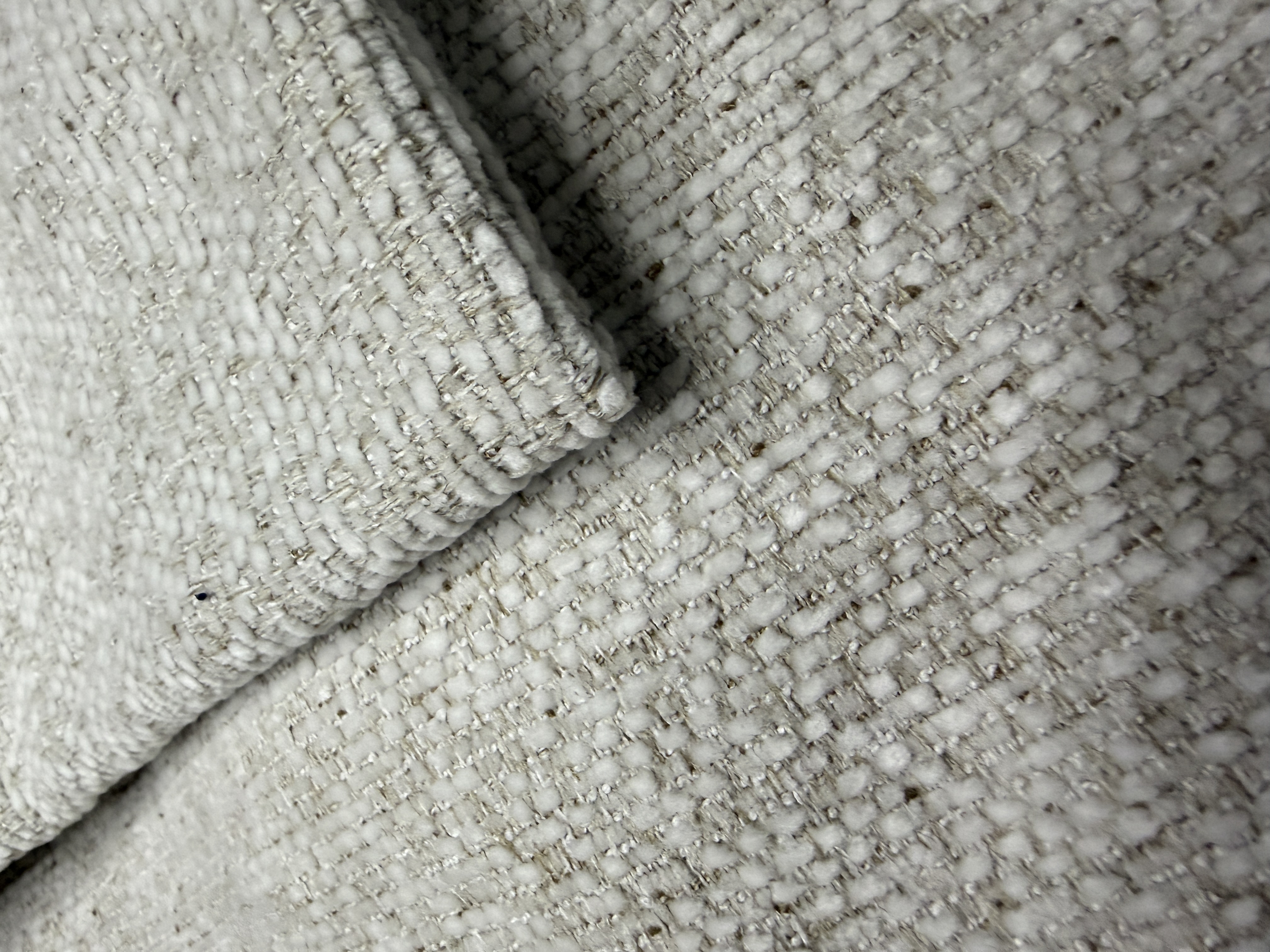
The first difficulty is vocabulary. Decorative fabric, upholstery fabric, sofa fabric, curtain fabric and cushion fabric are commercial terms rather than technical classifications, and they overlap. A dimout construction such as TL08269 is documented for both curtain and cushion use, and TL12210 is supplied as a curtain and sofa fabric. Buyers who treat these as separate supply chains often end up managing two suppliers, two color standards and two sets of documents for one project.
The second difficulty is that the performance requirement changes with the application. A sofa fabric has to resist repeated sitting pressure and friction, while a curtain fabric has to manage ultraviolet light, light blocking and, in many projects, noise. T-LAND's application notes describe the working conditions as household low-frequency friction and sunlight on one side, and commercial heavy-duty conditions on the other — which is why a construction that performs well in a residential living room may be the wrong choice for a hotel lobby.
The third difficulty is compliance. Fire safety rules for domestic upholstered furniture in the United Kingdom and safety rules for home textiles in the European Union do not test the same things, and the documentation required differs by market. The fourth is consistency: color, weight and hand feel have to repeat across dye lots and repeat orders, or the fabric becomes a returns problem rather than a product.
None of these issues is solved by a catalog alone. They are solved by knowing which fabric family fits the application, which parameters to fix in the specification, and which questions to ask before the first bulk order.
Industry Background: What the Numbers Say
The global home textile market reached USD 144.76 billion in 2025, according to The Business Research Company's home textile market report. Asia Pacific accounted for 44.17% of that market in 2025, based on Fortune Business Insights' home textiles market analysis, which reflects both the region's manufacturing base and its growing domestic demand.
Within the category, the upholstery fabric market was valued at USD 44.5 billion in 2023 (Verified Market Research), and the global blackout fabric market was valued at USD 2.7 billion in 2024, with a projected CAGR of 5.9% to reach USD 3.8 billion by 2030 (Strategic Market Research). Those blackout figures should be read with care: published estimates differ widely because some reports count finished curtains and others count raw fabric, so the same term can describe two different markets. On the supply side, China's home textile exports reached USD 2,870.94 million in March 2024 (Stellar Market Research), which underlines how concentrated export capacity remains in Chinese mills.
Regulation is moving at the same time as the market. The UK Furniture and Furnishings (Fire) (Safety) Regulations 1988 remain the core regime in 2026 for domestic upholstered products (Studio 198, 2026), while BS 5867 is the established UK fire safety standard specifically for curtains and drapes (Begoodtex, 2025). In the European Union, the General Product Safety Regulation (GPSR) 2023/988 sets safety requirements for home textiles, and Digital Product Passports are expected for textiles by 2027 (Carbonfact, 2026). For buyers, the practical consequence is that fabric selection now has a documentation dimension, not only a design dimension.
Detailed Solution: The Fabric Families Behind Home Textile Fabric
Most sofa and curtain programmes are built from five fabric families. Understanding what separates them makes specification easier, because each family has a natural performance profile rather than a marketing position.
1. Velvet Fabric
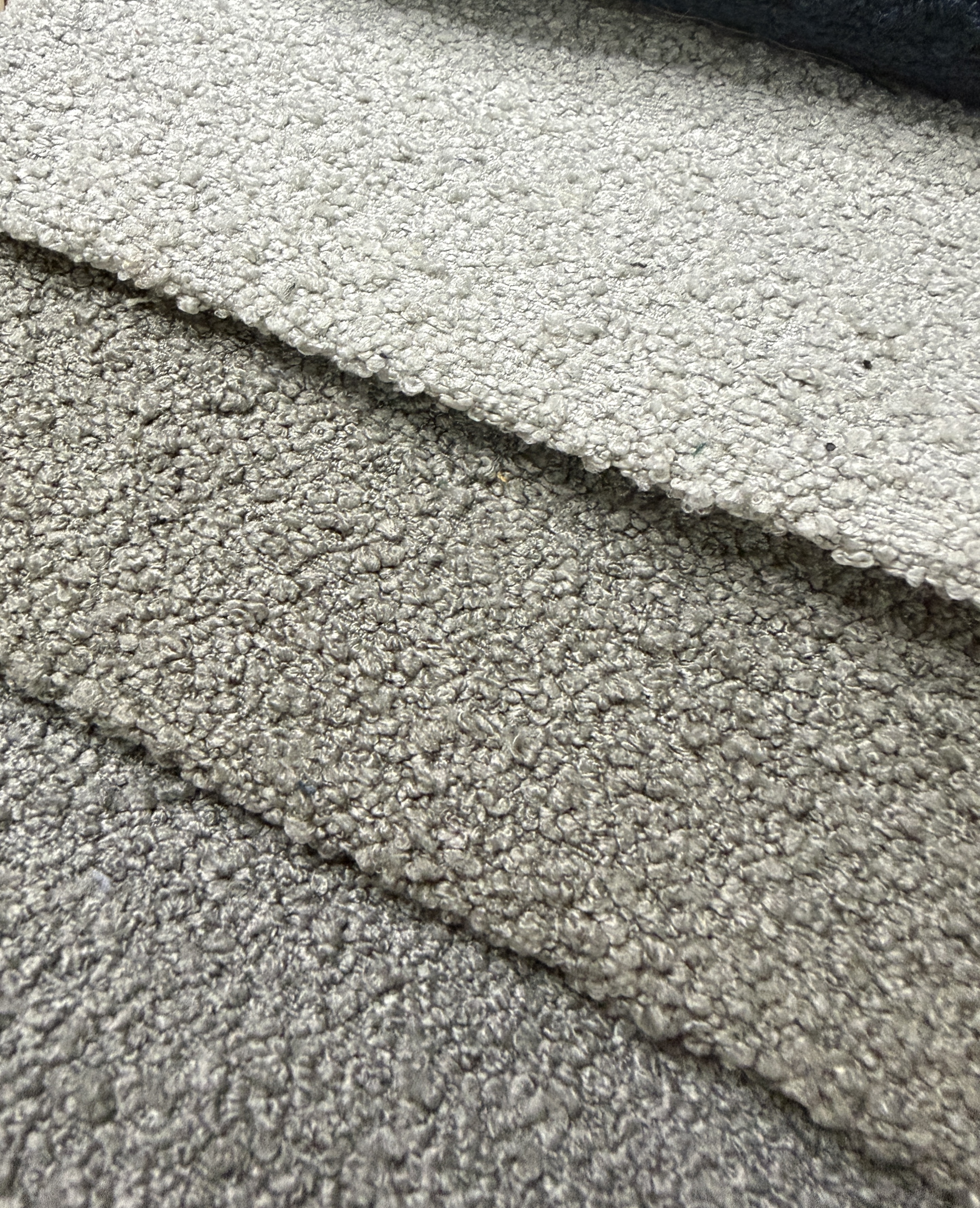
Velvet constructions are chosen for hand feel. TL07410 is a 100% polyester velvet sofa fabric with a 350D x 450D construction, 300 gsm weight and 150 cm width; it is supplied with chenille quality and a soft hand feel, a bonded back side, and can be made into sofas or cushions. Lighter options include TL07377-2 at 160 gsm (300D x 600D) and TL07242 at 220 gsm (150D x 320D + 200D), while TL0901 is a 200 gsm velvet at 160 cm width. The practical decision is not "velvet or not" but which weight matches the seat's expected use — lighter velvets suit decorative cushions and light residential seating, heavier ones take more friction.
2. Jacquard Fabric
In jacquard fabric the pattern is formed during weaving rather than printed afterwards, which is why jacquard constructions are often used where the fabric itself is the design element. TL07408 is a 450 gsm jacquard sofa fabric with a 1150D x 4500D construction; its surface resembles a looped pile, with a soft hand feel and a bonded back side. TL07392 (280 gsm, 900D x 1580D) and TL07373-1 (220 gsm, 350D x 900D) have brushed surfaces and a soft hand feeling. Heavier jacquard yarns generally mean denser coverage and a more pronounced pattern.
3. Poly Linen Fabric
Poly linen is a polyester construction engineered to give a linen hand feeling, typically with more dimensional stability than natural linen. TL12167 uses a 350D x 350D + 650D construction at 280 gsm, has a linen hand feel and a bonded back side, and is suitable for sofas and cushions indoors and outdoors. TL0415, TL0469 and TL0484 sit at 230 gsm in 600D x 600D or 300D x 300D constructions with bonded back sides. TL12199 is a curtain and sofa fabric in a 700D x 700D construction, supplied at 300 gsm with a non-woven backing or 380 gsm with a silicon coating — the non-woven version for sofa or cushion use, the coated version for curtain use.
4. Dimout Fabric
Dimout describes light control that sits between standard decorative fabric and blackout fabric. These constructions are used where a room needs privacy and reduced light without the total darkness of blackout. TL08321 is a 380 gsm dimout curtain fabric used for hotel projects and residential room darkening, with documented room darkening, noise reducing and fire-retardant properties. Other dimout options include TL08166 (260 gsm), TL08229 (230 gsm, supplied in 150 cm, 280 cm and 300 cm), TL0888 (250 gsm) and TL08180, a 310 gsm construction with a linen hand feel. Curtain fading is mainly caused by ultraviolet light breaking down dye molecules when a fabric has insufficient light fastness, so the light fastness grade is a specification item, not a detail.
5. Coated and Bonded Fabric
Coating and backing are the two levers that let one base fabric serve two end uses. Bonding adds a second layer to the back side, which improves body and makes a fabric easier to cut and sew for sofa and cushion production; silicon coating is used for curtain applications. TL12210, a 385 gsm poly linen fabric, is built as a bonded two-layer construction in which two linen-type fabrics are combined, and is supplied in 150 cm and 300 cm widths for room darkening curtain, sofa and cushion use.
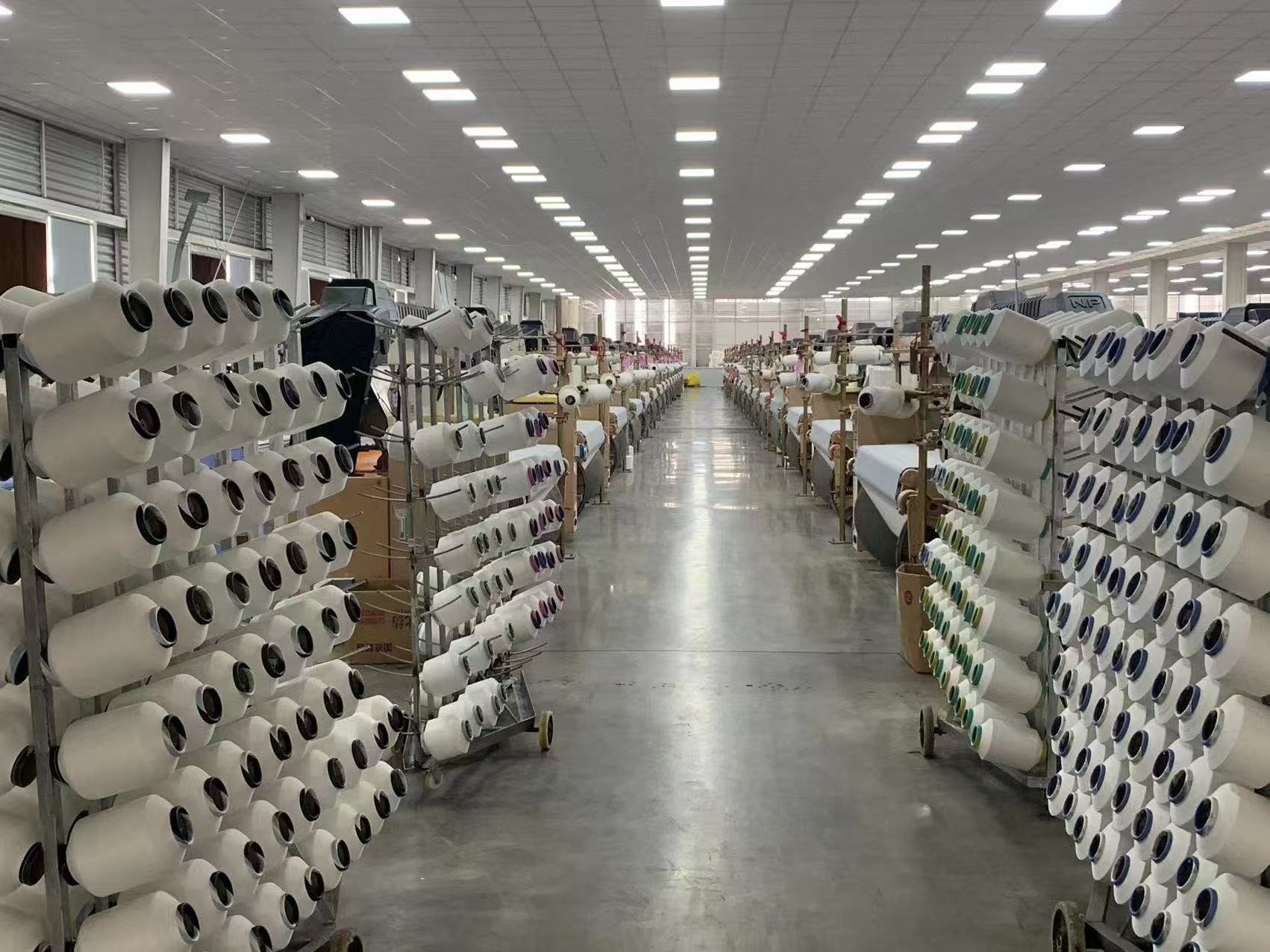
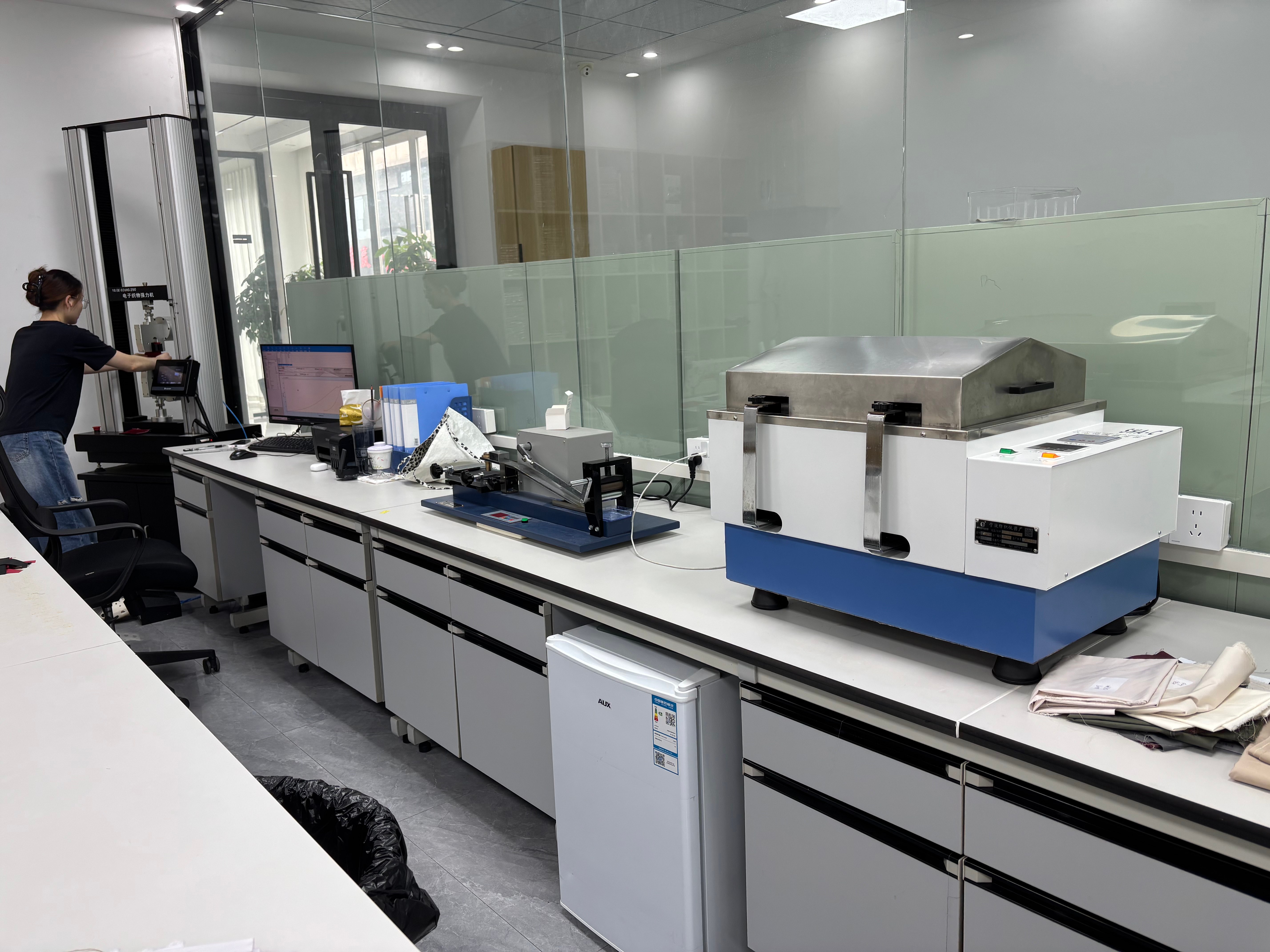
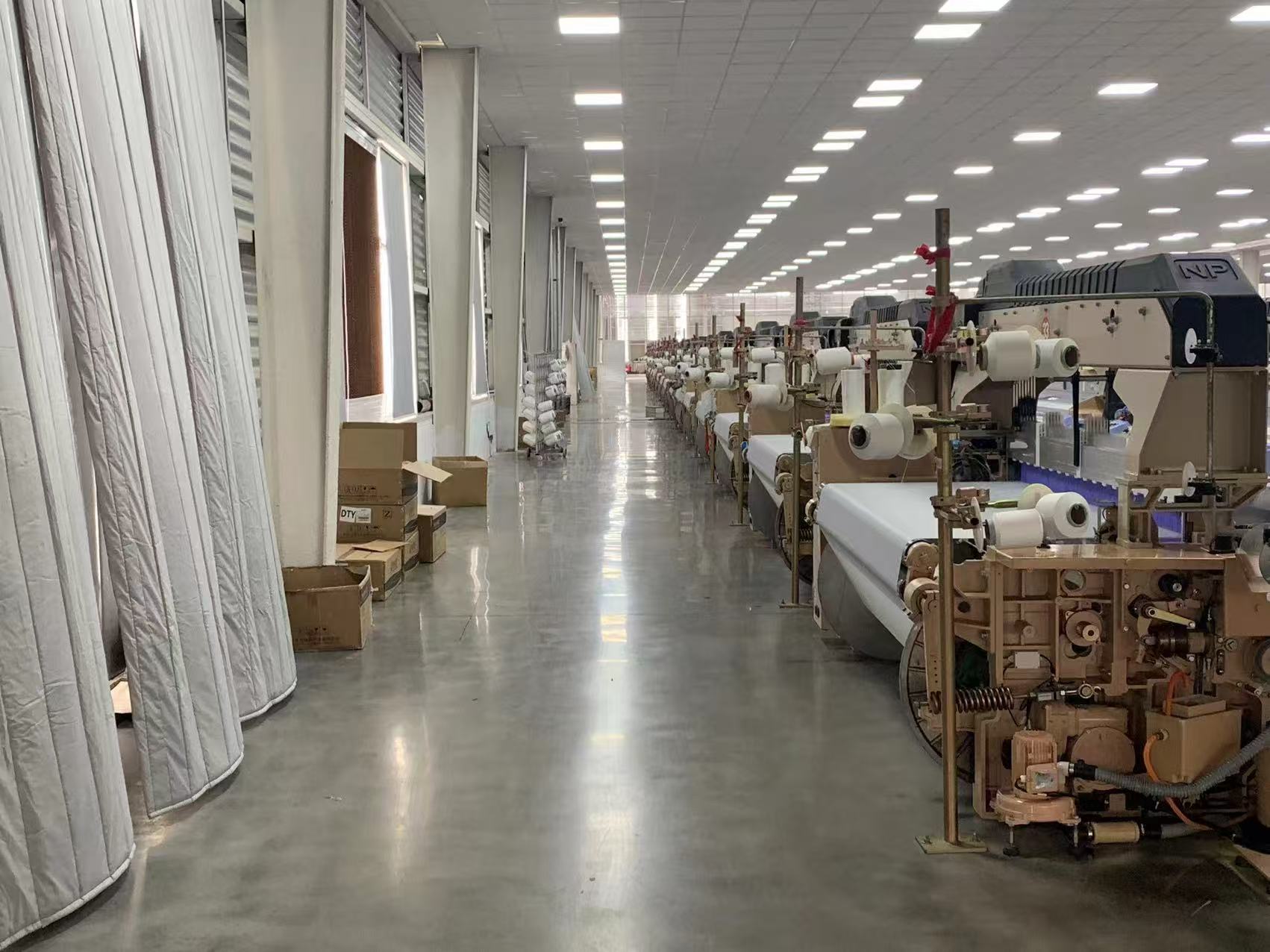
Where the mill fits. T-LAND TEXTILE is a manufacturer rather than a trading intermediary: the company operates a 5,000 square metre facility in Shengze, employs about 91 staff, and reports an annual woven fabric capacity of 5,000,000 metres, which supports repeat bulk orders. Its stated main products are sofa fabric and curtain fabric, supported by an R&D team of 3 engineers and an in-house laboratory used for per-lot quality testing. The company profile also states OEKO-TEX and GRS certification, and the facility includes a 1,500 square metre warehouse used for fabric storage and shipment handling.
Step-by-Step Breakdown: How to Specify and Source Home Textile Fabric
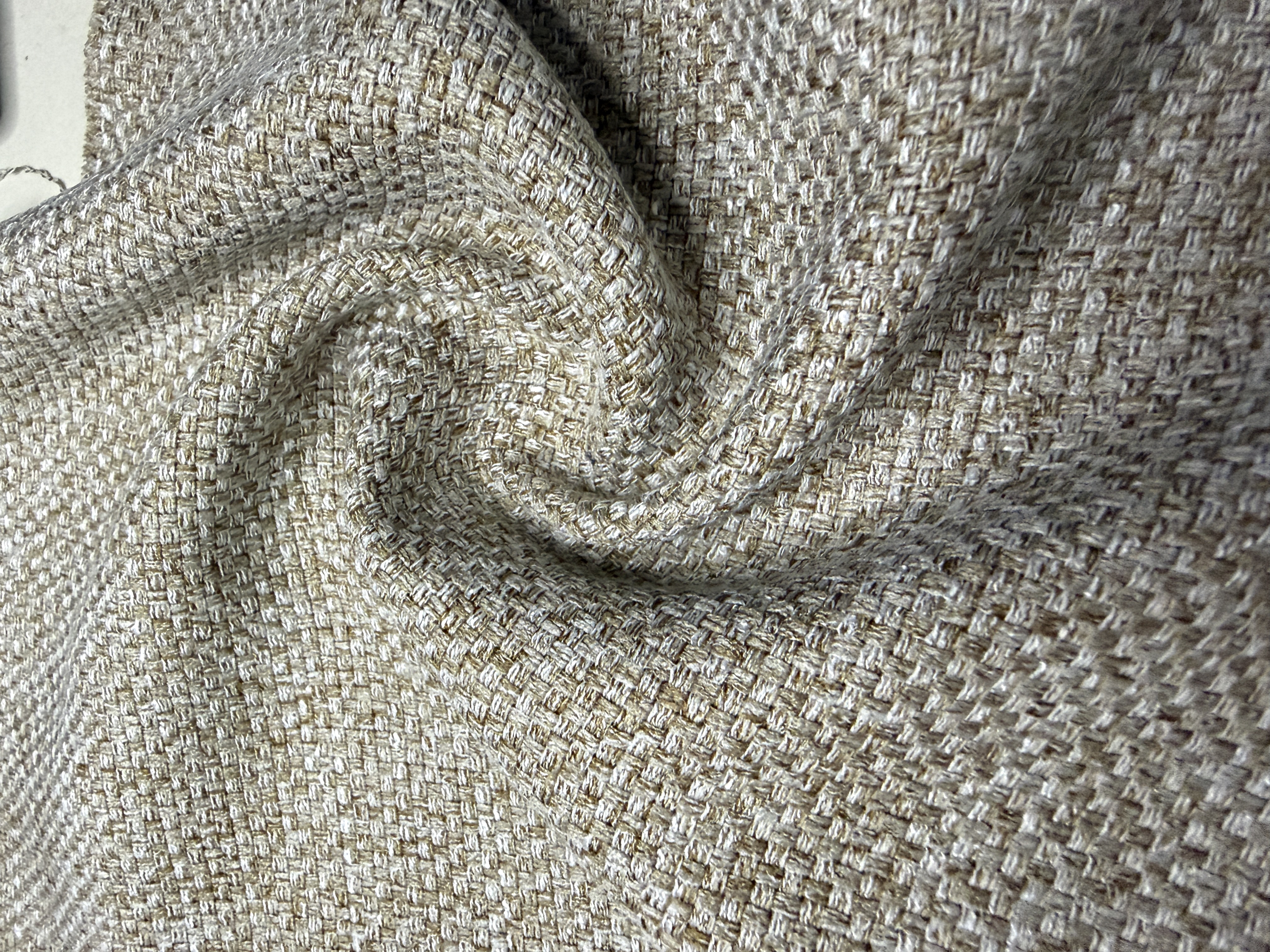
Step 1 — Define the application and the failure you want to avoid
Start with the failure mode, not the look. For a sofa in a hotel lobby that may be abrasion and pilling; for a west-facing curtain it is fading; for a restaurant bench it is staining and cleaning. Pilling forms when surface short fibres are pulled out and tangled by repeated friction, and looser yarns with higher short-fibre content increase that risk — so the Martindale wear and pilling-resistance grades should be fixed at specification stage.
Step 2 — Fix construction, weight and width
These three parameters drive most of the performance. A 160 gsm velvet and a 450 gsm jacquard differ in yarn size (105D x 200D against 1150D x 4500D), density and body. Width matters commercially: 150 cm suits most upholstery cutting plans, while 280 cm and 300 cm widths reduce seam count in curtain panels.
Step 3 — Decide backing and coating
Ask whether the fabric needs to be bonded, coated or left as greige. Bonded backings support sofa and cushion production, non-woven backings add stability, and silicon coating supports curtain use — in the TL12199 example the coated version is specified at 380 gsm against 300 gsm with backing.
Step 4 — Confirm colour, hand feel and light fastness
Most constructions in the range can be produced in any colour and colour-matched for furniture decoration. Hand feel is where velvet, brushed, linen and suede surfaces differ, and it should be judged on a physical sample rather than a screen.
Step 5 — Check compliance for the destination market
Match the market to the framework before ordering: UK domestic upholstered products fall under the Furniture and Furnishings (Fire) (Safety) Regulations 1988; UK curtains and drapes are covered by BS 5867; EU home textiles fall under GPSR 2023/988, with Digital Product Passports expected for textiles by 2027. Where flame retardancy is required, ask which technology is used — inherent-yarn FR is permanent and washable and is typically specified for hotel projects, while coating-treated FR carries a lower cost but its FR performance drops after repeated washing.
Step 6 — Approve a sample, then a first dye lot
Small sample orders are a normal part of development work. T-LAND states that it welcomes small sample orders to help clients develop new items, and that the copyright of any new item submitted by a client is retained by that client under the applicable law.
Step 7 — Lock bulk conformity
The standard control is a first-dye-lot sample: mass production starts only after that sample has been approved, so the approved colour and construction become the reference rather than the original development sample. This is the point where batch-to-batch colour difference control, GSM tolerance and composition verification should be written into the order instruction, alongside the mill's per-lot laboratory testing and its computerised (non-paper) order instruction system.
Use Cases: Matching Fabric to Project Type
- Residential decoration projects: lighter velvets, brushed jacquards and poly linen constructions for sofas and cushions, with dimout curtain fabric for bedrooms and living rooms where light control matters.
- Hotel and B&B projects: heavier dimout curtain fabrics, including 380 gsm constructions documented for hotel projects, plus upholstery-grade sofa fabric rated for commercial friction.
- Office commercial projects: poly linen and jacquard upholstery fabrics in coordinated colourways, selected for cleanability and repeatability across floors and rooms.
- Health-care institutions: stain-resistant and water-repellent options that are easier to clean, dimout curtains for privacy, and complete compliance paperwork per order.
- Exhibition and cultural tourism projects: decorative jacquard and velvet fabrics where visual impact is the primary requirement and abrasion is moderate.
- RV and yacht soft furnishing: bonded, dimensionally stable fabric matched to foam and frame construction during OEM production.
Home Textile Fabric Comparison Table
The table below compares the fabric families by the parameters that appear on a purchase order: construction, weight, width and primary application. All figures are taken from the documented product specifications of the models listed.
| Fabric family | Example models | Construction | Weight | Width options | Typical application |
|---|---|---|---|---|---|
| Velvet fabric | TL07410, TL07377-2, TL07242, TL0901 | 160D to 350D x 450D / 300D x 600D | 160–300 gsm | 150 cm, 160 cm | Sofa upholstery, cushions |
| Jacquard fabric | TL07408, TL07392, TL07373-1 | 350D x 900D to 1150D x 4500D | 220–450 gsm | 150 cm | Decorative sofa upholstery, cushion covering |
| Poly linen fabric | TL12167, TL0415 / TL0469 / TL0484, TL12199, TL12210 | 300D x 300D to 700D x 700D | 230–385 gsm | 150 cm, 300 cm | Sofa, cushion and curtain programmes |
| Dimout fabric | TL08321, TL08166, TL08229, TL0888, TL08180, TL08269 | 75D to 320D | 230–380 gsm | 150 cm, 280 cm, 300 cm depending on model | Room darkening curtains, noise reduction, hotel projects |
| Coated / bonded fabric | TL12199 (silicon coating or non-woven backing), TL12210 (bonded two-layer) | 700D x 700D; bonded two-layer poly linen | 300–385 gsm | 150 cm, 300 cm | Curtains (coated); sofa and cushions (bonded) |
Compliance requirements sit alongside the fabric specification and vary by market:
| Market | Framework | Applies to | Source |
|---|---|---|---|
| United Kingdom | Furniture and Furnishings (Fire) (Safety) Regulations 1988 (amended 2010, 2025) | Domestic upholstered products | Studio 198, 2026 |
| United Kingdom | BS 5867 | Curtains and drapes | Begoodtex, 2025 |
| European Union | General Product Safety Regulation (GPSR) 2023/988 | Home textiles | Carbonfact, 2026 |
| European Union | Digital Product Passport, expected for textiles by 2027 | Textile traceability | Carbonfact, 2026 |
FAQ
What compliance documents should I request from a home textile fabric manufacturer?
The answer depends on the destination market, and the request should match that market exactly. For domestic upholstered products sold in the United Kingdom, the core regime in 2026 remains the Furniture and Furnishings (Fire) (Safety) Regulations 1988, while BS 5867 is the specific UK fire safety standard for curtains and drapes. In the European Union, home textiles fall under the General Product Safety Regulation (GPSR) 2023/988, and Digital Product Passports are expected for textiles by 2027. Ask the mill for third-party certification that matches those markets, and ask which flame-retardant technology is used where FR is required: inherent-yarn FR is permanent and washable and is typically specified for hotel projects, whereas coating-treated FR costs less but its FR performance drops after repeated washing. T-LAND TEXTILE states OEKO-TEX and GRS certification in its company profile and confirms that both inherent-yarn and coating-treated FR curtain fabric options are available.
How do I tell whether a home textile fabric manufacturer can run both sofa and curtain programmes?
Check four capabilities rather than the catalogue cover: the construction range, the weight range, the width options, and whether the mill can apply backings and coatings in house. A mill that only weaves plain upholstery fabric cannot switch a programme from sofa to curtain without a second supplier. T-LAND's documented range spans 160 gsm velvet to 450 gsm jacquard for sofa use, 230–380 gsm dimout constructions for curtain use, widths of 150 cm, 280 cm and 300 cm, and both bonded backings and silicon coating. This is supported by an R&D team of 3 engineers, an in-house testing laboratory, a 5,000 square metre facility and an annual woven capacity of 5,000,000 metres, with about 90% of output exported and the European Union as the main market.
What drives the cost difference between two fabrics of the same width?
Five factors usually explain the gap. First, yarn size: a 105D x 200D construction and a 1150D x 4500D construction consume very different amounts of raw material. Second, weight: 160 gsm TL0329 and 450 gsm TL07408 sit at opposite ends of the upholstery range. Third, weave type, because jacquard patterns are formed during weaving rather than applied afterwards. Fourth, finishing: brushing, bonding and silicon coating all add process steps, as shown by TL12199, which is specified at 300 gsm with non-woven backing and 380 gsm with silicon coating. Fifth, colour and consistency work, including dyeing, batch-to-batch colour difference control and conformity testing. Comparing quotations without comparing these five variables usually produces a misleading price comparison rather than a real one.
Can I get samples before placing a bulk order?
Yes, and sampling should be treated as a formal step rather than an informal favour. T-LAND states that it welcomes small sample orders to help clients develop new items, and that it keeps the copyright of any new item submitted by a client, under the applicable law. The usual sequence is: development sample for hand feel and colour direction, then a first-dye-lot sample for bulk approval, and only then mass production. Judging hand feel, surface appearance and colour on a physical swatch is essential, because velvet, brushed, linen and suede surfaces cannot be assessed reliably from a screen.
How is bulk production kept identical to the approved sample?
Bulk consistency is controlled through approval gates, not through goodwill. After sample approval, a first-dye-lot sample is arranged and mass production starts only after that sample is confirmed, which fixes the reference standard for the whole order. Each production lot is then checked in the in-house laboratory, and batch-to-batch colour difference, GSM tolerance and composition verification are monitored against the approved reference. Order instructions are handled through a computerised, non-paper system, and finished fabric is held in a 1,500 square metre warehouse before shipment, so repeat orders stay comparable over time.
Conclusion: Turning Fabric Discovery into a Repeatable Order
Home textile fabric is not one product. Velvet, jacquard, poly linen, dimout and coated or bonded constructions each carry a different performance profile, weight range and compliance implication, and the market context — a global home textile market of USD 144.76 billion in 2025, with Asia Pacific holding 44.17% of it — means buyers have choice but also a real risk of comparing incomparable specifications.
The reliable path through that choice is a short checklist: define the failure mode your project must avoid, fix construction, weight and width on the specification, decide backing or coating, confirm the light fastness grade and compliance framework for the destination market, approve a first dye lot, and write conformity controls into the order instruction. Buyers who do this move from one-off purchases to repeat programmes with stable colour and hand feel.
Next Step: Sample, Quote or Catalog
If you are shortlisting home textile fabric manufacturers for a sofa or curtain programme, the fastest way to compare is a physical sample set plus a short specification sheet covering construction, weight, width, backing and destination market. T-LAND TEXTILE can supply sample yardage for development, a quotation against your specification, and a first-dye-lot sample before bulk production.
Download the T-LAND TEXTILE product catalogue (PDF): T-LAND TEXTILE catalog
Contact: Angela — Email: angela@t-landtex.com — Tel / WhatsApp: +86 13913732999 — Website: www.t-landtex.com
Address: 11F Yadu Building C, Qiangwu Road, Shengze Town, Wujiang City, Jiangsu, China.
Have Questions or Need More Details?
Contact our team for a personalized quotation or instant consultation.
Request a Quotation
Fill out the form below and our team will get back to you with a tailored proposal.
WhatsApp Direct Chat
Prefer to chat in real-time? Message us on WhatsApp for instant assistance & quick answers.
- Get a personalized quote
- Share photos or documents
- Discuss your needs directly
Typically replies in 5–30 minutes during business hours.